


Carl “Shucks” Beam

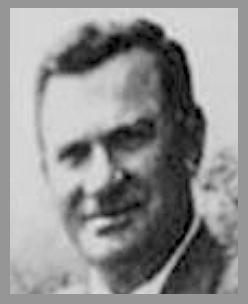
Carl “Shucks” Beam was born in Kentucky in 1909, the younger son of William Parker Beam and Susan Mary Smith. His older brother, Earl Beam, was born in 1906, and both boys grew up in a family whose livelihood had been closely connected to whiskey production for generations. Their father was master distiller at the family's Old Tub Distillery, where he worked alongside his brother Jim Beam. Carl’s childhood consequently coincided with a period when Old Tub had become an established American bourbon brand and the Beam family was expanding its production.
The family's whiskey-making heritage had begun in 1795, when Jacob Beam sold his first commercial whiskey in Kentucky. His son David assumed control of the operation in 1820, followed by David M. Beam in 1853. The latter relocated the distillery to Nelson County during the 1850s, taking advantage of railroad transportation to expand distribution beyond Kentucky. When David M. retired in 1892, Jim and Park assumed responsibility for the enterprise, with Jim managing its commercial affairs and Park supervising production.
Under Park Beam's supervision, Old Tub production increased substantially during the decades preceding Prohibition. Carl and Earl grew up during this period of commercial development, when the family name became closely associated with both distilling expertise and an established national whiskey brand. Unfortunately, National Prohibition was on the horizon, a misfortune that brought the Beam family's commercial distilling operations to an end in January of 1920. Carl was still a boy when the Eighteenth Amendment and the Volstead Act effectively prohibited the production and sale of beverage alcohol throughout the United States. The closure interrupted a business that had operated continuously through several generations, and it forced members of the Beam family to pursue other occupations. Carl reached adulthood during the thirteen years when the family's principal commercial whiskey operation remained closed. However, the repeal of Prohibition in December 1933 allowed the Beams to return to their established profession. Jim Beam, by then approaching seventy years of age, joined his son T. Jeremiah “Jere” Beam and other family members in rebuilding the whiskey business at Clermont, Kentucky. They acquired the former Murphy-Barber Distillery property and constructed a new production facility in approximately 120 days. The rebuilt operation became the James B. Beam Distilling Company, establishing the foundation for the modern Jim Beam bourbon enterprise.
Carl and his brother Earl joined the renewed family operation, bringing another generation of Beam descendants into the business. Their father Park also participated in the company's post-Prohibition activities before eventually accepting employment at another Kentucky distillery. The new Clermont operation initially produced whiskey associated with the family's established Old Tub heritage while developing the Jim Beam name as its principal commercial identity. By the late 1930s, Jim Beam Kentucky Straight Bourbon Whiskey had emerged as the company's defining product, as well as one of the nations top-selling whiskies.
Producing bourbon after Prohibition required rebuilding more than just the physical distillery. The company needed to restore its whiskey inventory, maintain the established character of its products, and develop sufficient production capacity to serve recovering markets. Jim Beam had preserved the family's traditional yeast culture, which remained an important component of the company's fermentation process, and the continuity of this yeast, together with the family's established grain recipes and production methods, helped distinguish Jim Beam bourbon from other American whiskeys.
In the 1940’s, World War II caused another interruption for distillers when they faced government restrictions on beverage alcohol production as industrial alcohol became important to the war effort. These circumstances complicated the rebuilding of whiskey inventories following Prohibition. At war’s end, however, the Beam company emerged positioned for further commercial development. By the middle of the 1940s, Jere had assumed increasing responsibility for the company's commercial operations, while Carl and Earl directed whiskey production. In 1947, Carl became master distiller at Clermont, while Earl served as assistant master distiller and supervised the second production shift. Their working arrangement continued the division of responsibilities established by their father and uncle decades earlier.
As master distiller, Carl was responsible for maintaining the established quality and character of Jim Beam whiskey. His position became increasingly important as Jim Beam expanded its production capabilities in the middle of the century. In 1954, the company opened a second distillery near Boston, Kentucky, providing additional capacity to meet the growing demand for its bourbon. The Boston operation complemented the established Clermont distillery, allowing the company to increase production while maintaining its traditional whiskey-making practices. Carl remained associated with Clermont, where he continued supervising the manufacture of the company's principal bourbon expressions. The expansion also created opportunities for other members of the Beam family, for instance, Frederick Booker Noe II, a grandson of Jim Beam and nephew of Jere Beam, developed his career within the company's distilling operations during that time. In 1960, Booker was appointed master distiller at Boston, while Carl continued as master distiller at Clermont. The arrangement placed two experienced cousins, each members of the extended Beam family, in charge of the company's principal Kentucky production facilities.
By that time, Carl’s sons, Baker and David Beam, had also entered adulthood and transitioned into the whiskey business. Baker began working at the Clermont distillery while still in high school, initially serving as a night watchman before advancing through various production positions. He ultimately became a distiller and spent thirty-eight years working for Jim Beam. David also followed his father into the company's distilling operations. Jere Beam directed the company's commercial activities, developing distribution throughout the United States and introducing its bourbon to overseas markets.
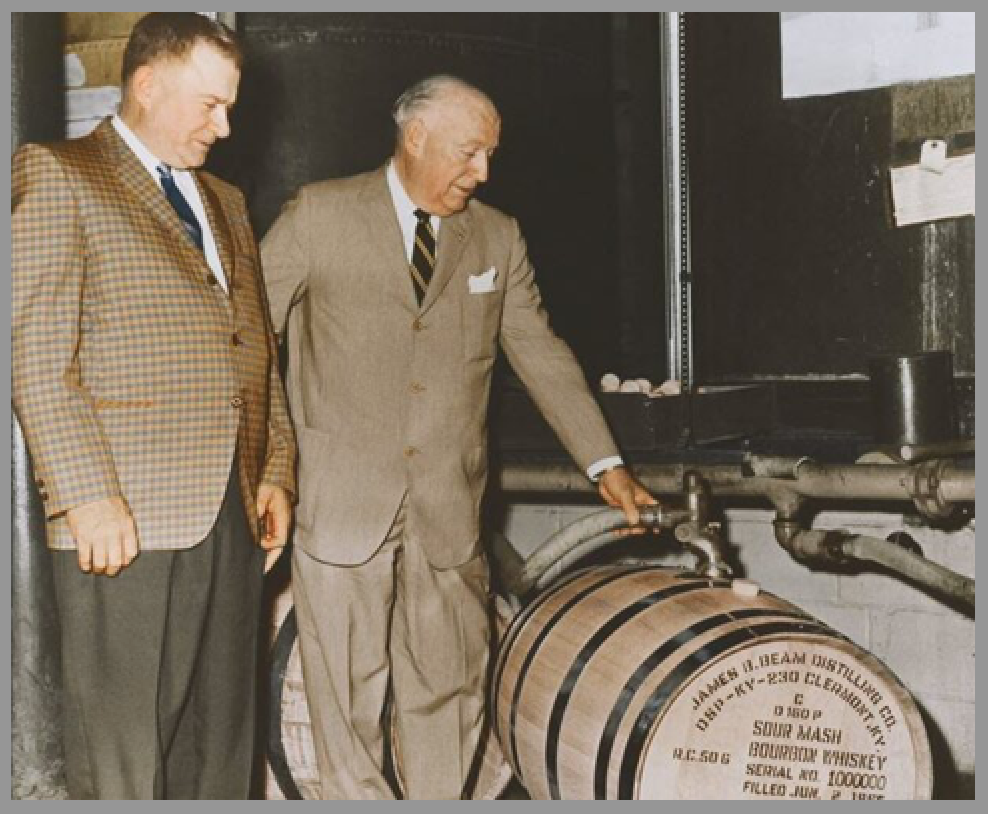
One of the most important milestones of Carl's career occurred on June 2, 1965, when the Jim Beam Distillery filled its one-millionth barrel of bourbon since the repeal of Prohibition. Carl participated in the occasion alongside Jere Beam, and a historical photograph (shown below) records the two men filling the commemorative barrel. The achievement represented more than three decades of production following the company's reconstruction in 1934. It also demonstrated the scale of the enterprise that had developed under the combined leadership of the Beam family. The millionth-barrel celebration provided a direct connection between the company's earlier history and its modern manufacturing operations. Carl represented the family tradition of practical distilling knowledge, while Jere represented the commercial leadership that had expanded Jim Beam's markets. Their participation acknowledged the importance of both production and distribution in the company's success. By the middle of the 1960s, Jim Beam had become one of the most well-known name brands in the United States in any product segment.
In 1967, American Brands acquired the Jim Beam company, beginning another chapter in its corporate development. The acquisition changed the ownership structure but did not end the Beam family's association with whiskey production. Shucks retired seven years later in 1974, content to relax on the porch of the big white house on the hill that still sits behind the distillery where he and Edna had raised their boys.
William Carl “Shucks” Beam died on August 19, 1981, at the age of 72. His contributions to the industry finally received formal gratitude in 2006 when he was inducted posthumously into the Kentucky Bourbon Hall of Fame. The acknowledgment recognized both his production responsibilities and his executive position. His induction placed him alongside other distinguished Kentucky whiskey makers whose careers had contributed to the development of the state's bourbon industry. It also acknowledged the important role he had played in maintaining Jim Beam's manufacturing traditions during its post-Prohibition expansion.
Carl “Shucks” Beam's career was defined by the production of bourbon rather than the public promotion of the family name. His responsibilities at Clermont placed him in charge of the whiskey-making operations that supported Jim Beam's growth from a reconstructed family distillery into a major American spirits producer. Working with his brother Earl, cousin Jere, and later generations of Beam distillers, he helped maintain the continuity of the company's manufacturing methods while its production capacity and distribution increased. His greatest contribution was preserving the practical distilling knowledge inherited from his father and passing that tradition to his sons, ensuring that the Beam family's influence on Kentucky bourbon continued well beyond his own career.
Sources:
Kentucky Distillers' Association, “Kentucky Bourbon Hall of Fame,” 2006 inductee listing, kybourbon.com
Beam Family Reunion, “The Beams, America's First Family of Bourbon”, Charles K. Cowdery, beamreunion.com
Beam Suntory, “Jim Beam: Brand DNA and History”, beamsuntory.com
Distillery Trail, “The Complete James B. Beam Distilling Co. Timeline from 1795 to Today”, distillerytrail.com
James B. Beam Distilling Company official website, beamdistilling.com
Contributed by Tracy McLemore, Fairview, Tennessee

Jim Beam Black, the World’s #1 Premium Bourbon was released at the end of Carl’s tenure and the beginning of his son Baker’s time as Head Distiller at Jim Beam. It is aged 8 years and has looked similar in all its versions of packaging.