

Reverend Elijah Craig


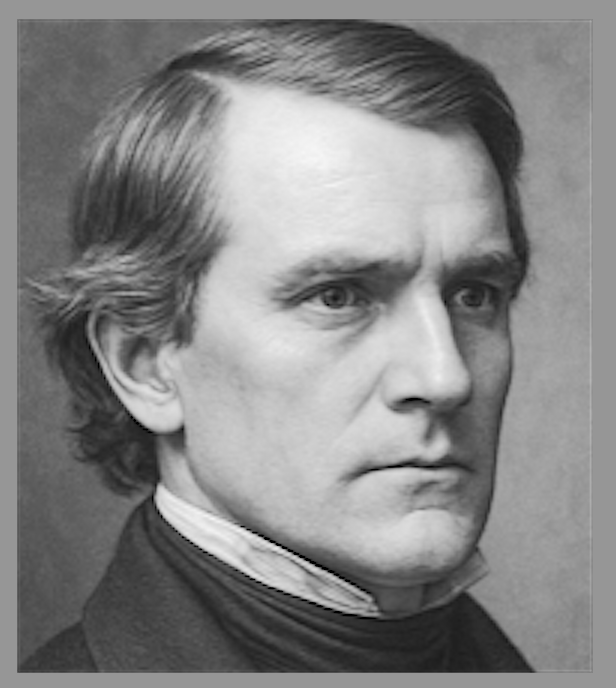
There are no actual photographs of Elijah Craig in existence. The above is an AI-generated image based on a reliable illustration.
Elijah Craig was born in 1745 in Orange County, Virginia, the son of Tolever Craig and Mary Hawkins Craig. His family lived in colonial Virginia during a period when agriculture dominated the economy and religious life was closely regulated by the established local church. His brothers Joseph and Lewis Craig became prominent Baptist ministers, establishing a family connection to the religious movement that would influence much of Elijah's early adulthood. Craig received only a rudimentary education before entering farming, an occupation he maintained for the remainder of his life, despite several other additional pursuits.
Around 1763, Craig married a woman named Frances, whose maiden name may have been Smith. The couple are believed to have had seven children, including four sons and three daughters, although surviving records do not conclusively establish that fact. His family responsibilities accompanied a growing commitment to spiritual matters after Craig experienced a religious conversion in 1764 after hearing the preaching of David Thomas, a traveling evangelist. The following year, Samuel Harriss encouraged him to participate more actively in spreading the Baptist faith. Craig began holding scriptural meetings in his tobacco barn, attracting neighbors who shared an interest in his religious teachings. In 1766, he traveled to North Carolina and persuaded minister James Read to return to Orange County with him to baptize members of his growing congregation.
His theological work soon developed into a formal ministry. In 1769, Craig helped establish Blue Run Church in Orange County and became its presiding elder. He was ordained as a Baptist minister in the summer of 1770, joining a movement that increasingly challenged Virginia's more traditional religious institutions, especially since his preaching continued to attract a substantial following. During this time, Craig refused to abandon farming, reflecting his belief that ministers should maintain an independent means of financial support.
The conflict between Virginia's established church groups and dissenting religious groups such as Craig’s brought him into direct confrontation with colonial authorities. He was arrested and imprisoned at least twice for his religious activities, including a period of confinement in Culpeper County. During one imprisonment, he continued preaching through the bars of his cell despite being restricted to a diet of rye bread and water for doing so. His dedication led to prominence among Virginia’s Baptists, and he was soon selected as a representative before the Virginia General Assembly. There he served proudly, advocating greater religious freedom for all of Virginia’s residents.
Following the American Revolution, Kentucky's frontier settlements attracted families seeking agricultural land and economic opportunities. In 1781, Craig's brothers Joseph and Lewis participated in the migration of a large Baptist congregation from Virginia to Kentucky, an event remembered as the Traveling Church. Elijah remained in Virginia during that migration but subsequently acquired interest in Kentucky land. He participated in a meeting of Baptist ministers in Kentucky in 1785 and established permanent residence in the region the following year.
Craig acquired approximately 1,000 acres in the area that became Scott County, Kentucky, and began developing a settlement known as Lebanon. The community grew around the agricultural and commercial opportunities created by settlers moving into the region. In 1790, the Virginia General Assembly incorporated the settlement as Georgetown, honoring George Washington.
In 1787, Craig became pastor of the Baptist congregation at Great Crossing, where he remained an important religious figure for several years. He later also served churches at McConnel's Run and Silas while maintaining his involvement in commercial enterprises. His simultaneous work as a minister, landowner, educator, and businessman made him one of the region's prominent early settlers and authority figures.
Education became another important part of Craig's activities. In December 1787, he announced plans to establish a boarding school for boys in Lebanon, offering instruction in subjects that included Latin, Greek, and the sciences. The academy was intended to accommodate approximately 50 students and provide educational opportunities beyond those ordinarily available in a frontier settlement. Craig subsequently helped organize Rittenhouse Academy, incorporated by the Kentucky legislature in 1798, which became a predecessor of today’s Georgetown College.
Alongside his religious and educational activities, Craig developed several enterprises that contributed to Kentucky's early industrial economy. He established sawmills and gristmills, a paper mill, a fulling mill for processing cloth, and a ropewalk used to manufacture rope from hemp. He also operated a ferry across the Kentucky River, supporting transportation and commerce in the developing region.
Then, using excess corn from his farm, Craig began distilling whiskey in 1789. A folk story tells that in June of that year, one of his barns caught fire. That barn held some empty whiskey barrels, and having held flammable liquid, they had become quite charred on the inside. Yet being a frugal man, he used the burnt barrels to store whiskey anyway. He subsequently shipped some of the burnt-barreled whiskey down the Mississippi, and on the six-month trip to New Orleans, it was noted that the charred barrels had imparted both color and flavor. Consumers in Louisiana raved about that “Red Liquor from Bourbon County." Craig finally deduced that the smooth, vanilla-like sweetness imparted to the drink must have been caused by the burnt casks, and from that time on, he intentionally charred the barrels used to store his corn liquor—thus began the legend of Elijah Craig as “The Father of Bourbon Whiskey.”
Craig continued all of his commercial enterprises and his religious activities into the nineteenth century. He remained involved in land ownership, manufacturing, and local commerce while publishing several works defending his Baptist theological beliefs. His publications included A Few Remarks on the Errors That Are Maintained in the Christian Churches of the Present Day (in 1801) and Three Letters from Philemon to Onesimus (in 1803). His ability to combine religious leadership with business development distinguished him among Kentucky's early entrepreneurs.
Craig's wife Frances died in April 1802, according to an announcement published in the Kentucky Gazette. Still, Elijah Craig continued preaching, farming, milling, and distilling in Georgetown during his final years. He ultimately dictated his will on May 13, 1808, and died five days later, on May 18, 1808. He was probably buried in Georgetown, though no grave marked with his name has ever been located, despite extensive searches.
Elijah Craig's historical importance rests on his documented accomplishments as a distiller, businessman, educator, and community founder. His association with charred oak barrels has become an enduring part of bourbon's heritage, while the whiskey bearing his name has developed into one of Heaven Hill's most recognizable premium brands. More than two centuries after his death, Elijah Craig remains a prominent figure in the history of Kentucky bourbon and the development of America's native whiskey.
Sources:
Library of Virginia, “Elijah Craig (ca. 1745–1808)”, Thomas H. Appleton Jr., 2006, lva.virginia.gov
Encyclopedia Virginia, “Elijah Craig (ca. 1745–May 18, 1808)”, Thomas H. Appleton Jr., September 2, 2025, encyclopediavirginia.org
Whisky Advocate, “The True Story of Elijah Craig”, 2019, whiskyadvocate.com
Elijah Craig Bourbon, “Our History”, elijahcraig.com
Georgetown/Scott County Tourism Commission, “About Us”, georgetownky.com
Heaven Hill Distillery official website, heavenhilldistillery.com
Contributed by Tracy McLemore, Fairview, Tennessee
Elijah Craig, the “Father of Bourbon,” has had several brands named after him by Hall of Fame Master Distiller Parker Beam. Pictured above from left to right are, Elijah Craig 12 year-old, Elijah Craig Barrel Proof and Elijah Craig Small Batch.

Left to right, Elijah Craig 18-year-old Single Barrel, Elijah Craig 20-year-old Single Barrel, and Elijah Craig 23-year-old Single Barrel.
