
Gary Gayheart

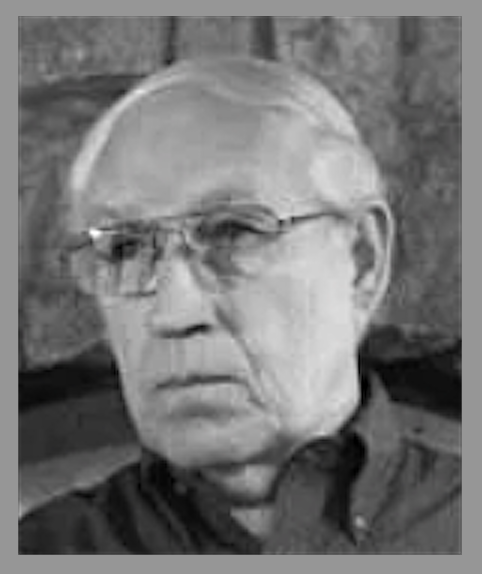
Gary Ray Gayheart was born on August 5, 1939, in Floyd County, Kentucky, the son of Ray E. Gayheart and Audrey Fraley Gayheart. He grew up in eastern Kentucky and eventually attended the University of Louisville, where he developed an interest in the chemistry of whiskey production. In 1961, he graduated with a Bachelor of Science degree in chemistry, establishing the scientific foundation for a career that would eventually place him among Kentucky's most accomplished master distillers. Following college graduation, Gayheart joined Fleischmann Distilling Corporation in Owensboro, Kentucky. Fleischmann was an established American spirits producer whose operations provided Gayheart with practical experience in commercial distillation and the scientific controls necessary to maintain consistent products. His employment with Fleischmann subsequently took him to Chicago, extending his experience within the company's operations, but he eventually returned to Kentucky to pursue another opportunity.
In 1969, Gayheart joined Schenley Distillers Corporation at its George T. Stagg Distillery in Frankfort. The facility had been associated with Kentucky whiskey production for generations and had operated under Schenley ownership since 1929. Its history included the leadership of Colonel Albert B. Blanton, whose influence on the distillery's operations and barrel-selection practices would eventually become an important part of Gayheart's own career. The Stagg Distillery was a substantial industrial operation, with facilities for grain preparation, fermentation, distillation, barrel filling, maturation, and bottling. Schenley's investment in the property during the 1930s had created a modern production complex, including large aging warehouses that held substantial inventories of maturing bourbon. Gayheart's chemistry background was particularly suited to an operation where the quality of the finished whiskey depended upon controlling each stage of production, from the handling of grain and yeast to the evaluation of mature barrels.
By 1972, Gayheart had advanced to master distiller responsibilities. His career also included responsibility at Schenley's Bernheim distillery in Louisville, where he worked during the early 1980s while continuing his association with the Frankfort operation. But another particularly important change occurred in 1983, when Schenley sold the Frankfort distillery and associated whiskey inventories and brands to private investors. The new owners, Ferdie Falk and Robert Baranaskas, retained Gayheart, preserving continuity in the distillery's production expertise. Elmer T. Lee, another longtime figure at the facility, also remained closely involved, and together they became part of a development that would have a lasting influence on the American bourbon industry.
In 1984, the distillery introduced Blanton's Single Barrel Bourbon, widely recognized as the first commercially marketed modern single-barrel bourbon. The brand was developed under the leadership of Elmer T. Lee, with Gayheart participating in its introduction and production. Named for Colonel Albert B. Blanton, the bourbon drew upon Blanton's practice of selecting individual barrels of particularly fine whiskey for his personal use and for entertaining guests. Unlike conventional bourbon bottlings, which typically combine whiskey from multiple barrels to maintain a consistent flavor profile, Blanton's was bottled from individually selected barrels. This approach emphasized the distinctive characteristics that develop during maturation, when differences in warehouse location, temperature, evaporation, and interaction with charred oak influence the finished whiskey. The bourbon was presented in a distinctive round bottle with a horse-and-jockey stopper, creating an immediately recognizable identity for a product intended to occupy the upper end of the American whiskey market.
In 1986, Elmer T. Lee retired from full-time employment, although he continued working with the distillery as master distiller emeritus and remained involved in selecting barrels for his namesake bourbon. Gayheart continued directing distilling operations as the company developed its premium whiskey portfolio, including single-barrel expressions such as Rock Hill Farms and Hancock's President's Reserve. His responsibilities encompassed the production and maturation of whiskey destined for bottling years later, requiring continuity in the distillery's production standards.
Another major ownership change occurred in 1992, when the Sazerac Company of New Orleans acquired the distillery and its aging whiskey inventories. Gayheart remained with the company as Sazerac began expanding its bourbon portfolio and investing in the historic Frankfort property. In August 1999, the facility was officially renamed Buffalo Trace Distillery, and Gayheart continued as its master distiller during the introduction of Buffalo Trace Kentucky Straight Bourbon Whiskey as the company's new flagship brand. Under Gayheart's leadership, Buffalo Trace entered a period of growing recognition for its premium bourbons. In 2000, Whisky Advocate named Buffalo Trace its Distillery of the Year, making it the first American distillery to receive the publication's international distinction. Its whiskeys earned further recognition in 2001 and 2002, reinforcing the reputation of the distillery's mature bourbon inventories and the production practices Gayheart had helped maintain through several decades.
In 2002, the Commonwealth of Kentucky recognized Gayheart's contributions to the state's signature industry by naming him an Honorary Commissioner of Agriculture. Three years later, he retired from Buffalo Trace, ending a 36-year association with the Frankfort distillery. Harlen Wheatley, who had worked alongside Gayheart for approximately a decade, succeeded him as master distiller in 2005.
In September 2007, Gayheart was inducted into the Kentucky Bourbon Hall of Fame, joining a distinguished group of individuals recognized for their contributions to Kentucky's bourbon industry. His induction acknowledged a career that had encompassed scientific training, production management, master distilling, and the introduction of important premium whiskey brands. It also recognized his role in maintaining the distillery's production standards during a period of substantial transformation within the American whiskey business.
Away from the distillery, Gayheart shared his life with his wife, Linda, whom he met and married during his college years. They raised two daughters, Gabrielle and Melissa, and eventually welcomed grandchildren and great-grandchildren. Gayheart maintained an interest in eastern Kentucky history, bluegrass music, college sports, and the Chicago Cubs, while also supporting animal welfare organizations. Linda died in 2012, and Gayheart died in Frankfort on September 1, 2026, at the age of 87.
Gary Ray Gayheart's career spanned the transition from the large-scale American distilling industry of the 1960s to the premium bourbon market of the early twenty-first century. From his beginnings as a Fleischmann chemist to his leadership at Schenley and Buffalo Trace, he combined scientific knowledge with decades of practical distilling experience. His participation in the introduction of Blanton's and his stewardship of the Frankfort distillery established his place among the influential Kentucky whiskey professionals whose work helped shape the modern bourbon industry.
Sources:
Rogers Funeral Home, “Gary Ray Gayheart Obituary”, tributearchive.com
Buffalo Trace Distillery official website, buffalotracedistillery.com
Whisky Magazine, “The Way of a Master,” Liza Weisstuch, January 22, 2010, whiskymag.com
Kentucky Distillers' Association, “Kentucky Bourbon Hall of Fame”, kybourbon.com
Cigar Aficionado, “On the Trail of Bourbon,” 2005, cigaraficionado.com
Bourbon & Banter, “Buffalo, Barrels & Bourbon Book Review”, 2021, bourbonbanter.com
Contributed by Tracy McLemore, Fairview, Tennessee


2001-2002 Whiskey of the year nominees from Buffalo Trace:
19-year-old W.L. Weller, 17-year-old George T. Stagg, 17-year-old Eagle Rare