

Jacob Beam


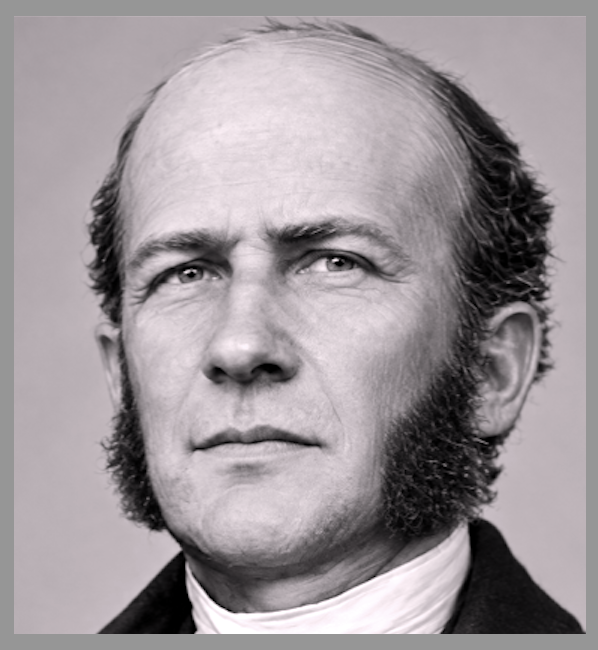
AI-generated image of Jacob Beam is based on a realistic illustration
Jacob Boehm began making whiskey on the Kentucky frontier when the United States was still in its infancy, long before bourbon became one of America's most recognizable spirits. A farmer, miller, and pioneer of German ancestry, Boehm established the whiskey-making enterprise that eventually became the James B. Beam Distilling Company. In 1788, Jacob began distilling whiskey from the surplus corn he grew. In 1795 he sold his first barrels of a corn whiskey he called "Old Jake Beam.” The sale marked the beginning of a family business that has already survived more than two-and-a-quarter centuries of political change, economic upheaval, and industrial development. Although his descendants transformed the enterprise into an internationally recognized bourbon producer, its foundation was established by Jacob's decision to convert a few bushel of excess grain grown on his Kentucky farm into marketable whiskey.
Johannes Jacob Boehm was born in Pennsylvania on February 9, 1760. His family belonged to the German-speaking population that settled western Pennsylvania during the colonial period. Eventually, the family’s German-sounding name, “Boehm”, was anglicized to “Beam”. His father, Nicholas Boehm, died while Jacob was young, leaving his mother, Margaretha, responsible for raising the family. In 1766, Margaretha moved the household to Frederick, Maryland, where Jacob spent much of his youth. The family settled on property associated with Jacob's uncle, Jost Myers, where farming provided the principal means of livelihood. Agricultural activities included growing grain, cultivating fruit, and producing other crops suited to the region. Jacob learned the practical skills of farming and milling, together with the methods used to ferment agricultural products into alcoholic beverages. His early experience included making wine from grapes, cider from apples, and whiskey from rye, establishing a familiarity with fermentation and distillation that would become central to his later livelihood.
During the eighteenth century, distilling was closely connected to agriculture throughout Pennsylvania and Maryland. Farmers frequently converted surplus grain into whiskey because the finished spirit could be stored and transported more conveniently than the grain from which it was produced, and was therefore usually more profitable. Jacob’s familiarity with both farming and distillation placed him among the agricultural producers who carried these practices westward as settlement expanded beyond the Appalachian Mountains.
On September 20, 1786, Jacob married his cousin, Anna Maria Myers. Over the next 15 years, the couple became the parents of twelve children. Jacob and Anna’s marriage also coincided with the movement of settlers from Maryland and Pennsylvania into Virginia, and then often on to Kentucky. Land availability and agricultural opportunities attracted families willing to establish farms in the developing western settlements. In 1787, the newlyweds began that arduous move themselves, traveling through the hardscrabble and often dangerous Appalachian frontier. Family histories describe Jacob carrying a wooden whiskey still as part of the equipment transported to his new home. Finally, the family settled in the region that became associated with Hardin's Creek, Kentucky, where fertile farmland and ready access to water would encourage agricultural production.

Jacob initially concentrated on farming, growing corn and other grains suited to Kentucky's soil. Corn was particularly important because the region's rich topsoil allowed farmers to raise quantities beyond their immediate household requirements. Converting surplus corn into whiskey offered an opportunity to preserve the economic value of the harvest while producing a commodity that could easily be sold or bartered. Jacob applied the distilling knowledge he had acquired in Maryland to the grain grown on his Kentucky property. However, the whiskey Jacob produced in Kentucky differed from the rye-dominated spirits traditionally associated with Pennsylvania and Maryland. Corn provided a majority portion of the grain used in Kentucky whiskey, contributing the sweetness that eventually became characteristic of bourbon. Yet Jacob employed methods that he had learned from earlier American distilling practices, including the use of a sour-mash fermentation process associated with the family's original whiskey.
In 1795, Jacob’s first barrel of whiskey was sold, and thereafter his business expanded rapidly. As the business developed, Jacob obtained several hundred more acres of land in a sale that was brokered by his uncle. Once his farm was settled, his activities then combined farming, milling, and whiskey production on a much larger scale, with all three businesses providing the economic foundation for the by-then blossoming Beam household. His continued involvement in agriculture ensured not only that the family would be well fed, but also provided access to the grain required for distilling. By the early nineteenth century, Jacob's whiskey was reaching markets beyond the immediate vicinity of his farm, with one historical account recording a shipment to New Orleans in 1810, demonstrating the expansion of his commercial activities well beyond Kentucky. After all, the early 19th century development of river transportation provided important opportunities for western producers to sell agricultural commodities throughout the Mississippi River system. Whiskey, which could be transported in wooden barrels, was particularly suited to these developing commercial networks.
Jacob's sons grew up learning the agricultural and distilling practices that supported the family enterprise. Among them were Jacob Jr., John, and David, each of whom became associated with the whiskey trade. David developed the closest connection to his father's distilling operation and eventually assumed responsibility for its management. The family's involvement in whiskey production was consequently established as a multigenerational enterprise while Jacob was still alive.
In 1820, Jacob was 60 years old, and at that time he transferred control of the distillery to his 18-year-old son David. The transition marked the beginning of the second generation of Beam family distilling leadership and ensured the continuation of the business Jacob had established twenty-five years earlier. David subsequently expanded production, enlarged the distillery during the 1830s, and developed the enterprise that became associated with the Old Tub name. His management carried the family's whiskey-making tradition into a period of further increasing industrialization and expanding American markets.
Jacob died in 1834, having lived long enough to see his son expand the family whiskey business. The enterprise continued through David's son, David M. Beam, who relocated the distillery to Nelson County during the 1850s to take advantage of developing railroad transportation. Subsequent generations introduced improvements in manufacturing and saw to the further expansion of the Old Tub bourbon brand. In 1892, Jacob's great-grandson James Beauregard “Jim” Beam assumed leadership of the business, eventually giving his name to the whiskey that would become internationally recognized.
Johannes Jacob Beam did not establish a national whiskey brand, construct an industrial distillery, or develop the international distribution network later associated with Jim Beam—those accomplishments belonged to the generations that followed him. His achievement was more fundamental: he established a successful commercial whiskey operation, passed his knowledge to his children, and created a family enterprise capable of continuing beyond his lifetime. Yet from a small Kentucky farm and a handmade wooden still came a distilling tradition that would ultimately encompass one of the most recognizable names in American whiskey.
Sources:
James B. Beam Distilling Company official website, beamdistilling.com
Beam Suntory, “Jim Beam: Brand DNA and History”, founders.beamsuntory.com
The Daily Beast, “America’s First Family of Bourbon: The Beams”, Lew Bryson, January 22, 2020, thedailybeast.com
Beam Family Reunion, “The Beams, America's First Family of Bourbon”, Charles K. Cowdery, beamreunion.com
Pre-Prohibition Whiskey Men, “The D. M. Beam Distillery, RD #230, Nelson County, Kentucky”, pre-pro.com
Contributed by Tracy McLemore, Fairview, Tennesse

Three brands have been named after the founder of the Beam Distilling Empire Jacob Beam, they are Jim Beam Jacob’s Ghost, White Whiskey (aged in a used barrel for only 12 months) and Jacob’s Well, an 84 proof Micro-distilled Bourbon and Hardin’s Creek Jacob’s Well.

The first Four iterations of Hardin’s Creek: Colonel James B. Beam; Jacob’s Well; the Boston Batch and the Clermont Batch. Hardin’s Creek is the first place in Kentucky that Jacob Beam and his family settled and after moving from Frederick, Maryland and began distilling Whiskey in 1795.