
Elmer T. Lee

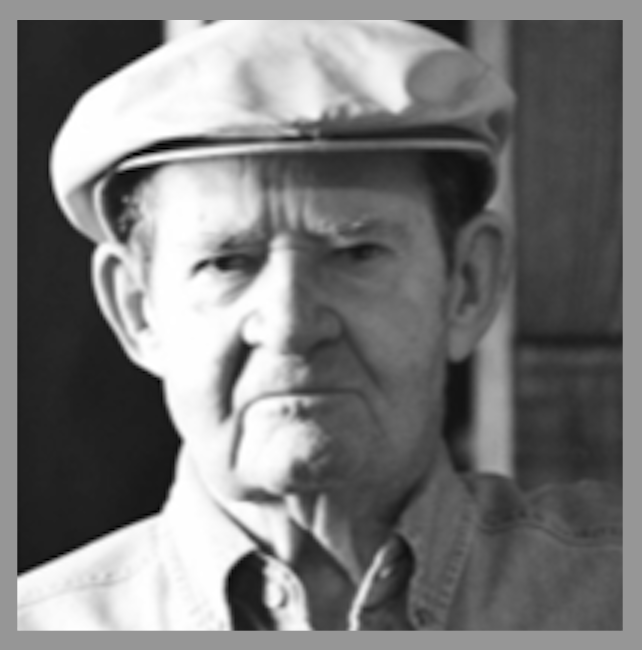
Elmer Tandy Lee was born August 5, 1919, on a tobacco farm near Peaks Mill, a small community in Franklin County, Kentucky. Growing up in the agricultural countryside surrounding Frankfort, he attended local schools and graduated from high school in 1936. He subsequently worked for the Jarman Shoe Company, remaining there until December 1941, when America's entry into World War II changed the direction of his life. Lee entered military service and became a radar bombardier aboard B-29 Superfortress bombers, flying missions against Japan from Guam during the closing stages of the war.
Following his honorable discharge in 1946, Lee returned to Kentucky and enrolled at the University of Kentucky to study engineering. He graduated with honors in 1949, equipped with the technical education that would provide the foundation for his career in whiskey production. That September, he sought employment at the George T. Stagg Distillery in Frankfort. When Lee arrived for his interview, distillery president Colonel Albert Bacon Blanton greeted him with the words, "Son, we're not hiring any hands today." Fortunately, plant manager Orville Schupp recognized Lee's qualifications and encouraged him to report for work the following week. Lee consequently joined the engineering department as a maintenance engineer, beginning a professional relationship with the distillery that would continue for the remainder of his life. The encounter also introduced him to Blanton, whose personal approach to selecting exceptional bourbon would eventually inspire Lee's most celebrated contribution to the industry.
Lee's engineering background proved particularly valuable in a distillery dependent upon complicated mechanical systems, carefully controlled production processes, and extensive barrel-aging facilities. He advanced from maintenance engineer to plant engineer and subsequently assumed increasing responsibility for the company's operations. By 1966, he had become plant superintendent, and in 1969 he was promoted to plant manager and master distiller. He held both positions until his retirement, directing bourbon production while overseeing much of the plant's continuing modernization and growth.
During Lee's years in management, the American whiskey industry experienced substantial changes in consumer preferences. Bourbon, once a dominant category in domestic spirits sales, faced increasing competition from vodka, gin, and lighter imported whiskies. By the late 1970s and early 1980s, declining demand presented a serious challenge to established Kentucky producers. Nevertheless, the Frankfort distillery continued producing and aging bourbon, maintaining the inventory and production expertise that would support an important development in the industry's subsequent revival. That development began with an assignment to create an exceptionally high-quality bourbon capable of occupying a premium position in the marketplace. Lee drew upon a practice he had observed during his early employment under Colonel Blanton. When entertaining distinguished guests, Blanton personally selected particularly desirable barrels from Warehouse H, having their contents bottled separately rather than combined with whiskey from other barrels. These selections, commonly called "honey barrels," represented Blanton's preference for individual barrels possessing exceptional characteristics. Lee recognized that this traditional practice could form the basis of a distinctive commercial bourbon. Instead of combining numerous barrels to achieve a consistent flavor profile, the new whiskey would be bottled from individually-selected barrels, preserving the particular characteristics developed during maturation. Each barrel could exhibit subtle differences resulting from its location in the warehouse and its interaction with the surrounding environment. The concept emphasized the individuality of mature bourbon while placing greater importance on careful barrel selection.
In the winter of 1984, Lee introduced Blanton's Single Barrel Bourbon, naming the whiskey in honor of the distillery president who had initially been reluctant to hire him 35 years earlier. It became the first modern bourbon brand commercially marketed specifically around the single-barrel concept. The whiskey was drawn from selected barrels aged in Warehouse H, continuing the tradition established by Blanton himself. Its introduction helped establish the super-premium bourbon category and demonstrated that American whiskey could be presented as a highly-individualized, carefully-selected product. Blanton's initially found particular success in Japan before gaining broader international recognition, helping demonstrate the commercial potential of premium Kentucky bourbon.
Lee retired from active management in 1985, one year after introducing Blanton's, but his association with the distillery continued. In 1986, the company introduced Elmer T. Lee Single Barrel Kentucky Straight Bourbon Whiskey, recognizing his contributions with a brand bearing his name. He remained involved in selecting barrels for the whiskey, regularly returning to the distillery to evaluate samples. His continued participation helped maintain a direct connection between the bourbon and the master distiller whose career it celebrated.
The distillery itself underwent another significant transition in 1992 when the Sazerac Company acquired the operation, returning it to family ownership. Following extensive renovations, the historic Frankfort facility was renamed Buffalo Trace Distillery in 1999, and a new flagship bourbon bearing that name was introduced. Lee continued serving as master distiller emeritus and brand ambassador, sharing his knowledge of bourbon production and the distillery's history. Even after formal retirement, his technical experience and familiarity with the facility made him a valued adviser to successive generations of distillery employees.
Recognition of Lee's achievements continued throughout his later years. He was inducted into the Kentucky Bourbon Hall of Fame in 2001 and received a lifetime achievement award from Whisky Advocate in 2002. A decade later, Whisky Magazine presented him with another lifetime achievement award and inducted him into its Hall of Fame. These honors recognized both his lengthy career in distillery management and his decisive contribution to the development of premium single-barrel bourbon.
Elmer Tandy Lee died July 16, 2013, just weeks before his 94th birthday. He was survived by his wife, Libby, and their daughter, Peggy Comer, a grandchild and a great-grandchild. Until his final years, he continued visiting Buffalo Trace, selecting barrels, meeting bourbon enthusiasts, and sharing the knowledge accumulated during more than six decades of association with the distillery. His influence remains evident in Blanton's Single Barrel and the whiskey bearing his own name, both continuing expressions of the barrel-selection principles he championed. More importantly, his introduction of Blanton's in 1984 helped establish an entirely new commercial category, contributing to the transformation of Kentucky bourbon from a declining American spirit into an internationally-respected premium whiskey.
Sources:
University of Kentucky, “Elmer T. Lee, BSEE 1949 – Hall of Distinction,” UK Engineering Department, ece.engr.uky.edu
Buffalo Trace Distillery, “Elmer T. Lee,” Legendary People, buffalotracedistillery.com
Blanton's Bourbon, “Our Story – The Original Single Barrel Bourbon Whiskey,” blantonsbourbon.com
Lexington Herald-Leader, “Elmer Lee Obituary,” July 17, 2013, legacy.com
Contributed by Tracy McLemore, Fairview, Tennessee

Elmer T. Lee was one of three men that saved the Bourbon Industry with his bold contribution of Blanton’s Original Single Barrel Bourbon. Buffalo Trace honored Elmer with his own namesake Elmer T. Lee Single Barrel Bourbon and then came out with a commemorative edition in 2013 in the year of his passing.