Baker Beam



Edward Baker Beam belonged to the sixth generation of America's most celebrated bourbon-making family, but he developed a reputation distinctly different from that of his more publicly recognized relatives. While his cousin Booker Noe became famous for his larger-than-life personality and his development of Jim Beam's Small Batch Bourbon Collection, “Baker,” as he was commonly known, preferred working directly with the equipment and production processes responsible for making the whiskey. His thirty-eight-year career at the Jim Beam Distillery in Clermont, Kentucky, earned him recognition as an accomplished distiller and eventually inspired the creation of Baker's Bourbon, a premium Kentucky straight bourbon bearing his name.
Baker was born July 30, 1936 in Bardstown, Kentucky, the son of Carl “Shucks” Beam, a member of the family's fifth generation of distillers. His grandfather, William Parker “Park” Beam, had served as master distiller at the family's original Old Tub Distillery, while his great-uncle, James Beauregard “Jim” Beam, became the namesake of the modern bourbon enterprise. Baker grew up on the grounds of the Jim Beam Distillery at Clermont, where whiskey production was part of everyday family life. His childhood coincided with the company's recovery from National Prohibition and the establishment of the distillery that would become the center of his professional career.
The Beam family's whiskey-making tradition began in 1795, when Jacob Beam sold his first commercial whiskey in Kentucky. The enterprise passed through successive generations, eventually coming under the leadership of David M. Beam, who relocated the distillery to Nelson County during the nineteenth century. His sons Jim and Park subsequently directed the family business, with Jim concentrating on commercial operations and Park supervising whiskey production. Their partnership established a division of responsibilities that continued through the next generation and provided the professional environment in which Baker developed his knowledge of bourbon manufacturing.
National Prohibition forced the original family distillery to close in 1920, but Jim Beam rebuilt the business immediately following repeal in December 1933. The reconstructed Clermont distillery began producing whiskey in 1934, preserving the family's traditional production methods and distinctive yeast culture. By the time Baker was born two years later, the business had resumed commercial operations and was developing the Jim Beam name into an increasingly recognized American bourbon brand. His father Carl became an important member of the company's production leadership, eventually serving as master distiller and vice president.
Baker began working at the Clermont distillery while attending high school, initially accepting employment as a night watchman. The position introduced him to the operation of the facility and the practical responsibilities associated with maintaining a working distillery. Rather than entering the business directly through a senior management position, he advanced through numerous jobs involving the equipment and daily production requirements of whiskey manufacturing. His early employment established a pattern of hands-on involvement that characterized his subsequent career.
Over the following decades, Baker acquired extensive experience throughout the distillery, developing a detailed understanding of its machinery, production systems, and operating procedures. His work included the practical responsibilities necessary to keep the manufacturing operation functioning efficiently. He became particularly associated with maintaining and repairing equipment, preferring the working environment of the distillery to public appearances and promotional activities. His knowledge eventually extended throughout the Clermont facility, where he became one of the company's most experienced production specialists.
In 1954, the company expanded its manufacturing capacity by establishing a second distillery near Boston, Kentucky. The new facility provided additional production capability while the Clermont distillery continued manufacturing the company's principal bourbon expressions. Baker gained experience at both facilities, developing an understanding of the different operating environments within the company's expanding production system. His work coincided with the period when Jim Beam was becoming one of the largest bourbon producers in the United States. Meanwhile, the company's production leadership remained closely associated with the Beam family. Baker's father Carl served as master distiller at Clermont, while Booker Noe, a grandson of Jim Beam, became master distiller at Boston in 1960. Baker and Booker were cousins, but their personalities and professional responsibilities differed considerably. Booker became widely recognized for his enthusiasm, storytelling, and public representation of the company, while Baker concentrated on the technical and mechanical aspects of whiskey production.
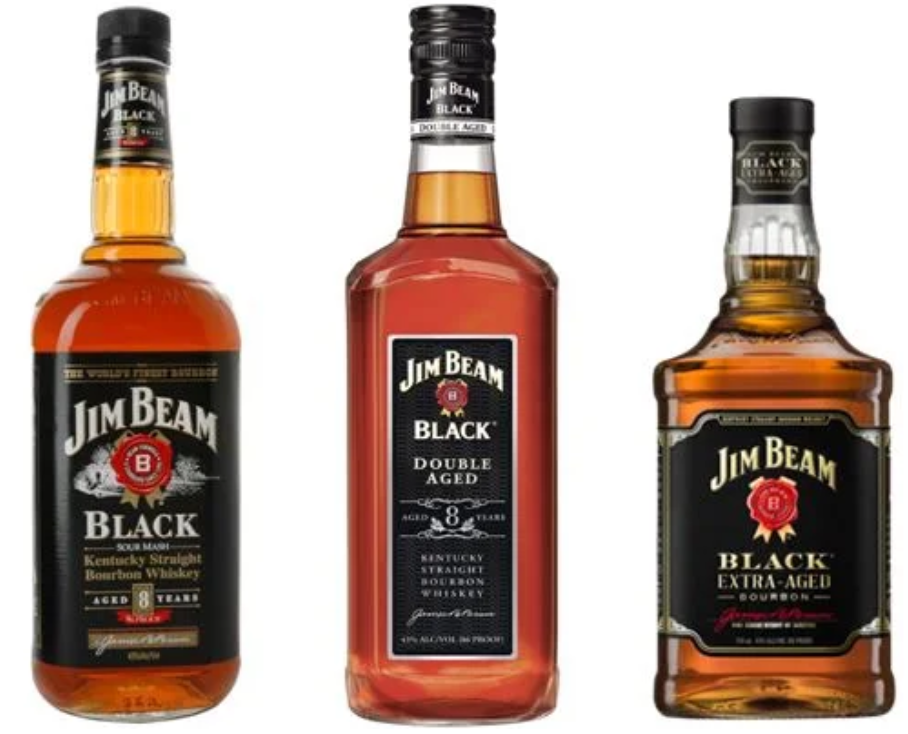
By the 1970s, Baker had become head distiller at the Clermont facility, assuming responsibility for production during a period of substantial growth. Jim Beam had become America's best-selling bourbon in 1970, and the company continued developing new expressions to complement its established White Label whiskey. Baker's responsibilities included maintaining the consistency of the company's bourbon while accommodating changes in production requirements. In 1978, Jim Beam introduced Jim Beam Black, a premium bourbon initially marketed as an eight-year-old expression. The whiskey provided consumers with a more mature alternative to the company's traditional White Label bourbon and represented an important development in its premium product offerings. Baker was serving in the company's distilling operations during this period, helping maintain production at Clermont as the brand expanded.
During the 1980s, Booker Noe began developing a collection of premium bourbons that would eventually become known as Jim Beam's Small Batch Bourbon Collection. The project emphasized distinctive whiskey styles, extended maturation, and the individual characteristics of carefully selected barrels. Booker introduced Booker's Bourbon in 1987, offering an uncut, unfiltered whiskey bottled at barrel strength. The collection subsequently expanded to include Knob Creek, Basil Hayden's, and a bourbon honoring his cousin, Baker Beam.
Baker's Bourbon was introduced in 1992 as part of the Small Batch Bourbon Collection. Booker created the whiskey in recognition of his cousin's long career and his contributions to the family's distilling tradition. Unlike the barrel-strength Booker's expression, Baker's was bottled at 107 proof and aged for a minimum of seven years. Its relatively high bottling strength and extended maturation distinguished it from the company's standard bourbon expressions. The whiskey reflected Baker's preference for a full-bodied bourbon with substantial flavor derived from maturation in charred oak barrels. Its character emphasized traditional bourbon notes, including vanilla, caramel, toasted nuts, and oak. Baker favored whiskey aged for approximately seven years, particularly barrels stored in the upper levels of aging warehouses, where temperature variations could influence maturation. His preference for mature, flavorful bourbon became closely associated with the product carrying his name.
Baker retired from Jim Beam in 1992 after thirty-eight years of employment. By then, he had become one of the company's most-experienced distillers and possessed an extensive understanding of the Clermont facility. Although he no longer held daily production responsibilities, he continued making occasional appearances at the distillery and remained associated with the bourbon honoring his career. His retirement coincided with the introduction of Baker's Bourbon into the market, ensuring that his name remained part of the company's premium whiskey portfolio.
In 2007, Baker was inducted into the Kentucky Bourbon Hall of Fame, joining several members of his family who had previously received the distinction. His induction followed that of his father Carl in 2006 and reflected the family's continuing influence on Kentucky's whiskey industry. The recognition was particularly significant for a man whose career had been devoted primarily to production rather than public promotion.
In 2019, Beam Suntory announced that Baker's Bourbon would become exclusively a single-barrel expression, replacing the original small-batch presentation. The whiskey retained its minimum seven-year age statement and 107-proof bottling strength, but each bottle would now contain bourbon drawn from one individual barrel. The redesigned packaging included information identifying the barrel's age, warehouse location, and filling date. Baker supported the change, which allowed consumers to experience the differences created by individual barrel maturation while preserving the whiskey's established character. The following year, Baker celebrated his eighty-fourth birthday and participated in an interview reflecting on his career and the changing bourbon industry. He continued living near the Clermont distillery, where aging warehouses remained visible from his home. His interests included motorcycles, trucks, and collecting historical materials associated with the Beam family. He also maintained an interest in the distillery's activities, occasionally visiting the property and participating in events celebrating the company's history.
Baker Beam's career represented a different kind of contribution to the history of American whiskey. He did not establish a distillery, develop an international distribution network, or become one of the industry's most prominent public personalities. Instead, he spent thirty-eight years learning and performing the practical work necessary to manufacture consistent bourbon, eventually directing production at the family's Clermont facility. His experience connected the traditional methods of earlier Beam generations with the modern manufacturing operations that supported the company's expansion. Through Baker's Bourbon, his contributions received lasting recognition, preserving the name of a distiller whose professional achievements were established through decades of work inside the distillery rather than through the publicity surrounding it.
Sources:
James B. Beam Distilling Company official website, beamdistilling.com
The Bourbon Review, “Baker’s Mark: Baker Beam Reflects on His Past, His Industry, and His Newly Rebranded Bourbon”, Sara Havens, July 30, 2020, gobourbon.com
Beam Suntory, “Baker's Bourbon Begins New Era As A Single Barrel Bourbon”, October 10, 2019, prnewswire.com
Kentucky Distillers' Association, “Kentucky Bourbon Hall of Fame”, 2007 inductee listing, kybourbon.com
James B. Beam Distilling Co., “Baker's Single Barrel Bourbon”, beamdistilling.com
Contributed by Tracy McLemore, Fairview, Tennessee