Daniel Barnes


Daniel Ryan Barnes was born in July of 1977, and grew up in Menard, a small West Texas community. There, his parents, Phil and Alice Barnes, operated the Navaho restaurant and motel for more than 25 years. The family business exposed him to the demands of hospitality, including long hours, personal service, and the daily discipline required to keep an independent enterprise operating. Barnes graduated from Menard High School and later, from the University of Texas, before he entered the hospitality trade himself, becoming a trained sommelier.
In about 2004, Barnes married his wife, Rachael, and before long, two daughters were born to the couple. A short time later, Barnes found himself discussing distilling with his father-in-law, Bruce Graham. The two first hashed out the idea that became Treaty Oak Distillery together one night in 2006. At the time, Barnes was running a successful medical-related exam company, and while he made a comfortable living, he wanted to pursue a project that inspired passion. Barnes had already been dabbling in home brewing, while Graham was an engineer by trade, and they recognized an opening in the early days of Texas craft whiskey. Once the duo settled on the idea, they spent about a year engineering and tweaking their recipe until they found a good formula, and that launched Graham-Barnes Distilling.
Still, the mid-2000s was a time when commercial craft distilling was still a young industry in modern Texas. Unbelievably, Graham-Barnes was, at that time, only the fourth operating distillery in the state. Its first still, built by Graham, was a small, direct-fired apparatus that Barnes later compared to a turkey fryer; the primitive equipment caught fire twice. Those modest beginnings placed Barnes among the early entrepreneurs who helped build a legal Texas distilling industry after state laws had finally changed to make small-scale commercial production more practical.
The distillery took its name from Austin’s Treaty Oak, an ancient live oak associated with the city’s early history. Barnes initially concentrated on spirits that could be sold without years of barrel maturation, particularly Treaty Oak Rum and Waterloo Gin. Rum also had personal appeal because his wife enjoyed it, but whiskey remained part of Barnes’s long-range plan. Rather than place immature bourbon on the market immediately, he used the company’s early years to gain production experience, develop brands, and prepare for the larger investment that aged whiskey required.
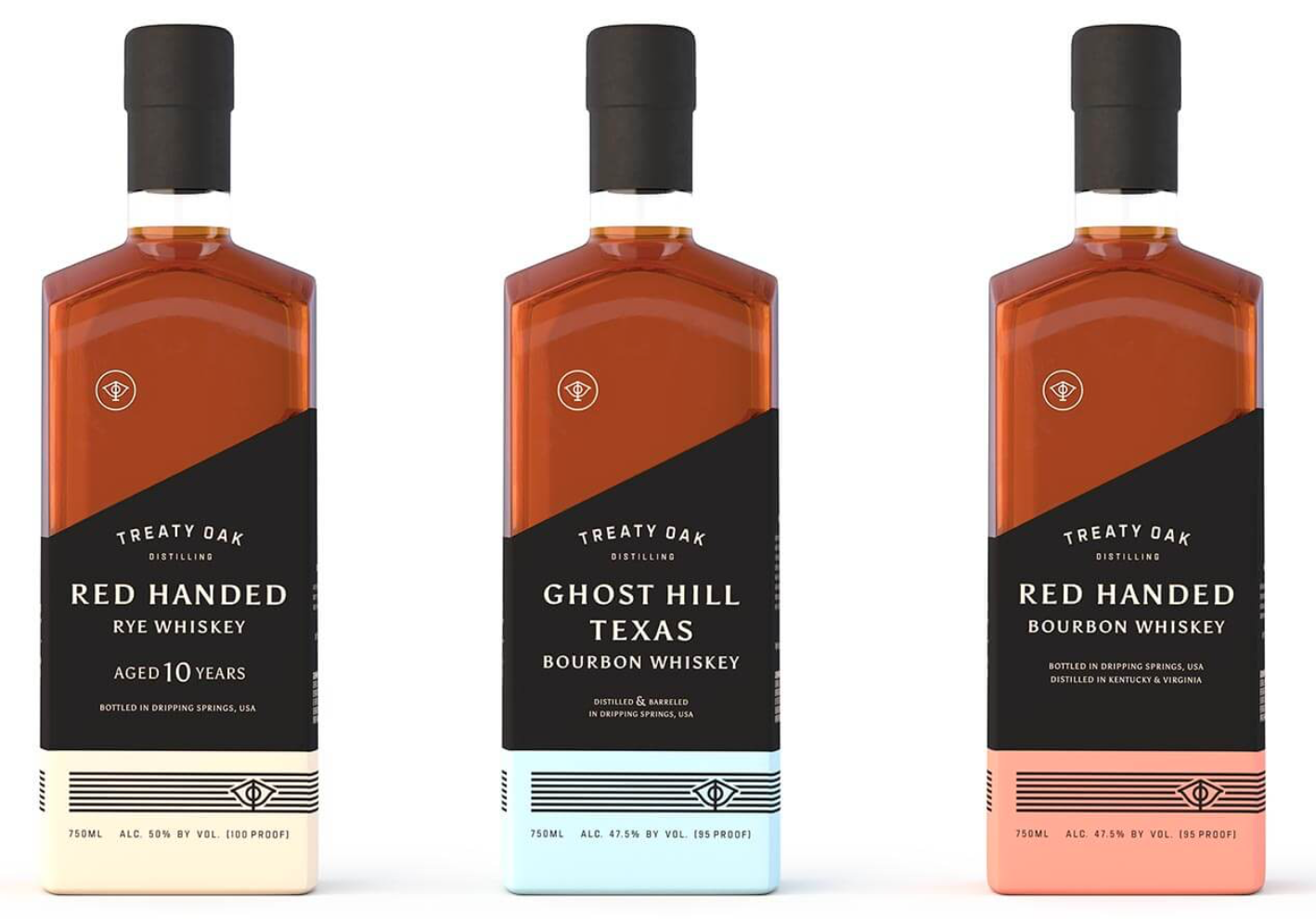
Treaty Oak’s early equipment and cramped North Austin premises eventually became inadequate for Barnes’s ambitions. He purchased a 28-acre ranch near Dripping Springs in 2014, giving the company room for larger stills, barrel storage, hospitality operations, and future expansion. The distillery moved its principal operation to the property in 2016. Copper pot stills manufactured by Vendome Copper & Brass Works replaced the rudimentary early equipment, and Treaty Oak later added column-distillation capacity to improve volume and consistency. The Dripping Springs property became known as Ghost Hill, and Barnes used that identity for the distillery’s principal grain-to-glass bourbon. Ghost Hill Texas Bourbon was developed from a wheated mash bill, and Barnes mashed, fermented, distilled, barreled, aged, and bottled the whiskey at the ranch, using limestone-filtered water and locally grown grain milled by Barton Springs Mill. At 95 proof, Ghost Hill gave Barnes a whiskey that represented Treaty Oak’s own production from raw grain through the finished bottle.
Treaty Oak also released Red Handed Bourbon and Red Handed Rye, and Barnes chose direct disclosure rather than disguise their origins. The 2018 Red Handed Bourbon combined two-year-old Kentucky bourbon with four-year-old Virginia bourbon, followed by additional maturation at Treaty Oak. The 100-proof Red Handed Rye originated at Canada’s Schenley Distillery, but Barnes treated sourced whiskey as another material with which his team could work, while preserving a clear distinction between those expressions and Ghost Hill, which Treaty Oak produced entirely at its own distillery.
Away from the distilling line, from 2012 to 2016, Barnes served as President of the newly formed Texas Distilled Spirits Association. In 2018, Barnes expanded distribution beyond Texas through a partnership with Mahalo Spirits Group. Treaty Oak’s whiskey and gin portfolio entered California, Florida, Georgia, Illinois, Michigan, Tennessee, and Virginia, giving the company a broader commercial reach after more than a decade of gradual development. The expansion coincided with new packaging and a new company emblem created partly by Daniel’s wife, Rachael, who served as Treaty Oak’s vice president of marketing.
Barnes widened the bourbon range again in 2020 with The Day Drinker Texas Bourbon. Made from the same recipe used for Ghost Hill, The Day Drinker was aged for one year and bottled at 80 proof. Its Texas grain, limestone-filtered water, on-site production, and lower proof positioned it as a more accessible companion to the older, stronger Ghost Hill. The two labels allowed Treaty Oak to present different expressions of the same core mash bill without abandoning its grain-to-glass identity.
The ranch grew into more than a production plant. It acquired a barrel barn, tasting areas, an open-air bar, a cocktail laboratory, a brewery, and a full restaurant. In 2018, Barnes renamed the restaurant Alice’s in honor of his mother, connecting Treaty Oak’s public hospitality program with the West Texas restaurant in which he had been raised. Alice Barnes remained involved at the ranch, greeting visitors and extending the family’s hospitality tradition into her son’s enterprise.
Treaty Oak Distilling was sold in November 2024 to the Texas-based premium spirits company High Basin Brands. The acquisition included the brand's 25-acre distillery property in Dripping Springs. Earlier that same year, the distillery's separate Waterloo Gin brand was also acquired by Patrón Tequila founder John Paul DeJoria. Since that time, Barnes has been involved with a number of other companies, both spirits-related and non-spirits related, including Waterloo sparkling water, Highpour, a hemp-derived THC beverage company, and The Notorious Collective, a home design firm.
Barnes’s lasting contribution to Treaty Oak is the transformation of a small North Austin operation into a working whiskey distillery and public destination in the Texas Hill Country. He began with improvised equipment at a time when Texas had only a handful of operating distilleries, then invested in local grain, professional stills, barrel inventory, and a permanent ranch. Ghost Hill Bourbon became the clearest expression of that development: Texas corn and wheat, milled locally, distilled and matured at Dripping Springs, and bottled under the name of the land where it was made. Through that whiskey, Barnes gave Treaty Oak a product rooted not merely in Texas branding, but in Texas agriculture, climate, production, and place.
Sources:
American Whiskey Magazine, “Treaty Oak—Full of Firsts,” February 21, 2019, americanwhiskeymag.com
Alcohol Professor, “Field Trips: Texas’ Treaty Oak Distillery,” Maggie Kimberl, November 12, 2018, alcoholprofessor.com
Edible Austin, “Fitzhugh Row,” January 13, 2021, edibleaustin.com
Breaking Bourbon, “Treaty Oak: A Flight of Texas Whiskeys,” Eric Hasman, December 20, 2018, breakingbourbon.com
BevNET, “Treaty Oak Distilling Launches Whiskey and Gin Portfolio in Seven States,” August 13, 2018, bevnet.com
Artisan Spirit Magazine, “Treaty Oak Unveils The Day Drinker Texas Bourbon,” August 25, 2020, craftspiritsmag.com
CultureMap Austin, “Texas Hill Country Distillery Branches Out with Charming New Restaurant,” Brandon Watson, October 26, 2018, culturemap.com
Bourbon Obsessed, “Treaty Oak Distilling Tour,” June 4, 2024, bourbonobsessed.com
Contributed by Tracy McLemore, Fairview, Tennessee