Paul Bissett

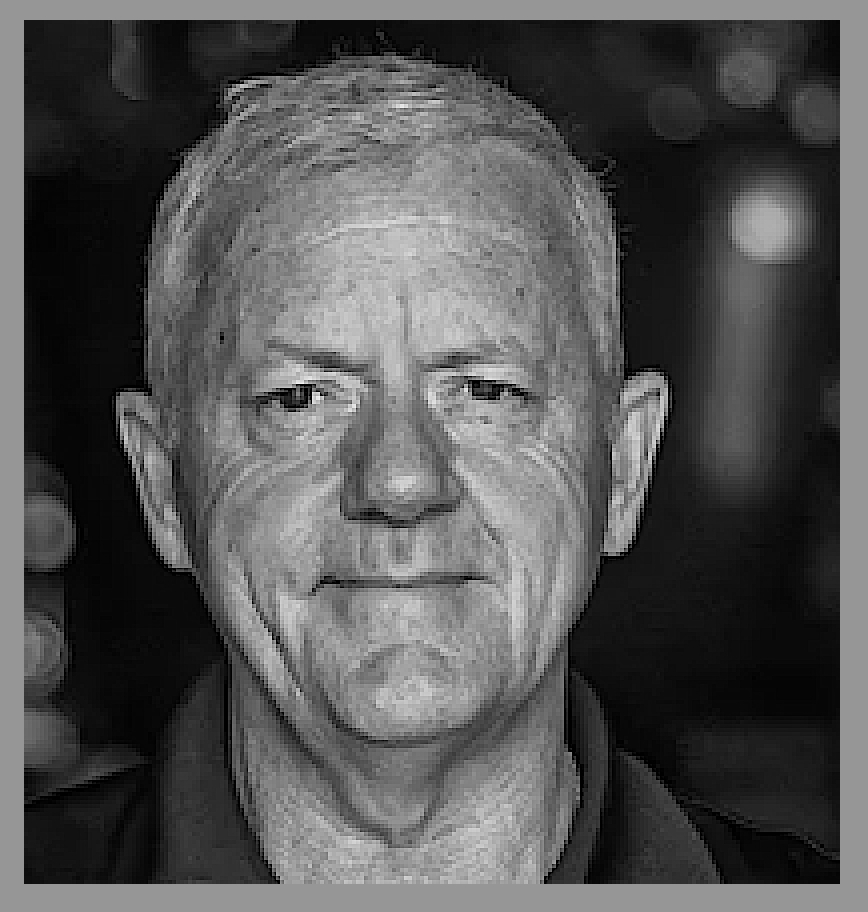
The sun was rising over Rio de Janeiro when Paul Bissett saw a sight that has remained with him across the decades. He was aboard a Royal Navy destroyer coming into port, with Copacabana Beach stretching along the water, Sugarloaf Mountain rising above the city, and the great figure of Christ the Redeemer looking down from its mountaintop. Bissett would accumulate plenty of other remarkable memories—meeting Queen Elizabeth, watching an Exocet missile come toward his warship during the Falklands War and miss, and later proposing to his wife from a hot-air balloon over Lake Tahoe. Yet that first view of Rio at sunrise remains one of the scenes he can still summon most vividly.
It was a long way from Blackness, the Scottish village where Bissett grew up. Born May 30, 1956, in Edinburgh, he was raised in Blackness in a large family with three brothers and four sisters. His mother, who stood just 4 feet 10 inches tall herself, had served during World War II as an aircraft spotter, identifying incoming aircraft during the Blitz so British defenses would know what they were facing. She later became a stay-at-home mother. His father was a long-distance truck driver. Most of the boys in the family eventually entered military service, while his sisters married and moved away except for one, who remained in Blackness.
Bissett was the smallest among his childhood friends, a circumstance that helped him discover an ability that would eventually become central to his working life. Self-preservation, he learned, could turn a small boy into a comedian. If he could make people laugh, he could change the dynamics around him. He became quick-witted, developed into a storyteller, and learned to use humor instinctively, although beneath the practiced public persona he remained fundamentally shy.
College was never part of Bissett's path. He joined the Royal Navy at 17 and ultimately spent 23 years in the service, serving aboard five warships and seeing combat during the Falklands War. His Scottish education also provided an unusual advantage during his early training. While other servicemen in his class were required to take remedial mathematics and English, Bissett was permitted to skip those classes. That gave him the opportunity to tour seized German vessels from the World War II-era, including one that had belonged to Hermann Göring.
The Navy also forced Bissett to confront his shyness. At one point he was made an instructor responsible for teaching more than 60 military students. He told his commanding officer that he could not do it. The answer, in effect, was that he was going to do it anyway. Standing before the class, Bissett told a witty story—the students laughed, something clicked, and public speaking ceased to be an obstacle. From then on, humor became his way through situations that once would have intimidated him. He eventually wrote a book about public speaking, and the same technique now forms an important part of his tours at Leiper's Fork Distillery.
His education in beverages began not with whisky but wine. In his early twenties, Bissett became a serious wine enthusiast, sampling wines from around the world and developing a particular affection for reds. When ulcers made wine impractical, he turned to beer and immersed himself in that subject instead. It established a pattern that has followed him throughout his life: when Bissett becomes interested in something, he studies it deeply.
Whisky, surprisingly, was not yet one of those subjects. Although Scotch had always been near, it had never been an important part of his life. That changed after he came to the United States. His Scottish background and unmistakable accent caused Americans to assume that he must know Scotch whisky, and eventually someone asked him to give a presentation about it. Bissett protested that he knew virtually nothing about Scotch. He was told, essentially, to fake it—the accent and Scottish background would carry him through.
Bissett took a different approach. He studied.
Then he combined what he had learned with the two things he already understood particularly well: history and humor. The presentation was a success, and what began as an assignment on a subject he barely knew became a major part of his life. He started writing a whisky newsletter and continued producing it for 12 years. He eventually became the author of 20 books, nine devoted to whiskey.
By then, Bissett's military career had also taken him far beyond Scotland. He left the Royal Navy in 1996 while he was in Saudi Arabia, where he was working in a military teaching position. There, in a bar, he met the American woman who would become his wife. After Saudi Arabia, the couple spent a short period in Taiwan before eventually settling in the United States. Bissett has a son and a daughter in Scotland from his first marriage and a stepson and stepdaughter in America.
Bissett and his wife came to the United States in 2000 and spent the next 20 years in California. His working life there was as varied as his military career. He became a professional firefighter in Vacaville and worked as a headhunter who located expert witnesses for litigation cases. He ran a jewelry store, trained food-and-beverage employees, helped people qualify as Bourbon Stewards, and taught a whiskey class at Auburn University. He and his wife also renovate houses.
Whiskey increasingly became the thread connecting his other pursuits. For approximately 15 years, Bissett had a side career as an associate brand ambassador for Glenfiddich and The Balvenie Scotch whiskies. During his final three years in California, he worked as a sales representative for a casino gaming company, but the amount of travel eventually became too much. He decided it was time to retire from that life and move south, where his money would stretch further.
Retirement, however, did not mean inactivity. Bissett contacted distilleries throughout Kentucky, Tennessee, and Alabama looking for a part-time position, and received more than 30 offers. One encounter settled the matter. In 2022, he met Lee Kennedy, founder and master distiller of Leiper's Fork Distillery outside Franklin, Tennessee. Bissett arrived for an interview, and Kennedy brought in the heads of all the distillery's departments. The conversation continued for more than two hours. By the time it ended, Bissett had been hired on the spot as director of tour guides.3
The job brings together much of what preceded it. His tours rely heavily on whiskey history, but humor remains just as important. The shy Scottish boy who discovered that laughter could protect him, and the reluctant Navy instructor who found his voice after making a roomful of servicemen laugh, now uses the same instinct to introduce visitors to Tennessee whiskey. His work has also brought appearances on television, radio, and podcasts, while Leiper's Fork itself has gained national attention, including recognition by Travel + Leisure among America's top 25 distilleries in America.
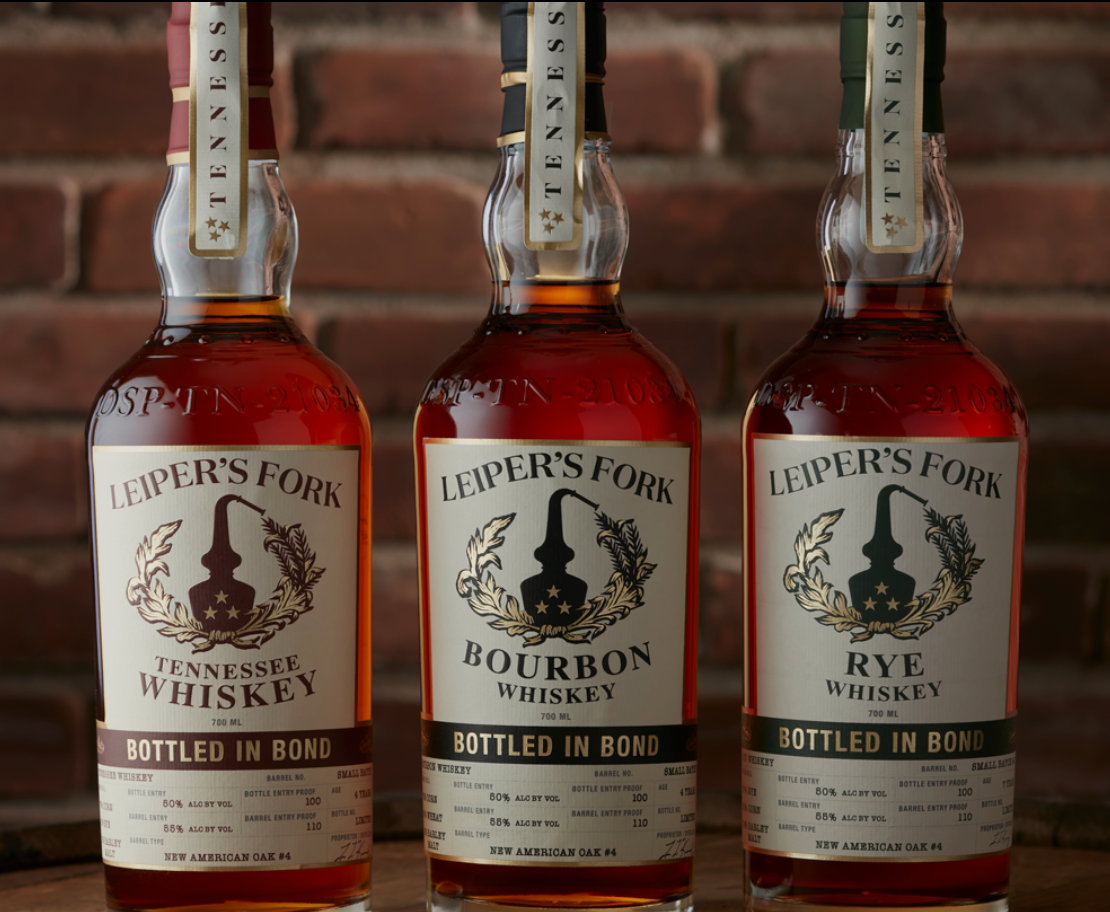
Among the distillery's whiskeys, Bissett considers Leiper's Fork Tennessee Bottled in Bond its best expression. In 2026, the whiskey received Best in Class honors at the ASCOT Awards associated with whiskey writer and critic Fred Minnick. For Bissett, however, working in whiskey extends far beyond what visitors see during a distillery tour. His day begins with whiskey. Each morning he reads articles about the industry and posts whiskey information on social media. In his spare time, he continues reading and writing about the subject. He currently has roughly 10 to 12 books framed out but unfinished, projects he is deliberately allowing to develop because writing, whiskey, and history remain labors of love rather than obligations to be rushed. He is also preparing a two-hour presentation devoted to Tennessee whiskey, tracing its history from the era of King Henry VIII to the present, and is writing a tour for Leiper's Fork's new Nashville Yards distillery. The work combines the same elements that have followed him from Scotland through the Royal Navy, California, and finally Tennessee: research, history, storytelling, and the ability to make an audience laugh.
At 70, Bissett has no particular desire to surrender the tour floor. He hopes that five or even ten years from now he will still be doing the work he does today. For a man whose life has included warships, firefighting, military classrooms, whisky ambassadorships, books, radio microphones, television cameras, and distillery tours, the route to Leiper's Fork was anything but direct. Yet the skills acquired along that route now converge every time Paul Bissett stands before another group of visitors, armed with a lifetime of stories, a formidable knowledge of whiskey history, and the sense of humor he first learned to use as the smallest boy in Blackness.
Acknowledgement: Special thanks to Paul Bissett for his invaluable insights and openness during the interview for this story, September 21, 2026
Photos courtesy Leiper’s Fork distillery website
Contributed by Tracy McLemore, Fairview, Tennessee