Jean-François Cloutier



Jean-François Cloutier was born in 1975 and raised in Quebec’s Bas-Saint-Laurent region, the vast territory bordering the lower St. Lawrence River east of Quebec City. Unlike many spirits producers who borrow ideas from established whisky regions, Cloutier and his future business partner, Joël Pelletier, looked first to the landscape around them. The maritime environment, agricultural resources, and traditions of eastern Quebec would become the foundation upon which they built their company, Distillerie du St. Laurent in about 2011.
Cloutier is married and has a daughter. He met his wife through his friend and colleague, Joël Pellatier. Their shared connection led the two men to bond over a mutual passion for fine spirits, and eventually go in partnership to build Distillerie du St. Laurent. However, in the early 2010s, the Canadian craft-distilling industry was still in its infancy, and Quebec’s whisky sector was even less developed. While the partners initially gained attention through other spirits, whisky was never far from their ambitions. From the beginning, they envisioned a distillery capable of producing a whisky that reflected the agricultural and maritime character of the Bas-Saint-Laurent. That decision was logical. The Bas-Saint-Laurent region possesses abundant fresh water and is one of Quebec’s most important barley-growing areas. Cloutier and his colleagues recognized that the ingredients necessary for whisky production already existed close to home. Rather than importing grain or attempting to imitate Scotch whisky directly, they sought to build a whisky program centered on local barley and local production. This commitment to regional authenticity would become one of the defining characteristics of the distillery’s whisky identity.
By the middle of the decade, the distillery had established enough commercial success to begin laying down whisky stocks. This was a significant step. Unlike gin, which can be sold shortly after production, whisky demands patience, capital, and faith in a long-term vision. Cloutier and Pelletier began filling barrels years before their first whisky would ever reach consumers. Their strategy reflected confidence, not only in their product, but also in the future of Quebec whisky itself.
One of Cloutier’s most distinctive contributions involved the development of a whisky designed specifically around the character of the St. Lawrence region. The distillery experimented with locally grown barley and explored methods intended to evoke regional traditions. Among the most notable initiatives was the effort to create a lightly smoked whisky inspired by the smoking techniques historically used by local fishers along the lower St. Lawrence. The goal was not to copy Islay peat or replicate Scottish methods, but to develop a flavor profile rooted in eastern Quebec. Such efforts reflected Cloutier’s broader belief that terroir could play an important role in whisky production.
As the whisky matured, the founders continued refining their ideas regarding aging. Cloutier became particularly interested in how the maritime environment surrounding Rimouski might influence maturation. Traditional whisky regions often emphasize warehouse conditions, seasonal temperature variation, and local climate. Cloutier believed that the St. Lawrence River itself could become part of the maturation process. The distillery eventually established barrel-aging facilities near the river, exposing casks to dramatic seasonal changes, coastal winds, and fluctuating temperatures. According to Cloutier, the objective was not to claim certainty about the outcome but to allow the whisky to absorb something unique from its surroundings.
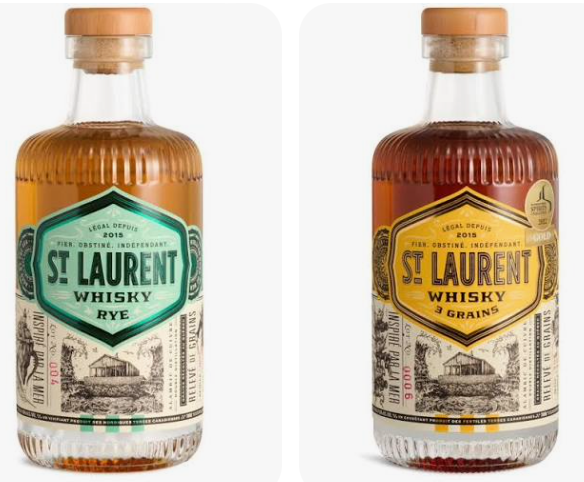
By 2019 and 2020, anticipation surrounding the distillery’s first mature whisky had become considerable. Industry observers noted that hundreds of barrels were already aging, and plans were underway for the release of whisky made primarily from Bas-Saint-Laurent grain. Commentators viewed Cloutier as a leader within Quebec’s emerging spirits industry, praising his willingness to innovate while remaining closely connected to regional agriculture. The forthcoming whisky represented not merely a new product but the culmination of years of planning and barrel maturation.
The following success of the distillery’s whisky program also helped demonstrate that significant whisky production could occur outside Canada’s traditional centers. For most of its history, Canadian whisky has been dominated by large industrial producers. Cloutier belongs to a newer generation that shows that smaller regional distilleries could create distinctive spirits with strong local identities. In doing so, he contributed to the diversification of Canadian whisky and helped broaden international perceptions of what Canadian whisky could be.
While much of his own personal history remains elusive, Jean-François Cloutier’s professional record is clear. As co-founder of Distillerie du St. Laurent, Cloutier helped create one of Quebec’s most ambitious whisky projects, championing a vision based on local grain, maritime maturation, and regional character. His work represents an important chapter in the emergence of modern Quebec whisky and in the broader evolution of Canadian craft distilling.
Sources:
Distillerie du St. Laurent, “Philosophy – Meet the Crew,” Distillerie du St. Laurent website, distilleriedustlaurent.com
Tabloid, “Joël Pelletier & Jean-François Cloutier: Après le gin, le whisky,” 3 January 2020, tabloid.co
Lionel Levac, “Après le Gin St. Laurent, le Whisky et l’Acerum,” Agro Québec, 7 May 2019, agroquebec.com
Tour du Québec, “La Distillerie du St. Laurent – Des spiritueux artisanaux ancrés dans leur terroir,” tourduquebec.ca
Vanessa Limoges, “Distillerie du St. Laurent: des barils qui vieillissent au rythme du fleuve,” TVA Nouvelles, 10 November 2022, tvanouvelles.ca
“Portrait – La Distillerie du St. Laurent,” La Virée du Saint-Laurent video interview featuring Joël Pelletier and Jean-François Cloutier, Facebook Video, 2016
“Distillerie St Laurent, Rimouski (2016),” YouTube video interview with co-founders Joël Pelletier and Jean-François Cloutier
Richard Woodard, “In Canada’s Whisky Scene, Everything Old Is New Again,” Whisky Magazine, 2022, whiskymag.com
Contributed by Tracy McLemore, Fairview, Tennessee