Yassem Méndez Capellán


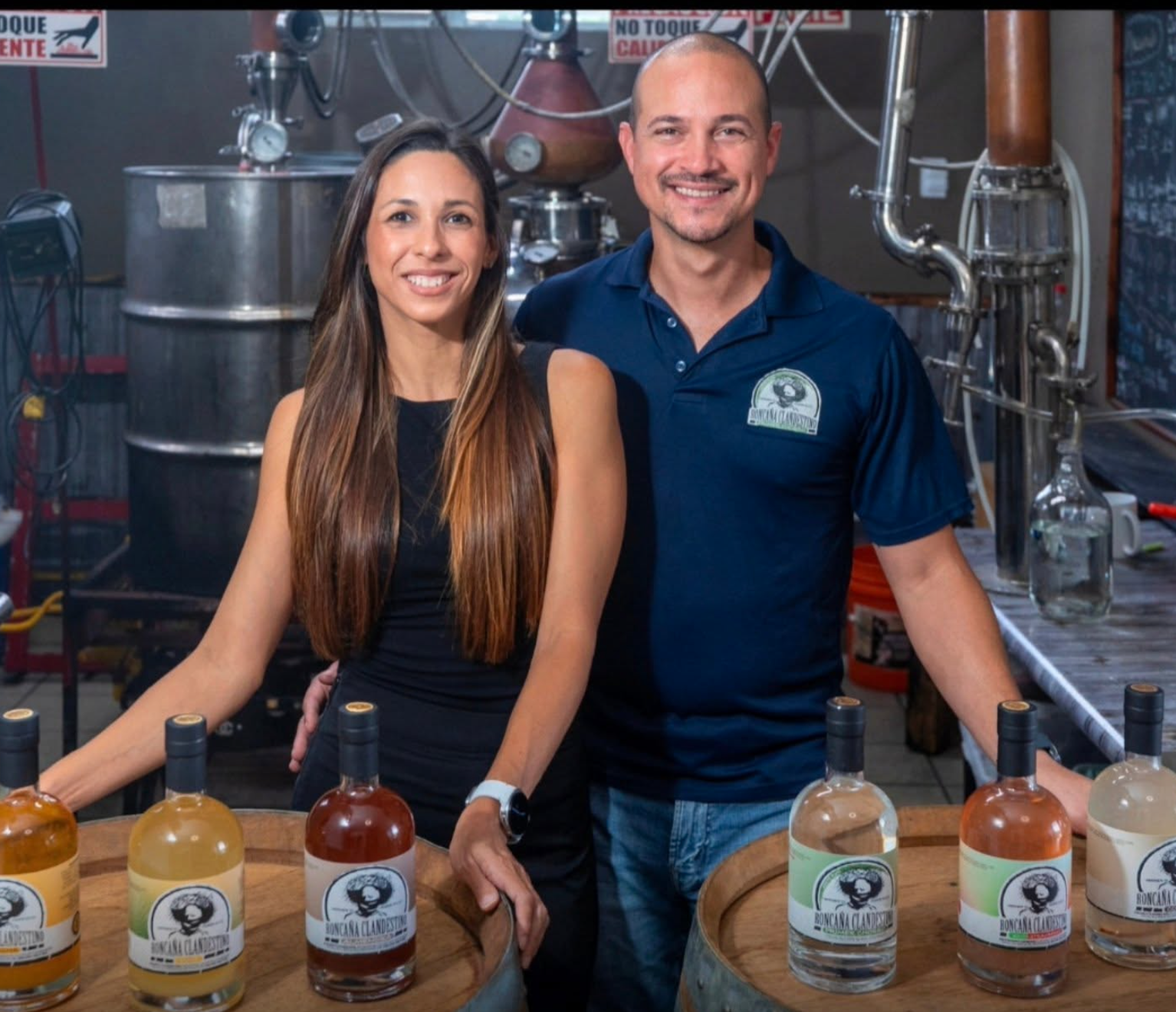
Yassem Méndez Capellán’s path into whiskey did not begin in a distilling school or an established family spirits company. It began in the Dominican Republic, where Méndez Capellán and his wife, Joann Morales Avilés, were studying medicine in 2019. Their professional plans were halted when their university unexpectedly closed, leaving the young couple without the institution through which they had expected to complete their studies. Faced with that uncertainty, they began developing the enterprise that became Destilería Capellán, a small distillery in the Jobos section of Isabela on Puerto Rico’s northwestern coast.
After that career plan change was necessitated, Méndez Capellán and Morales Avilés decided to create a distillery together, making their business the work of a married partnership from the beginning. Méndez Capellán serves as the company’s owner and president, while Morales Avilés is a co-owner and vice president. She participates in the commercial side of the operation and represents the company in discussions of its products, production standards, and use of Puerto Rican ingredients. The couple’s shared involvement has remained central as Destilería Capellán has progressed from a young microdistillery into a producer preparing one of Puerto Rico’s most historically significant grain spirits.
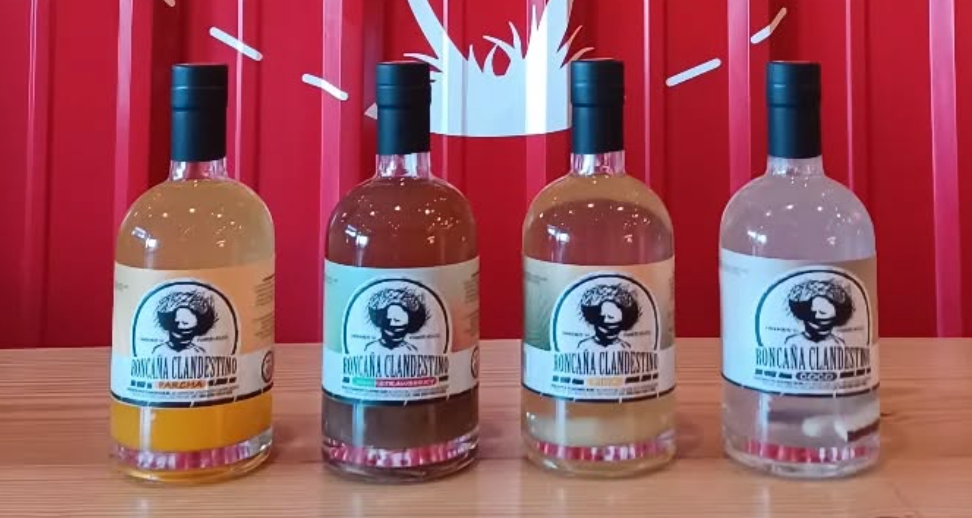
The business initially became known for Roncaña Clandestino, a 90-proof cane spirit rooted in Puerto Rico’s tradition of illicitly made ron caña. Although that product gave Destilería Capellán its first recognizable identity, Méndez Capellán eventually moved the operation into territory rarely explored by Puerto Rican distillers: malt whiskey. The project represented a substantial departure from an island spirits industry overwhelmingly associated with sugarcane and rum. Rather than sourcing mature whiskey from outside Puerto Rico, the couple undertook the longer process of producing a whiskey on the island and allowing it to mature under local conditions. That whiskey, named Isla, is made from 100% malted barley and is therefore a malt whiskey. In its creation, Destilería Capellán is applying Puerto Rican distilling experience to grain instead of cane and developing a whiskey identified with its place of production. Puerto Rico’s official tourism organization credits the distillery with becoming the island’s first producer of single-malt and single-barrel whiskey.
Making Isla obviously requires a different beginning from the couple’s cane spirits. Sugarcane supplies fermentable sugar directly, but barley contains starch that must first be converted into sugar before yeast can create alcohol. At Destilería Capellán, whiskey fermentation takes approximately seven days. The fermented liquid then moves into the distillation system, which employs stainless-steel tanks and copper in the production process. After distillation, the spirit is reduced with distilled water and checked with hydrometers to establish the intended bottling strength.
Maturation placed another set of demands on the young company. Destilería Capellán began aging the whiskey around 2023, nearly three years before the planned 2026 release. Its barrels are kept in a bonded warehouse under the controls imposed by Puerto Rico’s Treasury Department, which oversees distillation and bottling. This period in wood transformed the whiskey project from an experiment into a long-term business commitment: capital, labor, and distilled spirit had to remain tied up while the barrels matured.
While their first whiskey rested, Méndez Capellán and Morales Avilés continued building the company through its existing spirits and business-development programs. Destilería Capellán participated in Grupo Guayacán’s 2025 EnterPRize competition and emerged among the program’s winning businesses. EnterPRize combines entrepreneurial education, mentoring, coaching, and access to seed capital, giving growing Puerto Rican companies a structured means of strengthening their operations. The recognition placed the Isabela Distillery within a wider group of emerging island businesses selected for commercial promise, while the company’s membership in the Asociación Hecho en Puerto Rico reinforced its identity as a locally-based producer.
Morales Avilés has also helped articulate what the company considers essential to Puerto Rican distilling. In her capacity as vice president, she has emphasized production on the island, the use of local ingredients, and the avoidance of artificial syrups in the company’s cane spirits. Her public role demonstrates that she is not simply the founder’s spouse but an executive and spokesperson for the distillery. She and Méndez Capellán jointly appear at the center of the company’s history, from the interrupted medical studies that preceded its creation to its business competitions, established products, and movement into malt whiskey.
Destilería Capellán represents a decisive professional change that ultimately resulted in a rare and working grain-whiskey microdistillery in the Caribbean. By 2026, the husband-and-wife team founders had advanced beyond Puerto Rico’s familiar cane-spirit tradition and placed an island-made malt whiskey in barrels, bringing Yassem Méndez Capellán and Destilería Capellán to the threshold of releasing Isla as a grain spirit conceived, distilled, and matured in Puerto Rico.
El Nuevo Día, “Empresarios en Isabela elaboran whisky netamente puertorriqueño,” Sandra Torres Guzmán, May 4, 2026, elnuevodia.com
El Nuevo Día, “Conoce la Destilería Capellán, productores de Roncaña Clandestino,” May 3, 2026, elnuevodia.com
TeleOnce, “Ron y whiskey boricua: Un recorrido por la Destilería Capellán,” May 12, 2026, teleonce.com
Discover Puerto Rico, “Destilería Capellán”, discoverpuertorico.com
News is My Business, “Guayacán Opens EnterPRize 2026 with Workshops Across Puerto Rico,” April 7, 2026, newsismybusiness.com
Asociación Hecho en Puerto Rico, “Destilería Capellán”, hechoen.pr
Contributed by Tracy McLemore, Fairview, Tennessee