Dave DeFazio

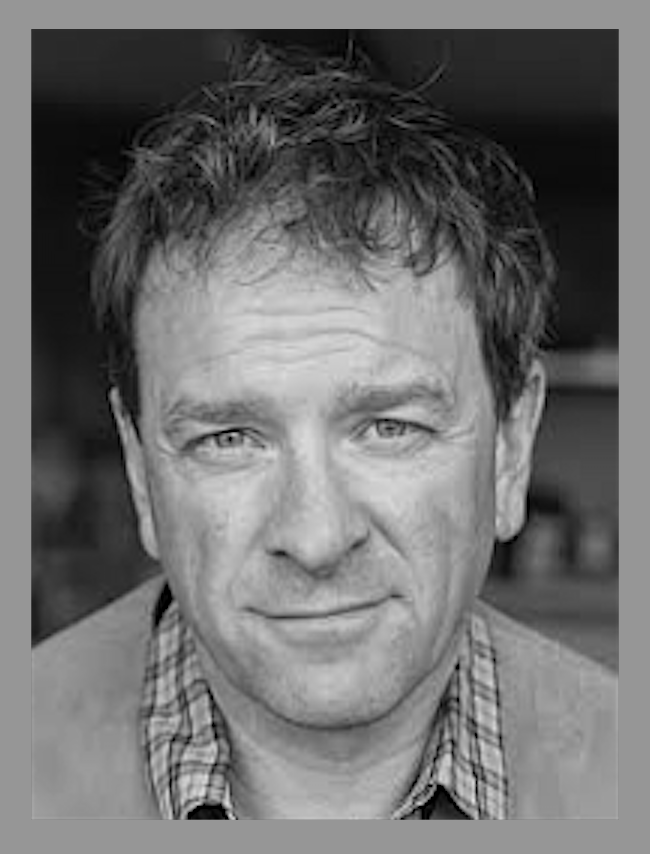
David F. DeFazio did not set out to become a whiskey maker. He was a lawyer, a New York native who came to Wyoming for its outdoors, yet he eventually established a legal practice in Jackson and remained there. DeFazio graduated from St. Lawrence University and later earned his law degree from The Catholic University of America’s Columbus School of Law. After law school, he worked for established Wyoming lawyers Brad & Kate Mead for three years before opening his own practice; the professional relationship became a close friendship, and in 2006, the Meads approached him with an unexpected proposition.
DeFazio, who was born in July of 1970, first came to Wyoming in the summer of 1992, fresh out of University. He was looking for a mountain escape for a year or so before he headed back to school for a law degree. DeFazio had never been to Jackson Hole before that time, but he had heard that the skiing and fishing, two of his favorite pastimes, were spectacular there. He worked as a river guide in the summer, and a ski lift operator in the winter, and before he knew it, a year and a half had elapsed before he finally set off for law school in Washington, D.C.
After law school, DeFazio decided to make a run by Jackson again, perhaps to make a little money before he set his permanent sights on San Francisco. The Bay City was where he determined that he would be provided with the professional connections which he needed to jump-start his fledgling career. He took the California Bar exam in July 1996, and rigged his truck for one last summer as a river guide in Wyoming.
Fate intervened, however, and DeFazio soon met Brad and Kate Mead. The Meads were well-known Wyoming lawyers who happened to be looking for a young attorney willing to assist in their law firm, but also to help out occasionally as a ranch hand, pulling calves, rounding up bulls and moving the herd between grazing pastures. DeFazio ended up staying with the Meads for three years, never quite making it to California. Fortunate, he admits, because he soon learned that he had failed the California Bar exam.
Though he still considered his good friends Brad and Kate Mead his mentors, after a few years, DeFazio decided to try navigating the legal waters on his own, and the DeFazio Law Office was soon formed. He now employs a full staff, and spends most of his time now promoting Wyoming Whiskey as the company’s Chief Operating Officer.
Wyoming Whiskey itself was founded during the time that DeFazio was working for the Meads. One day, Brad Mead called DeFazio into his office and told him that they wanted to make bourbon. “I laughed right in his face,” says DeFazio. After realizing that Brad was serious, DeFazio’s first task was to find people who actually knew how to make the spirit. None of the three had any distilling background, so they brought in Steve Nally, a veteran of Maker’s Mark with more than three decades of experience, to develop the recipe and production methods. The resulting whiskey program was built around Wyoming-grown grain and a distinctly Wyoming identity. The distillery in Kirby began production on July 4, 2009, and Wyoming Whiskey eventually released its first bourbon commercially in 2012 after three years of aging.
From the beginning, whiskey itself was the central proposition. Wyoming Whiskey’s stated mission was to make a premium whiskey using regional ingredients, and DeFazio emphasized the ability to trace its grain back to Wyoming farms. In a 2017 interview, he identified the company’s corn, winter wheat, winter rye and malted barley as non-GMO grains grown in the Big Horn Basin, while the distillery’s water came from a deep limestone aquifer near Manderson, Wyoming. The flagship bourbon was a wheated bourbon, and DeFazio made clear that bourbon would remain the company’s primary focus even as the distillery developed rye and other American whiskey expressions.
That philosophy also shaped DeFazio’s role. As Chief Operating Officer, he was responsible for the business surrounding production rather than the physical distillation itself. His duties included marketing, public relations, events, sales outreach and new-product development, while he also coordinated the different parts of the company from his office in Jackson, roughly four hours from the distillery. He advocated obtaining independent evaluations of the whiskey and packaging and, importantly, listening to criticism rather than allowing the founders’ attachment to their own work to determine what reached the market.
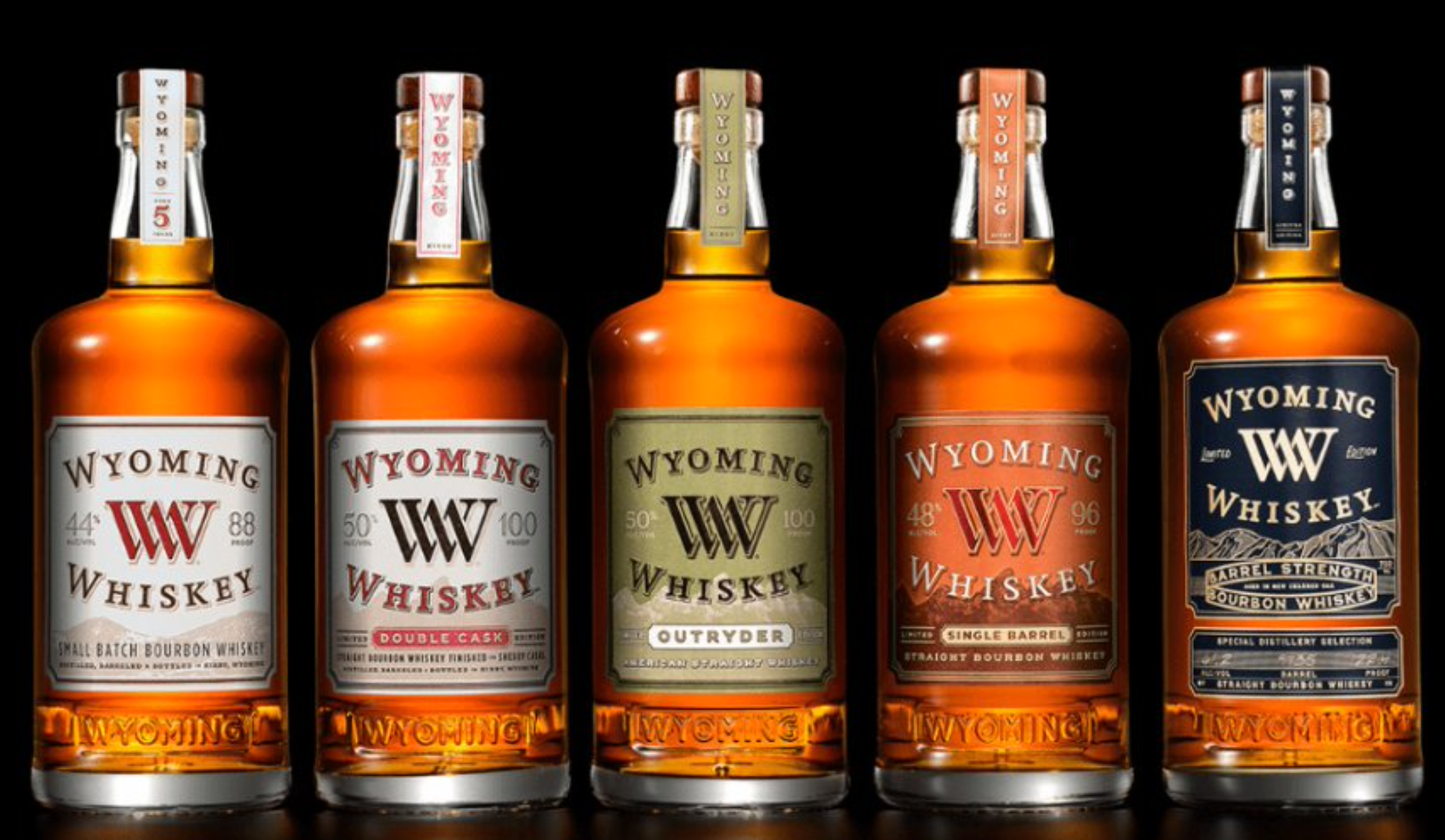
The whiskey portfolio expanded as the company accumulated mature stocks. In 2016, Wyoming Whiskey released Outryder, a bottled-in-bond straight American whiskey that represented the distillery’s first significant use of rye. Two separate mash bills went into the whiskey: one containing 48 percent winter rye, 40 percent corn and 12 percent malted barley, and another containing 68 percent corn, 20 percent winter rye and 12 percent malted barley. DeFazio had specifically directed that those whiskies be laid down in November 2011. Around the same period, Wyoming Whiskey developed Double Cask, a five-year-old bourbon finished in Pedro Ximénez barrels, demonstrating that the company could experiment with finishing techniques without abandoning bourbon as its core whiskey.
Wyoming Whiskey’s rapid growth eventually interested a major corporate partner. In September 2018, Scotland-based Edrington Group acquired a 35 percent stake in the company and assumed responsibility for sales, marketing, and distribution. At the time, the portfolio included several bourbon expressions along with Outryder Straight American Whiskey, and the partnership gave Wyoming Whiskey access to Edrington’s huge distribution infrastructure, while leaving whiskey production in Wyoming. The relationship deepened in 2023 when Edrington exercised an option to acquire another 30 percent of Wyoming Whiskey, bringing its total ownership to 80 percent and making it the majority shareholder. Then, in June 2026, the ownership story turned back toward Wyoming. WW Partners, LLC, an investment group led by DeFazio, re-acquired Edrington’s 80 percent stockholding in Wyoming Whiskey. And while financial terms were not disclosed, the transaction returned the company to full Wyoming ownership and ended the period in which Edrington held the majority interest.
The significance of DeFazio’s return to control is clearest when viewed against the whiskey itself. Wyoming Whiskey began with three lawyers and ranchers trying to answer a simple question: could Wyoming make a serious bourbon from its own local grain and water? Seventeen years after the company was founded, DeFazio and his partners proved the answer to that question was a resounding “yes”, then bought back the majority stake, putting the business once again under independent Wyoming-led ownership where they believe it should remain.
Sources
St. Lawrence University, “Chance Encounters, the Law, and Some Whiskey Business”, June 2020, stlawu.edu
Taste the Dram, “Getting behind what makes Wyoming Whiskey exceptional with David Defazio”, January 10, 2017, tastethedram.com
The Spirits Educator, “The Complete Guide to Wyoming Whiskey - Wyoming's First Legal Distillery,” Brian Donnelly, September 9, 2024, thespiritseducator.com
Whisky Advocate, “Macallan Parent Company Forms Strategic Partnership With Wyoming Whiskey,” Susannah Skiver Barton, September 6, 2018, whiskyadvocate.com
Jackson Hole News & Guide, “Lawyer Becomes Whiskey Conoisseur”, Melissa Cassutt, March 23, 2016, jhnewsandguide.com
Forbes, “Wyoming Whiskey Purchased By In-State Group And Co-Founder David DeFazio,” David Thomas Tao, June 29, 2026, forbes.com
Wyoming Whiskey official website, wyomingwhiskey.com
Contributed by Tracy McLemore, Fairview, Tennessee