
William Delme Evans
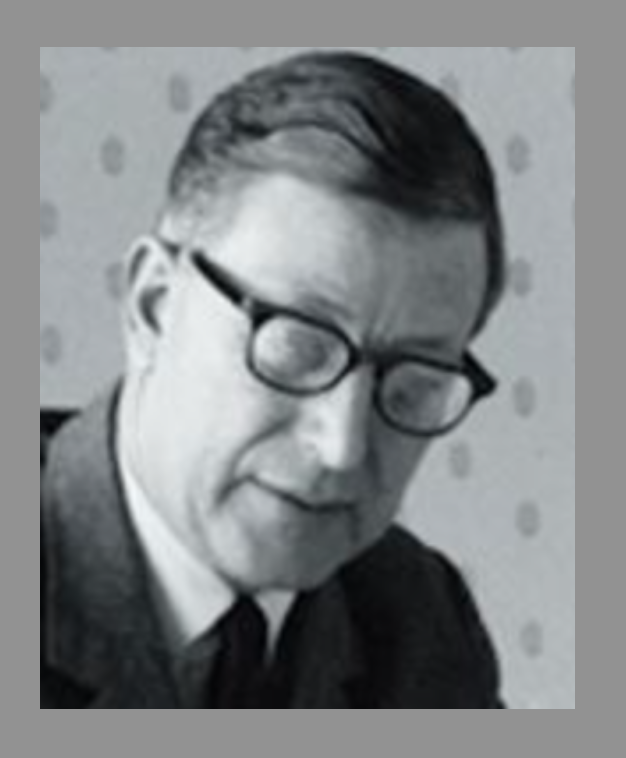

William Delmé Evans was born in July of 1919. He belonged to a small, stubborn tribe of twentieth-century figures who changed an industry, not by owning famous brands or writing tasting notes, but by designing the places where whisky could be made better. He was a Welshman whose career unfolded mostly in Scotland’s stillhouses and on building sites, where concrete, copper, water chemistry, and airflow influenced more than anyone had previously thought. He helped shape the look and logic of post-war Scotch distilling, especially through the distilleries most closely linked to his name: Tullibardine, Jura, and GlenAllachie.
As a boy of twelve, Evans toured Scotch distilleries, helped along by a school friend whose father worked as an Excise officer. Those visits taught him the discipline of distilling as a regulated craft: the rules that governed what could be built, what could be measured, what had to be recorded, and what would be rejected by the authorities. They also taught him something more intimate: that every distillery was a machine in a landscape, shaped by water supply, gradients, local fuel, and the cost of moving materials to remote places.
A few years later, Evans trained first as an agriculturalist, then as a surveyor, and he bought a farm in Northamptonshire, work that made him fluent in land, drainage, measurement, and the practical economics of rural property. Serendipitously, a bout of tuberculosis ruled out wartime service and other strenuous work, leaving him long stretches to study and plan. In that enforced stillness he turned toward the science and engineering of distilling, and he formed an ambition that would define his best-known projects: to build a modern distillery designed around gravity flow and efficiency. That opportunity arrived in the late 1940s with a disused brewery at Blackford in Perthshire. Delmé Evans learned of it through that same Excise connection from his schooldays, and he did something revealing: before he bought the building, he tested the water. A well still existed. He took a sample, sent it for analysis, and judged it “almost perfect for distilling.” By the end of the week he had purchased the site. This was engineering instinct: start with the water, and only then commit money to walls and equipment. From there he moved quickly, converting the former brewery into Tullibardine Distillery. He began the project in 1947, and by 1949 the distillery was completed and commissioned for production. The point was not simply to get stills running again, but to build a plant that wasted less energy and handled liquid in a controlled, rational sequence. Later descriptions of Tullibardine’s layout still highlight those choices: the production processes gathered efficiently, with design elements intended to maximize operational economy and heat use.
By 1953, he sold Tullibardine to the whisky brokers Brodie Hepburn. At that time, he described his health as fading again, likely from working too hard, and he returned home to recuperate. It is easy to miss the significance of that sale: he was not primarily trying to become a long-term distillery proprietor. He was proving that a distillery could be built differently, and then moving on, carrying the lessons of one site into the next. Three years later, the next call came from an entirely different kind of problem: depopulation. On the Hebridean island of Jura, two landowners, Robin Fletcher and Tony Riley-Smith, wanted to revive whisky-making to create local employment. The old Jura distillery at Craighouse had closed many years before, leaving only a “footprint” to work from, and Delmé Evans began designing a new distillery that would greatly increase capacity over what had existed before. He later recalled starting the design work during 1958, and by 1963, Jura distillery was commissioned.
Jura also reveals Delmé Evans’s temperament. A major building project on a small island is not merely a technical puzzle; it is a test of logistics, housing, labor, and community friction. He remembered hundreds of workers on the island at once, with extra construction for houses and a hotel, and he recounted the rough weekend conflicts that occurred between imported work crews and local life. This is the unglamorous truth of distillery “revival”: whisky is made in copper, but it is built in arguments, bruises, and budget lines.
Once Jura was operating, he served as its distillery manager until 1975. Alongside the day job, he applied the same practical impatience to travel that he applied to plant design. He built an airstrip on Jura, obtained a pilot’s license, and flew a Cessna 172 so that commuting between his home in Herefordshire and the island would not consume his working life. It is a telling detail about Delmé Evans: when distance threatened to slow him down, he did not merely complain about remoteness—he engineered a solution.

Cessna 172
After Jura, Delmé Evans was almost immediately pulled into the next surge of post-war Scotch expansion. Mackinlay McPherson, a subsidiary of Scottish & Newcastle Breweries, wanted a new Speyside distillery. Delmé Evans’s work became a chain of tasks that reads like a checklist for modern distillery creation: find a site, secure the water, design the buildings, calculate vapor velocities, design the stills, and plan the entire plant layout so that flow and energy use made sense. The result was GlenAllachie, which began production in 1968. GlenAllachie has continued to be described in terms that echo his original obsession: compact design, gravity-fed process, and distinctive condenser choices.
In the late Seventies, Delmé-Evans bought a farm in Herefordshire and he retired there, although he made frequent trips back to Scotland to see his distilleries at work. At the age of 70, typically of this most active and purposeful man, he took up golf, and invariably brought his clubs north with him to sample some of the Speyside courses. William Delmé Evans died in 2003. His legacy is not a single brand story, but a set of working distilleries that made the industry’s post-war expansion physically possible, and, in key respects, more efficient. He belongs in that rare category of whisky figures whose signature is not on the label, but in the layout of the rooms, the height of the stills, the way heat is captured and reused, and the way spirit travels through a building that was designed to let gravity do the heavy lifting.
Sources:
ScotchWhisky.com, “William Delme-Evans: Whisky Hero”, 02 Dec 2011
Whisky Magazine, “100 greatest whisky people”, Gavin Smith, 02 Dec 2011, www.whiskymag.com
The GlenAllachie official website, “25 Year Old”, www.theglenallachie.com
Undiscovered Scotland, “Tullibardine Distillery”, www.undiscoveredscotland.co.uk
Whisky for Everyone, “Tullibardine Distillery”, www.whiskyforeveryone.com
Contributed by Tracy McLemore, Fairview, Tennessee USA