Cam Ford

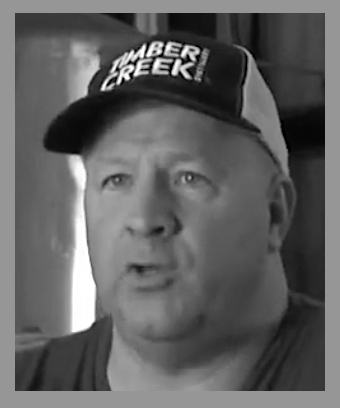
Camden E. Ford was born February 20, 1967, in Silver Spring, Maryland, and grew up in nearby Rockville, Maryland. After graduating from local Springbrook High School, he earned a Bachelor of Science degree in Electrical Engineering from the University of Maryland, followed by a Master of Science degree in that same field from Florida State University. Recognizing that technical expertise alone was not enough to build successful businesses, he later completed a Master of Business Administration at the University of Florida’s Warrington College of Business in 1996. Those three degrees equipped him with a combination of engineering, management, marketing, and strategic planning skills that would later become invaluable in launching a distillery from the ground up.
Following his education, Ford spent approximately two decades working in California's technology sector. During those years he held positions with companies including Intel, Hewlett-Packard, and Seagate, while also participating in numerous technology start-ups. His experience extended well beyond engineering into product development, product management, strategic planning, marketing, and business development. One of the start-up companies with which he was involved was ultimately acquired by Oracle, illustrating that his career included participation in ventures that achieved significant commercial success. Throughout those years, Ford developed a reputation as both an engineer and an entrepreneur, helping launch new technologies inside established corporations while also pursuing independent business opportunities.
Yet despite the professional rewards of Silicon Valley, Ford eventually sought a different lifestyle. He explained that the pace of life in California had become increasingly demanding as his family grew, and he and his wife, Kerri, had long planned to relocate permanently, perhaps to Florida's Emerald Coast. Kerri had grown up in nearby Fort Walton Beach, and the couple already owned a vacation home in the Destin area; although Ford could continue working remotely in technology, doing so would still require extensive travel. So rather than remain tied indefinitely to that schedule, he began searching for a career that would allow him to establish permanent roots in Northwest Florida while building something of his own. His search covered numerous possibilities before an unexpected suggestion helped point him toward distilling. A former Silicon Valley colleague sent Ford an article discussing the rapidly emerging craft distilling industry. Intrigued by the concept, Ford devoted considerable time to researching both the technical and commercial aspects of small-scale distillation. He concluded that market timing was favorable, particularly in the Florida Panhandle, where few craft distilleries then existed. Before committing significant capital, however, he decided to determine whether he could actually produce spirits of the quality he envisioned.
Ford constructed a small experimental still and began teaching himself the practical aspects of distillation. During this period he frequently shared samples with his next-door neighbor, Aaron Barnes, whose own interests included brewing and engineering. What began as casual conversations gradually evolved into a partnership. Barnes became increasingly interested in distillation, helping design equipment and discussing production methods, plant layout, and business strategy. Their complementary skills proved well-suited to the venture. Ford focused primarily on business development and long-range planning, while Barnes concentrated on production and distilling operations.
An unexpected yet friendly visit from agents of Florida's Division of Alcoholic Beverages and Tobacco, who had noticed Ford's online purchase of distilling equipment, accelerated their plans. Recognizing that they intended to pursue the craft seriously, Ford and Barnes decided to establish a fully-licensed distillery. Barnes's parents offered space in a large agricultural building on their family property near Crestview, Florida, providing an ideal rural setting for the new enterprise. the approach to the distillery is secluded yet stirring. The red clay road is lined with colossal pines, private driveways and deserted buildings. It was there that Timber Creek Distillery officially opened in 2014, taking its name from the Timber Creek Lodge located on the property.
From its beginning, Timber Creek adopted a philosophy that distinguished it from many other American craft distilleries. Rather than simply imitate Kentucky bourbon production, Ford and Barnes incorporated techniques commonly associated with Scottish malt whisky production. They selected traditional copper pot stills equipped with worm condensers, used roller mills instead of hammer mills, and employed lauter tuns to separate grain husks from the sweet wort before fermentation. Ford believed these methods reduced tannins contributed by grain husks while allowing the natural character of each grain to remain more pronounced in the finished whiskey.
But perhaps the distillery's most distinctive innovation was its grain-by-grain production system. Instead of fermenting and distilling a complete bourbon mash bill together, Timber Creek distilled corn, rye, wheat, and barley individually before blending the mature distillates. Ford maintained that this approach allowed far greater control over flavor development and consistency while highlighting the individual contribution of each grain. The distillery sourced as much of its grain locally from the Florida Panhandle as possible and utilized limestone-filtered water drawn from an on-site well, reinforcing its commitment to grain-to-glass production rooted in its own region.
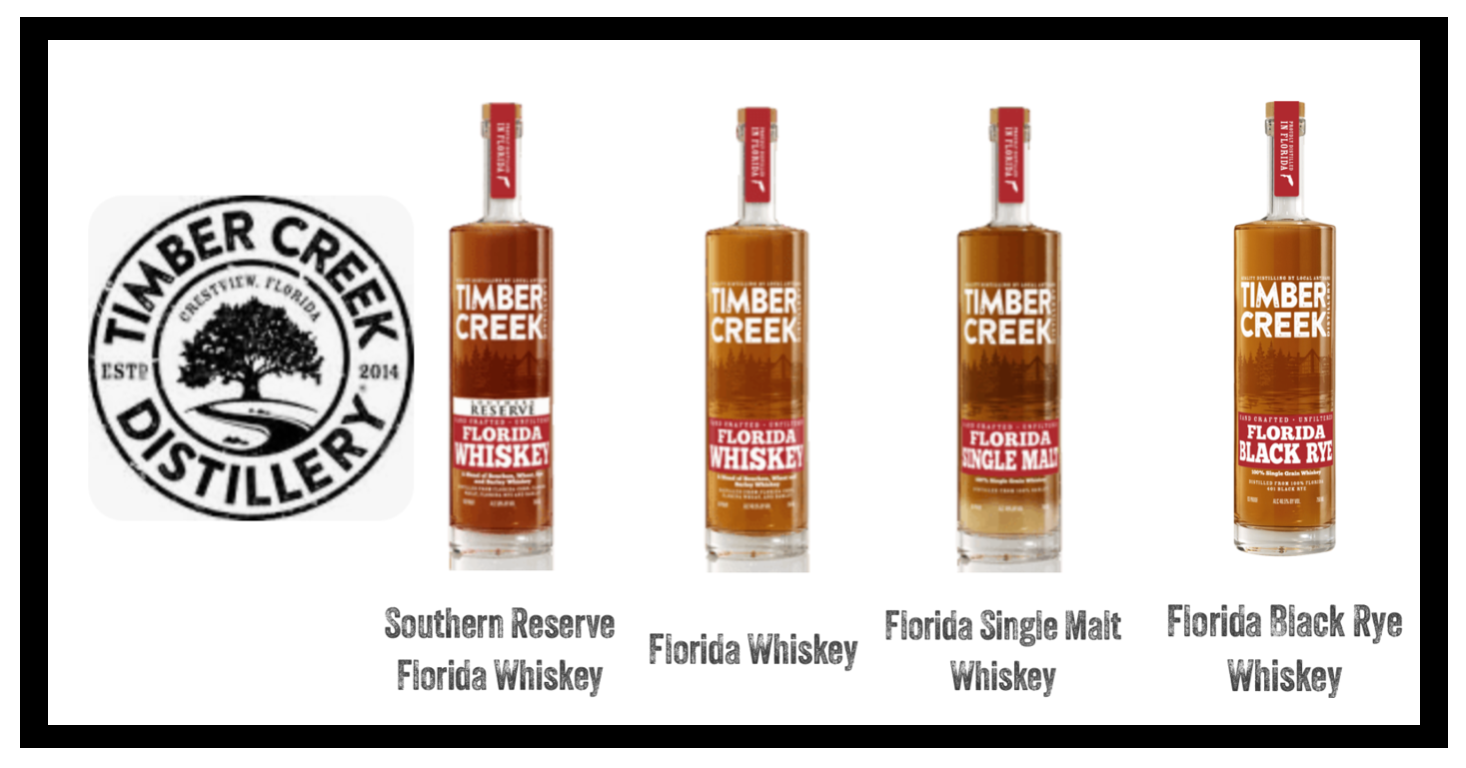
Although Timber Creek has produced rum, vodka, gin, and fruit brandies, whiskey has remained central to Ford's vision. The distillery's portfolio has included wheated bourbon, four-grain bourbon, rye whiskey made from Florida-grown black rye, and more recently an American single malt whiskey. Aging takes place in new charred American oak barrels under Florida's warm and humid climate, where higher average temperatures accelerate interaction between spirit and wood. Rather than market his flagship bourbon simply as bourbon, Ford frequently emphasized its identity as "Florida Whiskey," highlighting the influence of local agriculture, climate, and production philosophy on the finished product.
Meanwhile, the distillery has also became known for emphasizing public education. Tours allow visitors to observe active grain-to-glass production rather than merely viewing display equipment, while blending experiences introduce guests to the role individual grain distillates play in creating bourbon. By combining engineering precision, entrepreneurial experience, and a willingness to challenge conventional production methods, Cam Ford helped establish Timber Creek Distillery as one of Florida's notable grain-to-glass whiskey producers. His career illustrates that the contemporary American whiskey revival has been driven not only by multigenerational distilling families, but also by innovators willing to apply expertise from entirely different professions to the centuries-old craft of making whiskey.
Sources:
Timber Creek Distillery official website, timbercreekdistillery.com
VIE Magazine, "In Good Spirits”, Rinn Garlanger, May 19, 2016, timbercreekdistillery.com
850 Business Magazine, “Tallahassee…New Craft Distillery”, Matt Algarin, December 13, 2016, 850businessmagazine.com
Contributed by Tracy McLemore, Fairview, Tennessee