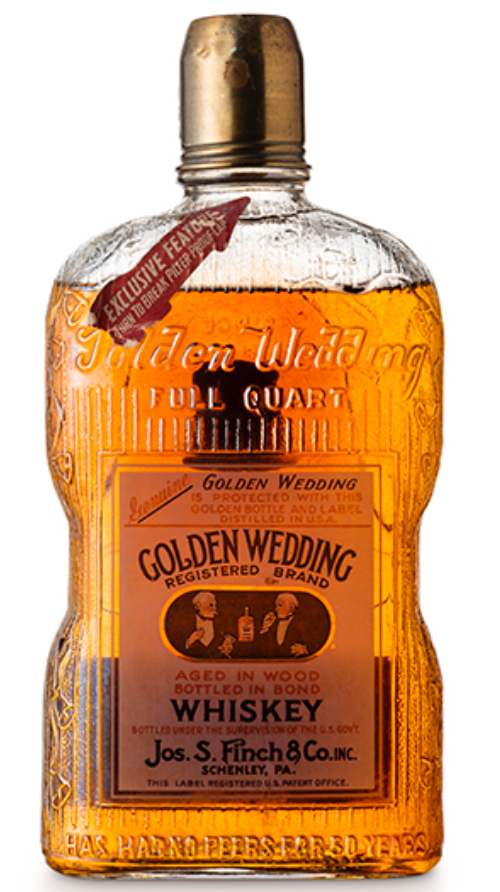
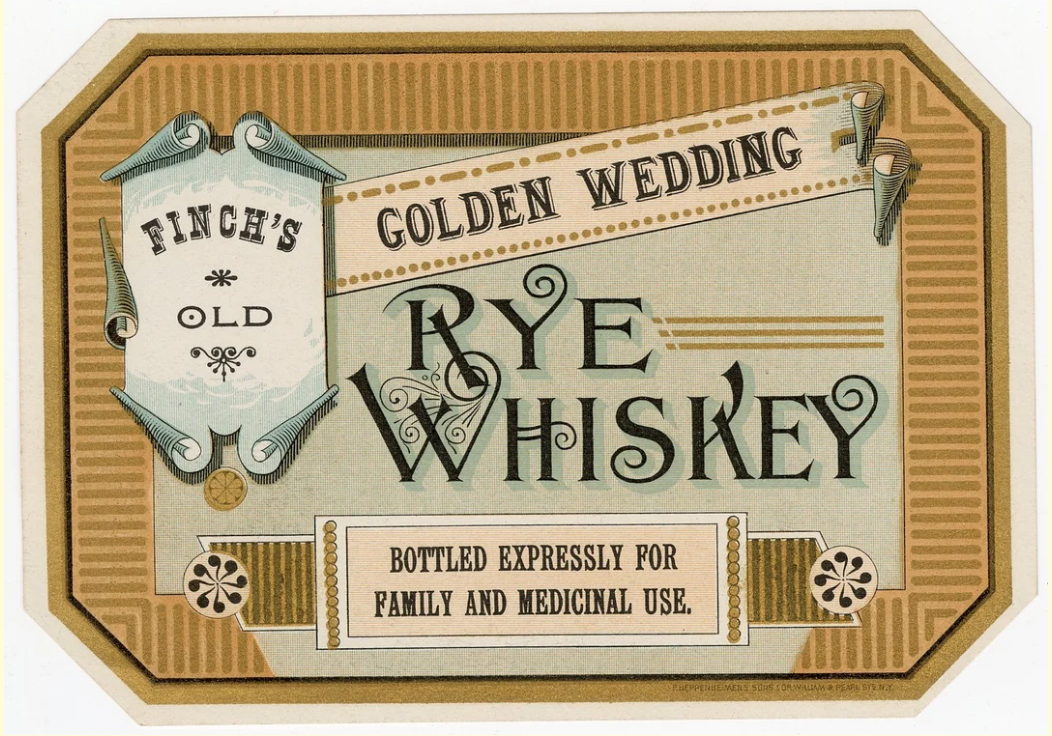
Joseph S. Finch

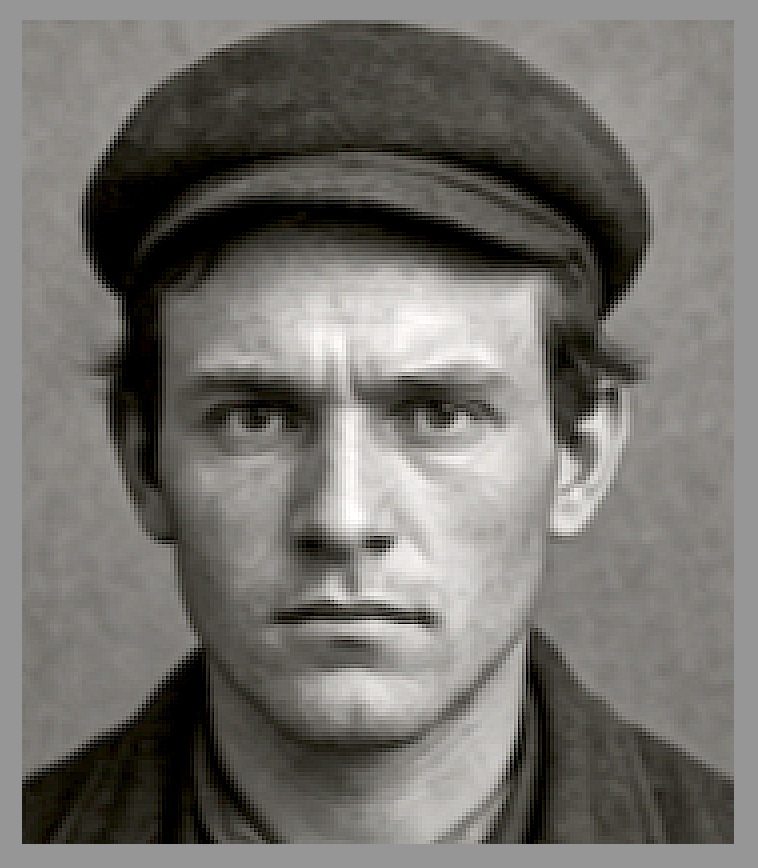
There are no actual photographs of Joseph S. Finch in existence. Above is an AI-generated image of Finch based on details known about his life.
Joseph S. Finch was born in Pennsylvania in 1839, at a time when western Pennsylvania was developing into one of America's most important whiskey-producing regions. The Pittsburgh area, with its access to grain, waterways, and expanding commercial markets, provided opportunities for distillers who could combine whiskey production with effective distribution. Finch became one of those entrepreneurs, establishing a business whose Golden Wedding Rye Whiskey would eventually achieve national recognition and remain commercially important long after his death.
Little information survives concerning Finch's childhood, parents, siblings, or formal education, but in 1859, when he was 20 years old, he married Elizabeth J. Moore, daughter of Thomas Moore, an established Allegheny County distiller. Moore owned a distillery known as Possum Hollow and operated another distilling establishment on First Avenue in Pittsburgh. Finch then entered the whiskey business through his father-in-law's enterprise, acquiring experience in an industry that would define his professional life.
By the middle of the 1850s, the origins of the distilling enterprise subsequently associated with Finch were taking shape. In 1856, Finch established his own enterprise, the Joseph S. Finch Distillery. It was a relatively modest facility, capable of mashing approximately 100 bushels of grain daily. There, Finch participated directly in both production and whiskey sales, though he was managing a business considerably smaller than the industrial-scale distilleries that would later dominate Pennsylvania's whiskey industry. But as business increased, Finch recognized the advantages of partnership and expanded production. So in 1867, he joined forces with John W. Painter, another Pennsylvanian. Painter came from Westmoreland County and had attended educational institutions in both Pennsylvania and Ohio. Their partnership combined the resources necessary to transform Finch's comparatively small operation into a substantial commercial distilling enterprise. The following year, Finch and Painter moved their operations to a new location near McKean Street and the Monongahela River in Pittsburgh. There they constructed a three-story brick distillery with substantial wooden structural supports and heavy doors. The business operated as Joseph S. Finch & Company and received federal designation as Distillery No. 4 in Pennsylvania's 23rd Internal Revenue District. The riverside location connected the growing enterprise with Pittsburgh's established commercial and transportation network. The company's most enduring achievement was the introduction of Golden Wedding Rye Whiskey, a brand whose origins date to 1869. Golden Wedding became closely associated with Pennsylvania rye whiskey, particularly the Monongahela tradition that had established a strong reputation in American markets. Finch's enterprise distinguished its product through a memorable name and consistent commercial identity. The whiskey subsequently became sufficiently successful to support expansion well beyond the capacity of the original distillery.
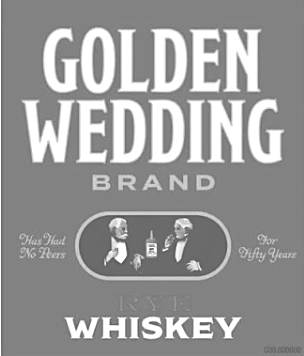
The Golden Wedding name was particularly effective because it connected a commercial product with a familiar celebration of longevity. Later labels employed anniversary imagery, including elderly figures raising glasses in a toast, reinforcing the connection between the whiskey and the traditional fiftieth wedding anniversary. The company also marketed other expressions, including Golden Wedding Pure Rye and, in later years, Finch's Red Satin. Golden Wedding, however, became the product most closely identified with the Finch name.
Finch’s partnership with Painter prospered during the 1870s as Pennsylvania whiskey producers competed for expanding regional and national markets. Pittsburgh business directories documented Joseph S. Finch & Company as an established whiskey enterprise, with listings continuing for decades. Its commercial operations involved both distilling and the wholesale whiskey trade. The company's continued expansion demonstrated the growing importance of recognizable brands in an industry where producers increasingly competed beyond their immediate communities.
Finch's personal life was marked by an early loss when his wife, Elizabeth, died in 1877 at only 37 years of age. Joseph S. Finch himself died only seven years later in 1884 at only 44 years of age. He was buried beside Elizabeth in Allegheny Cemetery. His death ended a relatively brief entrepreneurial career, but the whiskey enterprise he established continued under the management of John Painter and James G. Pontefract, who acquired Finch's interest in the company. The new partnership retained the Joseph S. Finch name, preserving its established commercial recognition.
In 1884, the company registered several variations of its Golden Wedding trademarks, including Golden Wedding Whiskey and Finch's Golden Wedding Rye. Under subsequent ownership, the distillery's production capacity eventually increased to approximately 1,000 bushels of grain daily, with whiskey production averaging 4,000 gallons per day. Warehouse capacity expanded to tens of thousands of barrels, reflecting a business considerably larger than the one Finch had personally managed. By 1911, the enterprise was valued at approximately $200,000 to $250,000 in Mida's Financial Index (about $8m in 2026).
The Golden Wedding name survived Prohibition through the acquisition of the Finch enterprise by Lewis Rosenstiel, whose Schenley organization became a major force in American whiskey. Golden Wedding subsequently appeared as a blended American whiskey and, beginning in 1948, as a Canadian whisky. Its identity evolved substantially from the Pennsylvania rye whiskey Finch had introduced in the nineteenth century. Nevertheless, the Joseph S. Finch name continued appearing on Golden Wedding products many decades after its founder's death.
Joseph S. Finch's career lasted only about two decades as an independent whiskey entrepreneur, yet his principal creation survived successive owners, changing production methods, Prohibition, and the transformation of the American whiskey market. His most significant contribution was the establishment of a distilling enterprise and a whiskey brand capable of retaining commercial value long after his lifetime. Golden Wedding remains part of the historical record of Pennsylvania rye whiskey, while Finch's name identifies one of the entrepreneurs who helped establish Pittsburgh's nineteenth-century distilling industry.
Sources:
Those Pre-Pro Whiskey Men!, “Finch to Painter to Pontefract Produced ‘The Golden Wedding’”, Jack Sullivan, January 31, 2015, pre-prowhiskeymen.blogspot.com
Bourbon Veach, “Brand History: Golden Wedding Rye”, Michael R. Veach, August 8, 2022, bourbonveach.com
Bourbon Veach, “Images of the Past: The Joseph S. Finch Distillery, Schenley, Pennsylvania”, Michael R. Veach, August 14, 2020, bourbonveach.com
Pre-Pro.com, “Jos S Finch & Co., Pittsburgh, PA (1873–1918)”, pre-pro.com
Los Angeles Whiskey Society, “Value of Old Overholt Rye Whiskey and Other Monongahela Whiskeys”, lawhiskeysociety.com
National Park Service, “National Register of Historic Places: George T. Stagg Distillery”, historical registration documentation, npgallery.nps.gov
The Elks Magazine, “The House of Schenley”, April 1936, elks.org
Contributed by Tracy McLemore, Fairview, Tennessee