John Grant

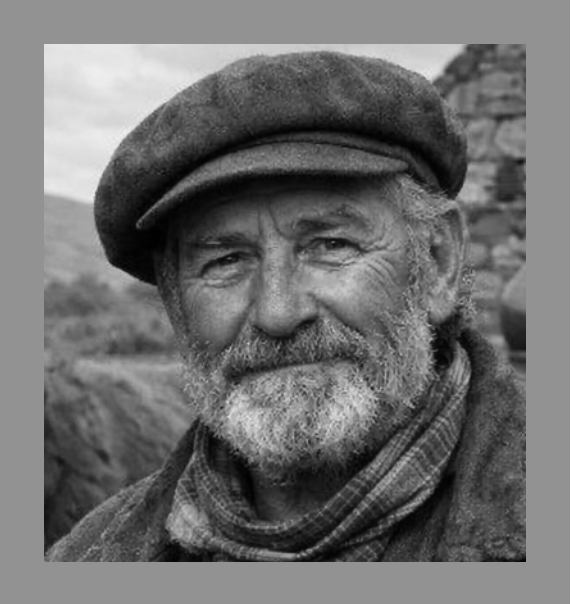
No known photo of John Grant exists. Above is an AI-generated image based on facts known about his life.
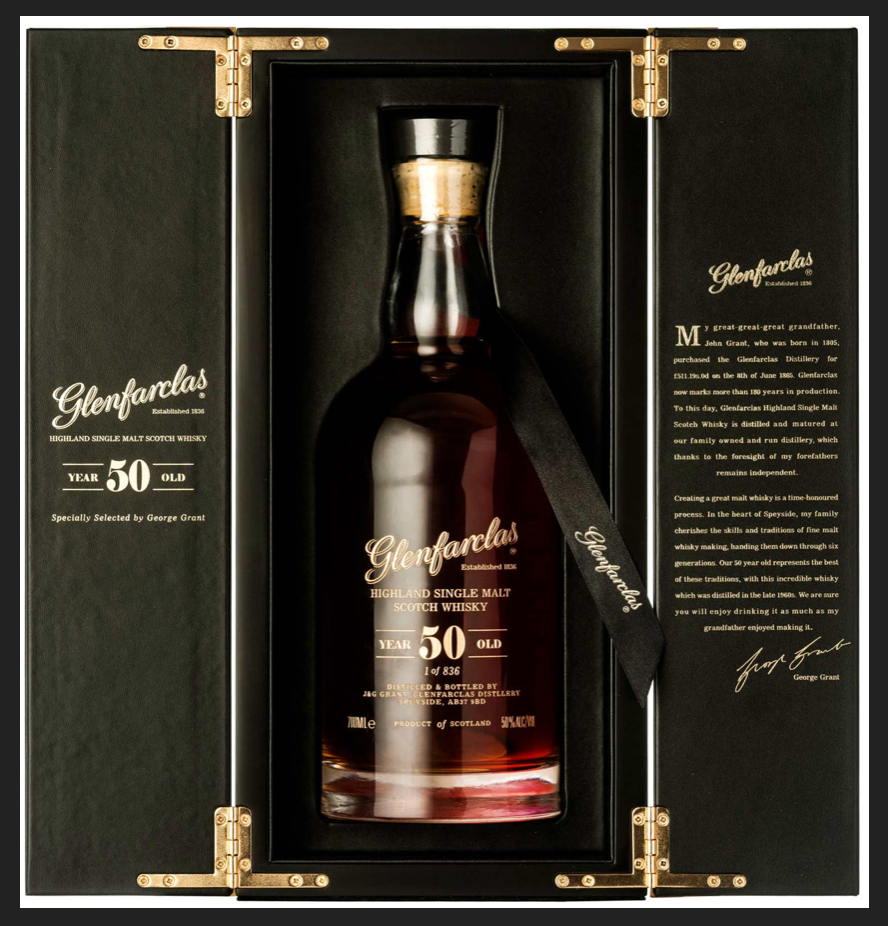
John Grant was born in 1805 on Lynbeg Farm in Glenlivet, in a part of Scotland where farms, tenants, and estate agreements then shaped the limits of a family’s future as surely as the weather did. From early on, Grant was a highly successful farmer and breeder of Aberdeen Angus cattle. As an adult, he lived at Blairfindy Farm, only a short distance from where he had been born. Near that property was Rechlerich Farm, known locally not only for its enviable grazing land and location in Speyside, but also because a distillery, Glenfarclas, (which means “valley of the green grass”), had been established in 1836 under earlier tenancy by the Hay family. Rechlerich became available for sale, and Grant’s attention quickly turned from what he already owned to how he might position his family’s long-term security. So he bought the land and buildings on 8 June 1865, and for both the farm and the distillery, paid only £511 (about $25,000 USD in 2025), an astoundingly small sum for such a purchase, even for those days.
Some 37 years before that purchase, on 2 December 1827, John Grant had married Barbara Grant in Inveravon parish, Banffshire. As was not uncommon in those days, the couple were distantly related, and the marriage tied together two local Grant lines, but it also anchored the household that would eventually carry Glenfarclas forward through multiple generations. Together John and Barbara had six children. Their oldest, George G. Grant, born in 1830, would become central to the distillery’s next chapter. However, for the first two decades following the Rechlerich purchase, John Grant’s life remained rooted only in agriculture, outsourcing the whisky-making to his cousin, a local distiller named John Smith. He was, after all, not a trained distiller; he was a cattle farmer with capital, credibility, and a practical reason to be interested in the lush green property on the Ballindalloch estate.
Over the next decade, though, Grant slowly came round to the idea of distilling whisky on-site, the decision helped along because in 1870, John Smith left Ballindalloch to establish what would become Cragganmore distillery. At that point, John went into full partnership with his now adult son George in running Glenfarclas more directly. From that point forward, John’s role reads less like a landlord-farmer with a distilling sideline and more like a proprietor committed to building a reputation for the spirit coming out of his stills. The father-son duo immediately set to make their mark on the distillery, increasing production and expanding their local market. It was also during this period that Glenfarclas transitioned from mostly selling whisky to blenders, into beginning to establish itself as a single malt brand.
When John Grant died in October 1889, he left both the distillery and cattle farm to George, continuing the family line of control rather than allowing Glenfarclas to drift into outside hands. John’s death did not close the story at all, but instead, set a pattern: ownership passing through family succession, with continuity treated as a strategy rather than a sentiment. George, however was to unexpectedly die the following year of 1890, and, following that tragedy, his own sons, also named George and John, began to operate the distillery. John and George Grant quickly established The Glenfarclas-Glenlivet Distillery Co. Ltd, holding a 50% interest in partnership with Pattison, Elder & Co. of Leith. The brothers immediately set out modernizing the distillery, as the original farm/distillery was demolished and rebuilt as a modern Victorian distilling plant in about 1896.
However, the Glenfarclas-Glenlivet Distillery Co. Ltd partnership dissolved abruptly in 1898, a result of the infamous Pattison Whisky Crash which left partners Pattison, Elder & Co. bankrupt and the Grants in a dire financial predicament. Committed to rebuilding Glenfarclas’ financial stability John and George Grant reformed J & G Grant Ltd., acquiring the Pattison interest in the distillery, although combined with the cost of rebuilding work Glenfarclas only survived by mortgaging and selling whisky stocks to R.I. Cameron, an Elgin whisky broker. Nevertheless, in about 15 years, Glenfarclas’ financial future was finally secure, and the distillery’s whisky had by then attained a stellar reputation as a high-quality malt. In this turbulent time, Glenfarclas’ Spirit of Independence had also been born, which saw the Grant family commit to the principle of keeping Glenfarclas as an independent family owned and operated distillery indefinitely, no matter what the cost.
1914 saw John Grant retire from the business due to ill-health, and his brother George continued alone. When George died in 1949 his own sons, also named John and George took on the distillery. During the next three decades the distillery was substantially rebuilt and expanded, with sales increasing significantly and a strong export presence being established. The present John Grant took over the chairmanship of the company on the death of his father, George, in 2002.
The fascinating and, at times, troubling, events of the last 170 years at Glenfarclas all stand on the foundation a talented cattle breeder named John Grant created: a distillery purchase initially made mostly for the grassy grazing acreage, then a subsequent secondary decision to distill. In the end, five continuous generations of male heirs as distillers, all named either John or George, and all determined to keep their inheritance strongly tied to the family unit from whom it originated. The resulting transition plan has kept Glenfarclas strong and independent when many distilleries in a weakened position became absorbed into larger, non-family units.
John Grant’s legacy is, that, by the time of his death, he had put in place the practices and values that shaped the distillery’s long-term direction. His sons, his son’s sons, and now their grandsons have continued to carry that work forward without interruption, remaining closely involved across the generations. Today, Glenfarclas Distillery stands as a highly respected private, independent producer of premium spirits, grounded solely in the foundation John established nearly 170 years ago.
Sources:
Whisky Magazine, Issue 24, “Glenfarclas Distillery is a family affair”, 16 Jul 2002, John Lamond, www.whiskymag.com
Difford’s Guide, “Glenfarclas Distillery/J&G Grant”, diffordsguide.com
whisky.com, “Glenfarclas distillery profile and history”
Vinfolio editorial, “Glenfarclas Distillery: Family first”, 18 March 2020, vinfolio.com
LoveScotch, “House of the Glenfarclas Grants”, lovescotch.com
Contributed by Tracy McLemore, Fairview, Tennessee USA
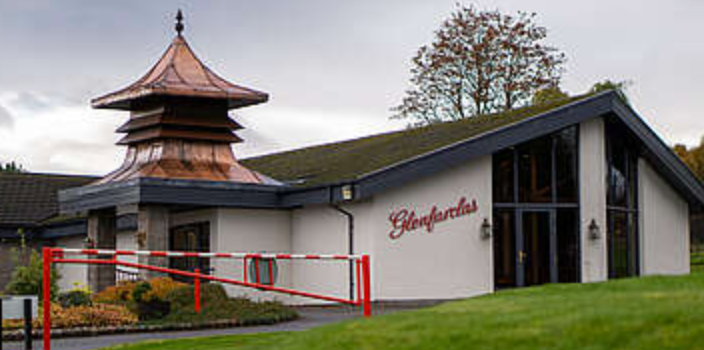
Glenfarclas Distillery, present day