Brandon Howard

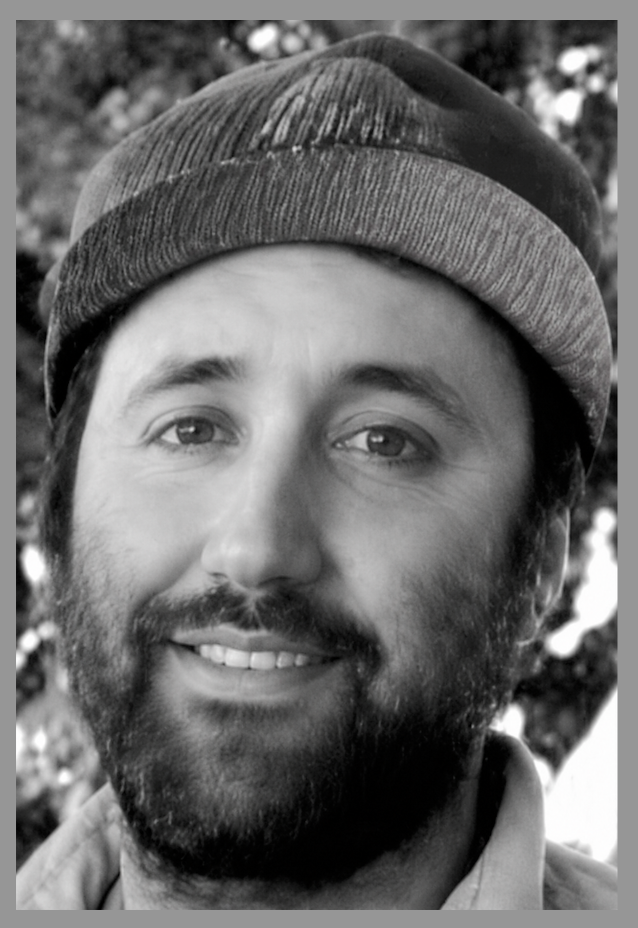
Brandon P. Howard was born in June of 1982, and while not much of early life is widely documented, it is known that he attended the University of Alaska-Fairbanks, and majored in Chemistry. He then transferred to the University of Alaska-Southeast, graduating in 2005 with a BS in Biological Oceanography. Much of Howard’s spare time during that period was spent homebrewing beer, but soon he became engrossed by the parallel between brewing and distilling—particularly the fact that malt whiskey begins, essentially, as an unhopped beer. Howard pondered: if American craft brewers could experiment with different malts, yeasts and fermentation techniques, perhaps a distiller could bring the same creative approach to single malt whiskey. His fascination about that relationship led him through an internship at Westland Distillery in Seattle, a distillery that was one of the early leaders in the emerging American single malt movement.
By 2014, Howard had decided to try distilling as a career. He shared that ambition with Maura Selenak, who quickly became his business partner (and three years later, his wife). At that point, the couple lived in an off-grid home outside Juneau and enjoyed making cocktails and entertaining friends. They briefly entertained the romantic notion of moving to Scotland and working at a distillery, but ultimately decided to build something of their own there in Alaska. Together, the couple spent roughly two and a half years planning their distillery before opening its doors.
In 2016, Howard and Selenak leased space in downtown Juneau, in a historic building constructed in 1937 for Alaska Electric Light & Power. The building offered an unusually valuable feature for a working distillery: a large freight elevator capable of carrying heavy equipment and materials between the street level and the roughly 10,000-square-foot basement. Howard later said that the elevator effectively made the business possible. The production equipment included a 250-gallon Vendome still, deliberately positioned where pedestrians could see it through the building’s large windows.
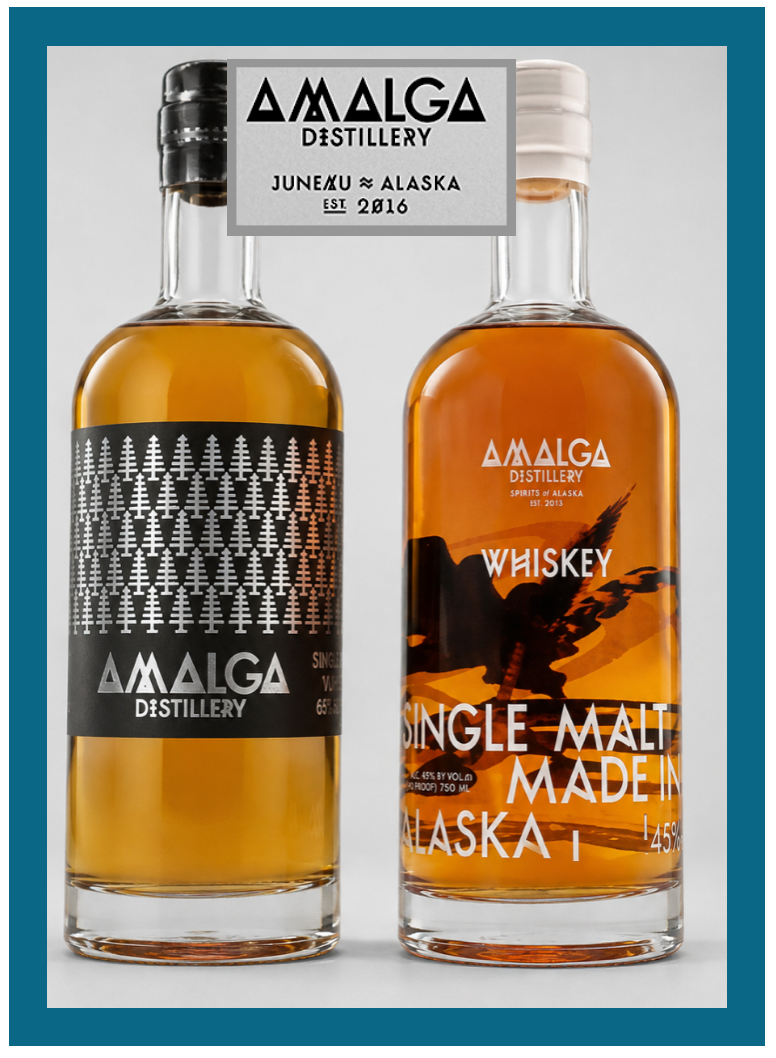
Whiskey was part of the plan from the beginning. Howard intended to manufacture single malt whiskey using only Alaska barley, wheat and rye. Because whiskey required years in barrels, however, he would need products that could be sold sooner while its whiskey matured. Soon, the distillery had a name, Amalga, which means a mix, fusion, or bringing together of different elements. When Amalga’s tasting room opened in the summer of 2017, Howard’s Juneauper Gin consequently became its most immediately visible spirit, while barrels of whiskey quietly aged below the tasting room.
Howard’s whiskey education then extended beyond the United States. He travelled to Scotland and completed a brief apprenticeship at Kilchoman Distillery on Islay, where he observed a traditional production system encompassing barley, malting, peat kilning, fermentation and distillation. Kilchoman’s influence became particularly evident in Amalga’s heavily peated whiskey, yet Howard had no intention of reproducing Scotch whisky in Alaska. He simply applied lessons which he had learned in Scotland, at Westland and through brewing, to develop his own single malt style at Amalga. Howard’s original concept was to treat the brewing stage of whiskey production as an opportunity rather than merely a preliminary step before distillation. Amalga had worked with pale, crystal, honey and chocolate barley malts before, each with their own different fermentation characteristics to produce flavors before the spirit ever entered a barrel. Since then, some of his batches have used Golden Promise barley, while peated releases have incorporated Scottish Bairds Heavy Peat malt. This willingness to manipulate malt bills and fermentation gives Amalga’s whiskey a connection to American craft brewing while retaining the basic architecture of single malt whiskey. Barrel maturation then became the second major component of Howard’s approach. Amalga’s Flagship Single Malt generally begins its maturation in new American oak, a significant departure from the predominantly used-cask maturation associated with Scotch whisky. New oak contributes vanilla, caramel, tannin, spice and toasted flavors more quickly, and in some batches has given Amalga’s single malt characteristics Howard associated with bourbon or rye. Rather than pursuing uniformity at all costs, Amalga has allowed successive batches to explore variations within an identifiable house style.
Finishing casks have expanded that approach. Cognac barrels became a recurring favorite, adding brighter fruit characteristics to several flagship batches, while other releases have incorporated rum, Armagnac, coffee-liqueur and other casks. Batch 6, for example, took whiskey that had matured approximately two to two and a half years and finished it in a rum cask. Batch 24 combined three new-American-oak barrels aged three to four years; portions were subsequently finished in Armagnac, rum and coffee-liqueur casks before blending. The result is a whiskey program built around experimentation, but with the objective of maintaining a recognizable flagship identity.
The business that Howard and Selenak began planning years earlier ultimately became more than a production facility. Amalga’s downtown tasting room developed into a gathering place for Juneau residents as well as visitors, and in 2024 it was named a James Beard Award semifinalist for Outstanding Bar. Amalga is still selling its renowned Juneauper Gin, but has now also added RTD cocktails and, importantly, an established line of single malt whiskey; its flagship had reached Batch 25.
Howard’s place in Alaska whiskey is therefore tied less to reproducing an established regional tradition than to helping create one. He began as a homebrewer interested in the connection between beer and whiskey, trained at Westland, studied traditional whisky production at Kilchoman, and then brought those lessons home to Juneau. Inside a former electric-company building, using a Kentucky-built pot still, varied malt bills, new American oak and an assortment of finishing casks, he developed a distinctly American approach to single malt. Nearly a decade after Amalga opened its doors, the barrels beneath downtown Juneau have become the lasting expression of the idea that first attracted Howard to whiskey: malt, yeast, fermentation, distillation and wood provide enough variables for a talented distiller to spend a career exploring them.
Sources:
Juneau Empire, “Hop Dreams: Five Locals Envision Craft Brewery, Distillery in Downtown’s Future,” Kevin Gullufsen, June 14, 2016, juneauempire.com
Alaska State Legislature, “House Labor & Commerce Committee, HB 248 Hearing,” February 13, 2016, akleg.gov
Edible Alaska, “Juneau Distilled,” October 13, 2017, ediblealaska.ediblecommunities.com
Alaska Public Media, “Sample Sales Present Snag for Overhaul of State Alcohol Laws,” May 8, 2018, alaskapublic.org
Juneau Economic Development Council, “Crafting with Community: Amalga Distillery and the Spirit of Juneau,” June 11, 2025, jedc.org
Amalga Distillery official website, amalgadistillery.com
Contributed by Tracy McLemore, Fairview, Tennessee