Colin Hay

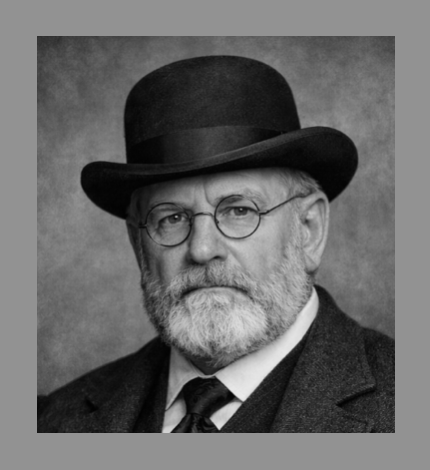
There are no known photos of Colin Hay. Above is an AI-generated image of him based on facts known about his life.
Colin Hay entered the Ardbeg story at a moment when the distillery had already proved how fragile “legitimate” whisky-making could be on Islay. Ardbeg was established as a legal commercial concern in 1815, when John MacDougall took out a license for the site on the Kildalton coast. In the decades that followed, the business operated in a world where local farming, coastal shipping, and the whisky trade were tightly interwoven: strong enough to grow, but vulnerable to illness, debt, and abrupt changes in who controlled the books. By 1838, a Glasgow spirit merchant, Thomas Buchanan, bought the distillery while MacDougall’s son, Alexander, continued to manage operations.
That transition set the pattern that would define Colin Hay’s career: Ardbeg could have outside financial muscle behind it, but it still depended on capable, trusted management on the ground. Colin Hay was exactly that kind of local figure. An Ileach born in 1827 in Kildalton Parish, he began working at Ardbeg in the 1840s while Alexander MacDougall was the resident partner in the firm. The public record regarding those years is clear about why the distillery was drifting toward trouble. In 1846, an Excise officer reported that Alexander MacDougall was, by then, “paralytic,” constantly confined to his chair, and unable to look after his affairs properly; the same report alleged that workers were stealing new-make spirit right from the worm. These discoveries were the kind of practical, damaging disorder that could unravel a distillery long before the public ever saw a bankruptcy notice.
When Alexander’s health failed further, the burden of keeping Ardbeg functioning fell heavily on his sisters Margaret and Flora MacDougall, who took on the responsibility for running the business, appointing Hay as their manager. After Alexander MacDougall died in 1853, Ardbeg was then co-run by Colin Hay and the MacDougall sisters, women the distillery’s archive suggests “may rightfully be Scotland’s first female distillers.” Yet the same period is also described as a continued struggle to keep the business going. After Flora’s death in 1857, Ardbeg’s agents and major creditors, Buchanan, Wilson & Co., examined the books and found chaos: casks removed without recorded payments; legal fees paid in whisky rather than cash; and a drain on stocks that left a “gaping hole” in the warehouse, likely caused by employees helping themselves to what they wanted. Even personal expenses were being charged through the company accounts, including a bill for providing “outfits and a passage to India” for Alexander’s late brother Dugald, who had once served briefly as distillery manager.
This was the crisis from which Colin Hay’s reputation was forged. The creditors stepped in with a rescue package, something the same firm had apparently done in 1838, when Ardbeg was previously threatened with closure, and the man chosen to lead the recovery was Hay. After Margaret’s death in 1865 he became sole partner, taking on the challenge of rebuilding Ardbeg while it was still hugely indebted to Buchanan, Wilson & Co. What followed was not a single dramatic save, but a long, disciplined campaign to turn a distressed distillery into a high-output, well-equipped concern that could serve both blenders and distant markets.
By the mid-19th century, Ardbeg was in a good position in that its whisky had become highly sought after. Contemporary trade claims describe demand from blenders and wine-and-spirits merchants across the UK, and also export markets including the United States, Argentina, Australia, and New Zealand. That commercial pull mattered because it gave Hay a reason to invest and expand, provided he could modernize Ardbeg fast enough to meet demand and steady enough to convince creditors and partners that the business had truly changed. He set about increasing capacity and improving logistics in concrete, trackable ways: he installed larger stills, erected new warehouses, and built a deep-water quay so that coal, barley, and supplies could be landed directly at the distillery and whisky shipped more cheaply to the mainland. In 1883, he installed a steam engine when the water wheel alone was insufficient to power the new machinery, finally making Ardbeg into a modern, mechanized Victorian distillery.
Hay’s expansion program also shows in reported output. By 1886, journalist Alfred Barnard, amid his historical and still oft-cited visit to Scotland, noted production at 250,000 gallons per year, a figure later repeated in Ardbeg’s own historical timeline as about 1.1 million liters, making Ardbeg the most productive distillery on Islay at the time. Barnard’s reporting is also used to frame the social scale of what Hay built: around that time, about 60 men were employed at the distillery, and the village of Ardbeg had grown to about 200 people, with a school serving children from the village and surrounding area. These details help explain why Hay can reasonably be called Ardbeg’s most pivotal historical figure—he didn’t merely keep the stills running; he strengthened the economic gravity of the entire region.
Hay’s expansion program also shows in reported output. By 1886, journalist Alfred Barnard, amid his historical and still oft-cited visit to Scotland, noted production at 250,000 gallons per year, a figure later repeated in Ardbeg’s own historical timeline as about 1.1 million liters, making Ardbeg the most productive distillery on Islay at the time. Barnard’s reporting is also used to frame the social scale of what Hay built: around that time, about 60 men were employed at the distillery, and the village of Ardbeg had grown to about 200 people, with a school serving children from the village and surrounding area. These details help explain why Hay can reasonably be called.
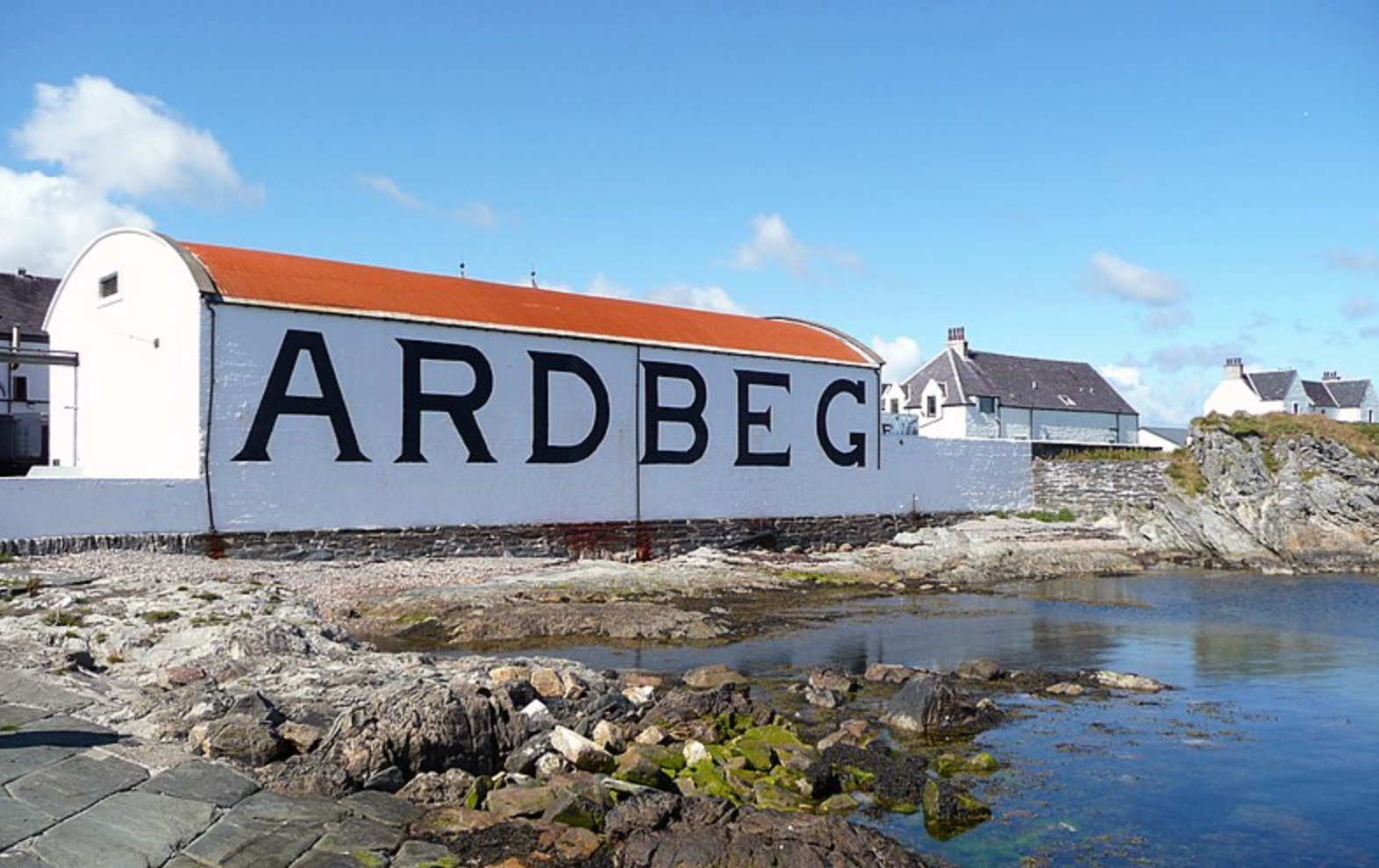
By this later period Hay had also built a magnificent seafront house beside Warehouse No. 3, laid out gardens, and added amenities such as a billiards room for the workforce’s leisure and gatherings where families could join for evening events. He was also described as a pillar of Islay society: a farmer of nearly 2,300 acres who raised cattle and sheep; a Justice of the Peace and parish councillor; and a leading figure in the Glasgow Islay Association. Hay was also a passionate supporter of Gaelic education and the revival of Gaelic literary traditions. These attributes were all an important reminder that the men who built successful Victorian whisky businesses often moved between commerce, land, local governance, and culture.
Yet even Hay’s triumph years had sharp tests. Ardbeg survived the late-1880s and early-1890s depression in the market for Islay whiskies, and it also survived a huge December 1887 fire that destroyed the stillhouse, tun room, malt barns, and kiln. Yet the survival itself is part of the point: Hay’s Ardbeg had enough strength; financial, operational, and organizational, to rebuild after a disaster that would likely have ended a weaker concern outright. In 1888, Ardbeg’s license was renewed jointly by Colin Hay and Alexander Wilson Gray Buchanan, reflecting the partnership arrangements that had helped stabilize ownership.
By now 60 years old, Hay retired in 1897, and at that point the distillery was the largest and most successful on Islay. He died two years later, leaving behind not only expanded plant and stronger shipping infrastructure, but an Ardbeg that had become central to Islay’s whisky economy and village life. His story also carried a cautionary epilogue through family succession: Colin’s son, Colin Elliot Hay, later returned as manager and resident partner, but struggled with reputation and debt in the long run. Ardbeg’s later 20th-century closures and revivals belong to other eras and other owners, but the Victorian foundation that made Ardbeg a major name, including its scale, its facilities, and its ability to recover from catastrophe, bears Colin Hay’s astute, forward-thinking management imprint more clearly than any other single individual’s.
Sources:
Scotch Whisky magazine, “Whisky heroes: Colin Hay, Ardbeg”, 04 July 2017, scotchwhisky.com
Ardbeg official website, “Our History”, www.ardbeg.com
Historic Environment Scotland, “Ardbeg Distillery…”, portal.historicenvironment.scot
Mark Littler, “Ardbeg Distillery: A Comprehensive Timeline”, Beth Squires, 03 January 2021
Contributed by Tracy McLemore, Fairview, Tennessee
Ardbeg’s most pivotal historical figure—he didn’t merely keep the stills running; he strengthened the economic gravity of the entire region.