Michael Henry



Michael Henry's journey to becoming one of Scotland's accomplished master blenders began in Northern Ireland, where whiskey production was part of the community in which he grew up. Raised on the country's north coast, approximately seven miles from the historic Old Bushmills Distillery, Henry developed an early familiarity with an industry that would eventually define his professional life. Both his father and grandfather enjoyed whiskey, providing an introduction to its traditions long before he considered making it his career. The nearby Bushmills and Coleraine distilleries also demonstrated the importance of distilling to the region's economy and cultural identity.
Henry's interest in science also persuaded his eventual profession. While studying biology and chemistry for his A-level examinations, he began experimenting with home brewing, combining his scientific interests with an appreciation for fermentation. When considering university programs, he discovered the brewing and distilling degree offered by Heriot-Watt University in Edinburgh, an institution internationally recognized for its expertise in brewing and distillation. After learning that distilleries sometimes sponsored students pursuing the qualification, Henry approached Bushmills and secured financial support for his education. He subsequently worked at the distillery during university holidays, gaining practical experience that complemented his academic studies.
Following university, Henry spent approximately ten years in the brewing industry, developing the technical knowledge that would later distinguish his approach to Scotch whisky. He worked for the Bass brewing organization, subsequently associated with InBev, at facilities in Belfast and Glasgow. His responsibilities provided extensive experience with mashing, fermentation, yeast behavior, and the production processes that determine the characteristics of beer. These disciplines also form the foundation of whisky production, where decisions made before distillation can substantially influence the finished spirit. His brewing experience would become particularly valuable when he began exploring the relationship between fermentation and flavor development.
In January 2007, Henry joined Loch Lomond Distillery in Alexandria, Scotland, as warehouse manager. The distillery, established at its present location in the 1960s, possessed an unusually versatile production system capable of manufacturing both malt and grain whisky. Henry's initial responsibilities included overseeing newly-distilled spirit, filling casks, managing maturation inventories, and coordinating the movement of whisky to the bottling operation. His position provided extensive knowledge of the distillery's production capabilities and the characteristics of its maturing stocks. When the employee responsible for blending High Commissioner and other bulk whiskies retired, Henry also assumed those responsibilities alongside his warehouse management duties.
A significant turning point occurred in 2014, when Loch Lomond Group was acquired by private equity firm Exponent and its management team. The new ownership placed greater emphasis on developing the company's single malt portfolio and establishing stronger recognition for its individual distilleries. Henry's experience with production, maturation, inventory management, and blending positioned him to contribute directly to this transformation. He was formally appointed master blender in 2015, assuming responsibility for developing and maintaining the character of whiskies produced across the group's portfolio, including Loch Lomond, Glen Scotia, and the remaining stocks of the closed Littlemill Distillery.
At Loch Lomond, Henry found production equipment that offered opportunities unavailable at most Scottish distilleries. Alongside traditional swan-neck pot stills, the distillery operated distinctive straight-neck pot stills fitted with rectifying plates, allowing greater control over distillation and the resulting spirit. By adjusting the operation of these stills, selecting different yeast strains, and varying the peat levels of malted barley, Henry could work with multiple styles of new-make whisky. This flexibility allowed him to develop expressions with markedly different characteristics while retaining their identity as products of a single distillery.
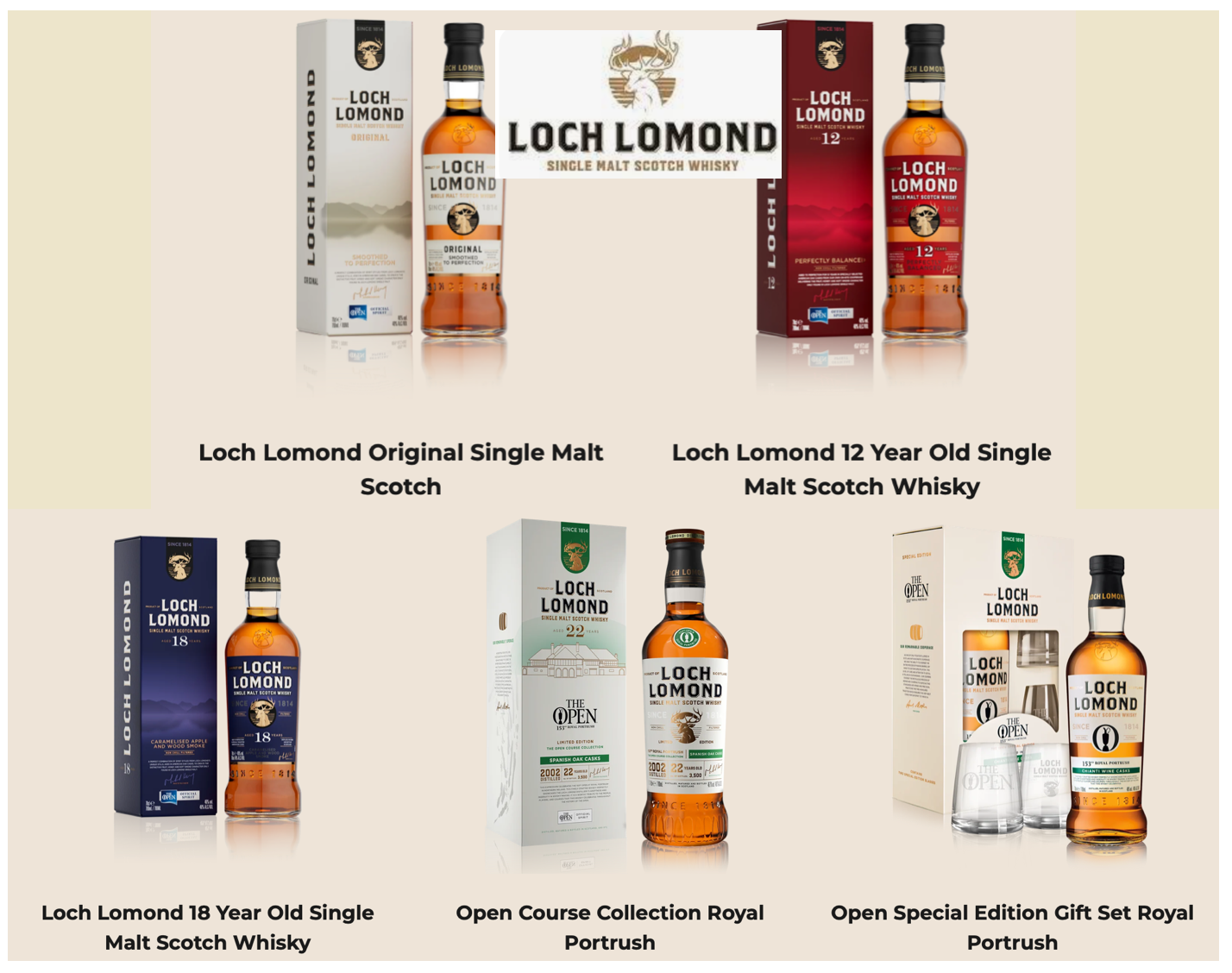
Henry established a recognizable flavor profile for Loch Lomond single malt based on three principal characteristics: orchard fruit, honeyed sweetness, and gentle smoke. Extended fermentation and the straight-neck stills contribute notes associated with apples, pears, and citrus, while maturation in American oak provides complementary sweetness. Carefully selected peated spirit introduces a restrained smoky finish. The Loch Lomond 12 Year Old became a particularly representative expression of this approach, combining several spirit styles to demonstrate the distillery's versatility. The Inchmurrin range emphasizes the fruity character produced through its distinctive distillation methods, while Inchmoan explores the different smoky and peated characteristics available from the same production equipment.
Henry's responsibilities extended beyond developing individual expressions. His daily work combined production planning, inventory management, maturation assessment, cask selection, and experimentation with new flavor profiles. He also helped oversee the development of Glen Scotia whiskies, releases from Littlemill's surviving stocks, and additional products within Loch Lomond Group's expanding portfolio. In 2017, Loch Lomond introduced an exceptionally limited 50-year-old single malt distilled in 1967. Henry had monitored the whisky during his years with the company, and its eventual release demonstrated the importance of long-term maturation management alongside technical innovation.
The distillery's growing international presence brought further opportunities to introduce its whiskies to new audiences. In 2018, Loch Lomond began a partnership with The Open Championship, creating special releases associated with one of golf's most prestigious competitions. Henry contributed to the development of these whiskies while continuing to refine the company's established expressions. His work also reflected a broader philosophy of whisky production in which fermentation, distillation, and maturation were treated as complementary instruments of flavor creation rather than separate manufacturing stages.
In December 2024, Henry received recognition as a Keeper of the Quaich, an honor acknowledging significant contributions to the Scotch whisky industry. By that time, he had spent nearly two decades at Loch Lomond Group and approximately nine years as its master blender. His responsibilities encompassed an increasingly diverse collection of Scotch whiskies, including traditional single malts, single grain expressions, and innovative blended products. The recognition acknowledged a career built upon scientific understanding, operational experience, and sustained contributions to whisky development.
Henry's career demonstrates how the technical foundations of whisky production can support innovation without abandoning established standards of craftsmanship. His progression from a Northern Irish student sponsored by Bushmills to master blender of a major Scottish whisky producer brought together brewing science, practical distilling knowledge, and the disciplined evaluation of maturing spirits. At Loch Lomond, he helped establish a distinctive identity based not simply on the age of a whisky or the cask in which it matured, but on the deliberate creation of flavor throughout production. His contribution illustrates an important principle of modern Scotch whisky making: the character of a finished whisky begins taking shape long before the spirit enters a barrel.
Sources:
Loch Lomond Whiskies official website, lochlomondwhiskies.co
Master of Malt, “Q&A: Loch Lomond Master Blender Michael Henry!”, Kristiane, June 11, 2018, masterofmalt.co
Distiller, “Loch Lomond: Inside Scotland's Most Innovative Distillery”, Thijs Klaverstijn, October 5, 2017, distiller.com
Scottish Licensed Trade News, “Meet the Maker: Michael Henry, Master Blender, Loch Lomond, Glen Scotia and Littlemill Single Malts”, September 13, 2018, sltn.co.uk
The Whisky Shop, “My Craft – Loch Lomond Master Distiller Michael Henry”, Declan Leach, March 26, 2019, whiskyshop.com
The Scotsman, “How Chemistry, Biology, and Sport Have Driven the Career of This Scotch Master Blender”, Emma Newlands, August 7, 2024, scotsman.com
The Whiskey Wash, “Meet Michael Henry, the Visionary Rewriting the Rules of Scotch Whisky”, The Whiskey Wash Team, September 3, 2026, thewhiskeywash.com
Contributed by Tracy McLemore, Fairview, Tennessee USA