Harry Johnson

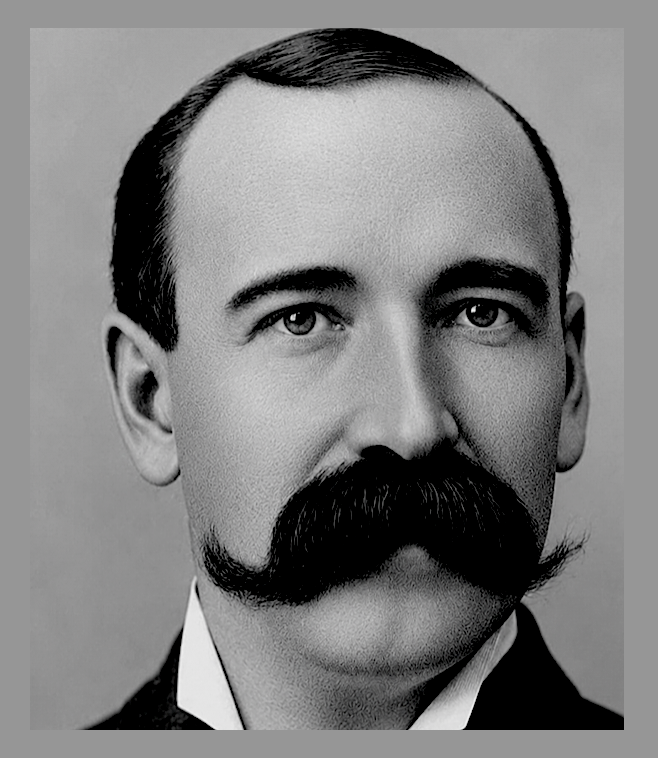
Harry Johnson never distilled a barrel of whiskey, owned a famous Kentucky distillery, nor invented a celebrated bourbon brand, yet few individuals outside the production side of the industry did more to shape the way Americans experienced whiskey during the late nineteenth century. At a time when bourbon and rye were becoming the nation's preferred spirits, Johnson transformed bartending from an informal occupation into a disciplined profession. Through his influential New and Improved Bartender's Manual and his insistence upon cleanliness, consistency, and customer service, he established standards that affected thousands of bars across the United States and, in turn, the public's perception of American whiskey. While master distillers refined the spirit itself, Johnson refined the manner in which it was presented, served, and appreciated.
Johnson was born in 1845 in Prussia. Surviving records reveal surprisingly little about his early years; furthermore, modern historians note that many of the details surrounding his childhood remain uncertain because Johnson, in typical outlandish bartender style, frequently embellished his personal history in conversation. It is known that he went to sea as a young man, a decision that ultimately changed the course of his life. During a voyage to California in 1861, he suffered serious injuries, including a broken arm and hip, forcing him to remain behind in San Francisco while his ship departed without him. Rather than returning immediately to Europe, the sixteen-year-old found work as a kitchen boy at San Francisco's Union Hotel, beginning an unexpected career in the hospitality industry.
The timing could hardly have been more fortuitous. San Francisco in the early 1860s bustled with commerce generated by the Gold Rush, while the Civil War created growing demand for American-made whiskey. Johnson learned every aspect of hotel service, gradually advancing from kitchen work to tending bar and eventually supervising operations. The profession demanded far more than simply pouring drinks. A successful bartender needed to understand customers, maintain inventories, manage employees, and simultaneously prepare beverages under considerable pressure. Johnson absorbed these lessons quickly and developed a reputation for meticulous workmanship and uncommon professionalism. During these formative years he also encountered the legendary bartender Jerry Thomas, whose flamboyant style would become both an inspiration and, later, a source of rivalry.
After approximately eight years in San Francisco, Johnson moved to Chicago, where he opened his own saloon. Chicago's rapidly expanding population offered ambitious entrepreneurs enormous opportunities, and Johnson's establishment quickly prospered. Never content simply to tend bar, he lectured publicly, wrote newspaper articles, and promoted higher standards within the profession. Johnson later claimed to have defeated five of America's finest bartenders in a celebrated New Orleans competition in 1869, earning the title of "Champion Bartender of the United States." Although no independent contemporary evidence has confirmed that contest, the claim itself illustrates the reputation he had already cultivated as one of the country's leading practitioners.
Disaster struck in October 1871 when the Great Chicago Fire swept through the city, destroying Johnson's business along with much of downtown Chicago. Like countless entrepreneurs who lost everything, he rebuilt his career elsewhere rather than surrendering to misfortune. He subsequently worked in Philadelphia before relocating to New York, where some of the nation's finest hotels and restaurants provided an ideal stage for his talents. There he managed prestigious bars, continued writing, and further expanded his national reputation as both a bartender and teacher.
Johnson's usually-friendly-but-professional rivalry with Jerry Thomas became one of the most colorful episodes in nineteenth-century American bar history. Thomas cultivated the image of the theatrical showman, dazzling customers with dramatic flourishes such as the famous Blue Blazer cocktail, whose flaming streams of whiskey became legendary. Johnson openly admired his technical excellence but emphasized order, discipline, and efficiency, and their differing philosophies occasionally produced public friction. Included in this was a famous incident in which Thomas reportedly entered Johnson's establishment and angrily overturned a bowl of Tom and Jerry (an eggnog-like bourbon beverage), criticizing Johnson's methods before storming out. Whether embellished through repeated retelling or not, the episode reflected genuine competition between two men who each sought to define the emerging profession of bartending.
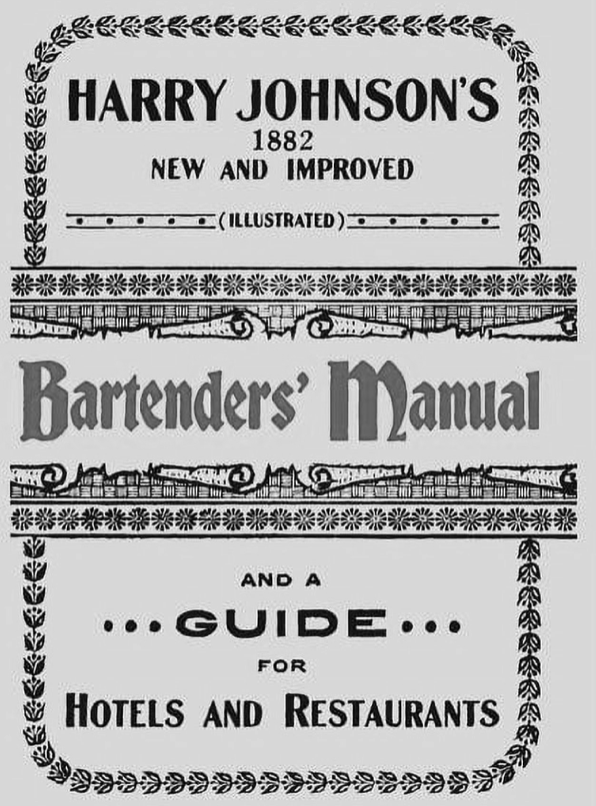
Johnson's greatest contribution arrived in 1882 with the publication of New and Improved Bartender's Manual; or, How to Mix Drinks of the Present Style. Although remembered today for its cocktail recipes, the volume's true significance lay elsewhere. Earlier publications had explained how to prepare drinks; Johnson explained how to operate an entire bar. He devoted extensive attention to employee training, personal appearance, customer relations, inventory management, sanitation, glassware, beer handling, wine storage, and efficient business practices. In effect, he produced the first comprehensive operations manual for the American saloon. The work reflected his belief that tending bar constituted a respected profession requiring knowledge, discipline, and integrity rather than merely the ability to mix beverages.
For American whiskey, the timing proved especially significant. During the 1880s, bourbon from Kentucky and rye whiskey from Pennsylvania and Maryland dominated bars across the nation. Johnson's manual preserved numerous whiskey drinks while simultaneously teaching bartenders how those spirits should be presented to customers. Whiskey cobblers, juleps, punches, cocktails, toddies, and countless other preparations occupied prominent places within the book, but equally important were Johnson's repeated instructions concerning cleanliness, accurate measurement, quality ingredients, and courteous service. By standardizing professional practices, he helped ensure that customers encountered American whiskey under consistent conditions whether they visited a hotel in New York, a saloon in Chicago, or a restaurant elsewhere in the country.
Johnson never stopped refining either his manual or his profession. Revised editions appeared in 1888 and 1900, each expanding upon his earlier work and reflecting changing tastes. He also pioneered an entirely new occupation by serving as what would now be called a hospitality consultant, advising owners on designing bars, training employees, and organizing successful operations. Long before restaurant consulting became commonplace, Johnson traveled widely sharing practical business knowledge accumulated through decades behind the bar. His influence extended well beyond individual establishments because every bartender he trained or advised carried those standards into another community.
Late in life Johnson returned to Europe, spending his final years in Germany. He died in Berlin on January 13, 1933, just a few months shy of his 88th birthday. Harry left behind no famous whiskey brand bearing his name nor distillery carrying forward his legacy. Yet his influence endured through generations of bartenders who continued to consult his manual well into the twenty-first century. Historians of the hospitality industry now regard him as one of the fathers of professional bartending, while students of American whiskey recognize that he helped define how bourbon and rye reached the public during their formative decades. So Harry Johnson's legacy ultimately rested upon a simple but enduring principle: exceptional whiskey deserved exceptional service. Distillers could devote years to producing a fine bourbon or rye, but the public judged that whiskey through the hands of the bartender who poured it. By insisting upon professionalism, consistency, and respect for both customer and product, Johnson elevated not only his own profession but also the reputation of American whiskey itself. His influence cannot be measured in barrels distilled or warehouses constructed, but in the countless bars where, for generations, bourbon and rye were served according to standards he helped establish.
Sources:
1882 Harry Johnson's New and Improved Bartender's Manual, Exposition Universelle des Vins et Spiritueux Digital Collection, 1882, euvs-vintage-cocktail-books.cld.bz
Harry Johnson's Bartenders' Manual (1882, 1888, 1900, 1934), EUVS Library, euvslibrary.com
Armin, "The Foundation of Bartending – Literature from Harry Johnson to the Turn of the Century (1882–1899)," Bar-Vademecum, 19 July 2015, bar-vademecum.eu
Harry Johnson's New and Improved Bartender's Manual, Open Library (1882 edition), openlibrary.org
Contributed by Tracy McLemore, Fairview, Tennessee