Lawrence Lavelle Jones


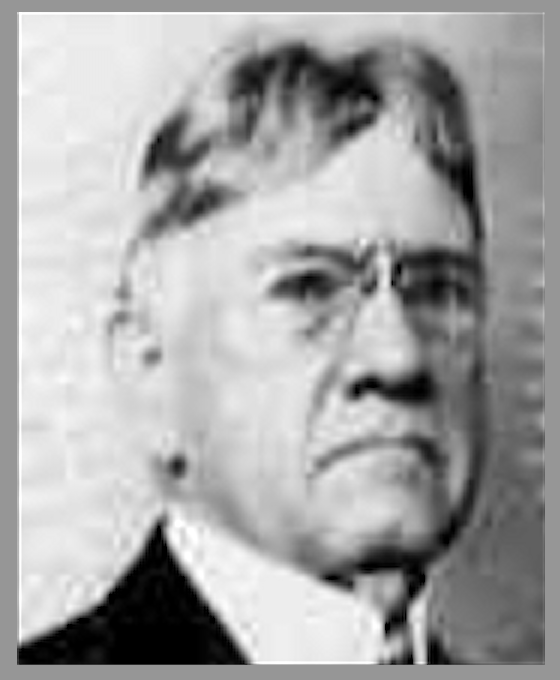
Lawrence Lavelle Jones was born in Lynchburg, Virginia on December 2, 1860 into a family whose fortunes would become closely tied to American whiskey. His father, Colonel Warner Roland Jones, served in the Confederate Army and was killed at the Battle of Atlanta in 1864, when Lawrence was still a small child. His mother, Louisa, died soon afterward, leaving Lawrence and his brothers, Warner Paul and Saunders Paul Jones, orphaned. Their uncle, Paul Jones Jr., took the three boys into his household and raised them, creating a relationship that would eventually place Lawrence at the head of one of the most recognizable whiskey businesses in the country.
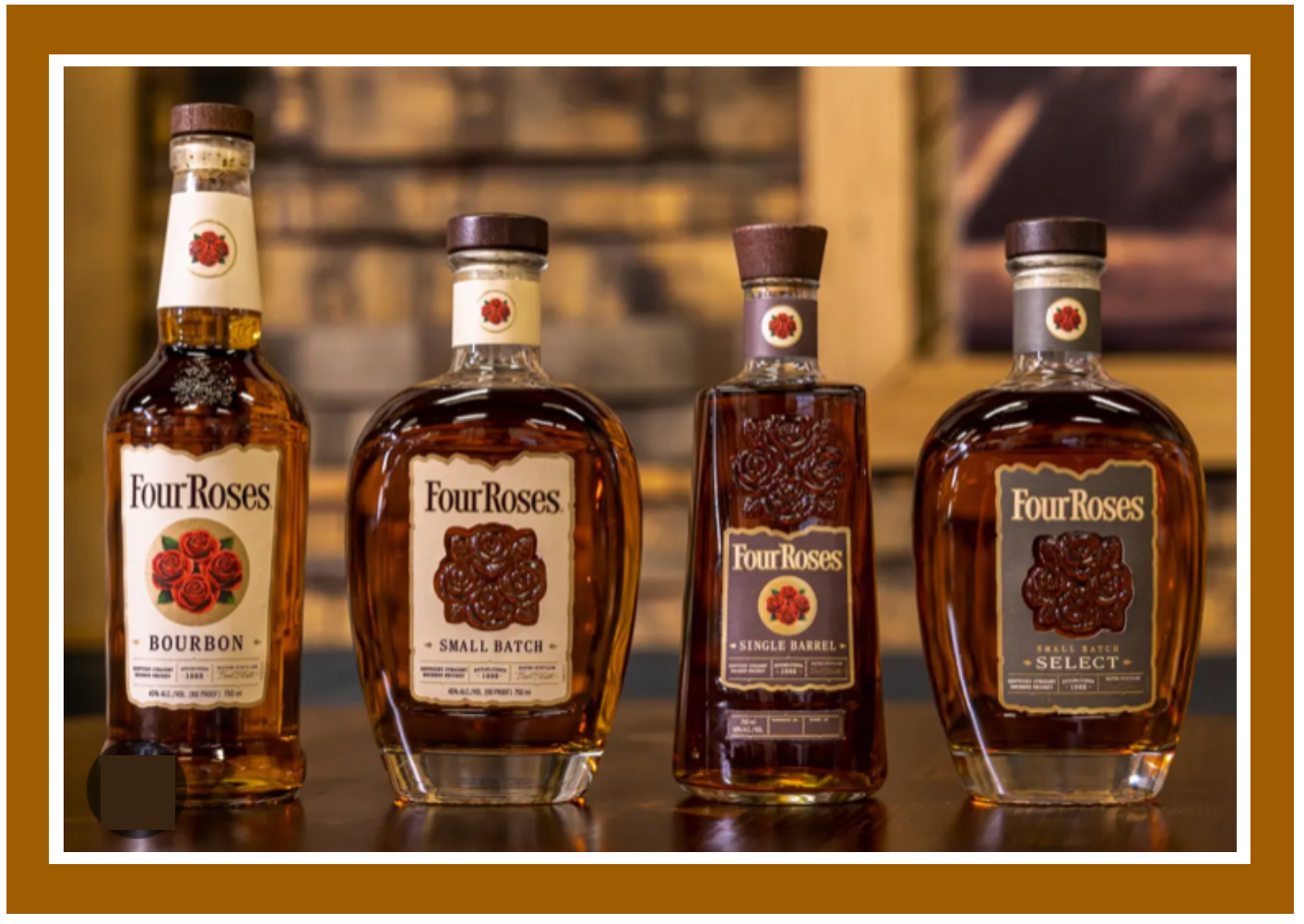
Paul Jones Jr. had followed his own father into the wholesale whiskey and tobacco trade in Georgia, but moved his business to Louisville, Kentucky, in the 1880s as Georgia became increasingly enamored with the idea of state Prohibition. Lawrence accompanied his uncle to Louisville and entered the whiskey business with him. Four Roses emerged during this period as one of the Jones enterprise's important whiskey names, with the company itself dating the brand to 1888. When Lawrence's older brother Warner died in 1889, Saunders also moved to Louisville and joined Paul and Lawrence in the business.
Lawrence's personal life became intertwined with one of the most charming stories within whiskeydom, ultimately resulting in his 1894 marriage to Miss Mary “Mamie” Peabody. Though more than one version of the story of “the Four Roses” exists, the least contested one is that Lawrence repeatedly sought to court the beautiful young woman. However, he was rebuffed several times before making one final proposal and asking her to wear roses to a dance if she accepted. She ultimately appeared that evening at the dance wearing a corsage of four yellow roses, giving Lawrence a wife, their whiskey a name, and the world an enduring, romantic tale that still captivates the imagination after more than 130 years.
Paul Jones Jr. died in 1895, leaving Lawrence and Saunders to continue the successful business that their uncle had founded. The boys prospered in Louisville and expanded well beyond the whiskey trade. In 1899 they purchased the city's Masonic Temple property, and after that building was destroyed by fire, they created one of downtown Louisville's notable early skyscrapers. The eight-story Paul Jones Building opened in 1906, named for the uncle who had raised them. Its scale reflected the brothers' success: with approximately 153,750 square feet of office space, it dwarfed many contemporary Louisville office buildings, and a newspaper of the period described it as a monument to the brothers' "public spirit and enterprise."
Whiskey nevertheless remained central to Lawrence's business life. During the early twentieth century, he and others organized the Small-Grain Distilling Company as a means of selling Four Roses straight whiskey by mail. A disagreement eventually separated Lawrence and Saunders in the Paul Jones Company, leaving Lawrence in control of the whiskey enterprise. Saunders, who had suffered years of paralysis, died in 1916, and Lawrence became the surviving principal of the family business just as the American liquor industry approached its greatest crisis.
National Prohibition took effect in 1920 and destroyed countless American distilling businesses, but Lawrence found a narrow legal route that ultimately preserved Four Roses. In 1922, the Paul Jones Company acquired Frankfort Distilling Company, one of only six concerns holding federal authority to sell “medicinal” whiskey during Prohibition. The operation became Frankfort Distilling Corporation, allowing whiskey to continue reaching consumers legally through physicians' prescriptions and drugstores. Four Roses surviving packaging of the period identifies a 100-proof product made from fermented grain mash, aged in wood and bottled under federal Bottled-in-Bond controls. The company even patented a fiberboard package with a tamper-resistant seal. In doing so, it was one of the first whiskey concerns to assure purchasers that the whiskey inside was indeed what the bottler claimed it to be.
Though the medicinal arrangement saved the company in the long run, it did not make the Prohibition years easy ones. Fires struck the Frankfort operation three times between 1923 and 1933, destroying buildings, whiskey, and interrupting production. Yet Four Roses survived a period that obliterated many popular competing whiskey names. When repeal arrived on December 5, 1933, Lawrence's company possessed something enormously valuable: an established whiskey brand that had remained visible while much of the pre-Prohibition industry had disappeared. Frankfort Distilling became Frankfort Distilleries, Incorporated, and Four Roses entered the newly reopened legal market from a position of unusual strength.
Four Roses consequently became one of America's leading bourbons during the 1930s and into the 1940s. Its advertising grew correspondingly ambitious. In 1938, an elaborate illuminated Four Roses sign appeared in New York's Times Square, its electrically lighted roses surrounding the declaration, "A Truly Great Whiskey!" The display remained there until 1945. Lawrence had taken the whiskey business inherited from his uncle, guided it through family changes, Prohibition, fires and the Great Depression, and lived to see Four Roses emerge from those disruptions as a nationally prominent Kentucky bourbon.
Whiskey was only one portion of Jones's extensive business career. He became principal owner of the Jefferson Island Salt Company and Peerless Manufacturing Company and had interests in coal mining, chain stores and Kentucky Electric Company, a predecessor of Louisville Gas and Electric. He also participated in the early development of electric and street railway operations in Louisville and was an early incorporator in the Seelbach Hotel project. Civic life interested him as well: Jones was a major force behind establishing the Kentucky State Fair permanently in Louisville.
Away from business, Jones developed a particular enthusiasm for horses. His stables contained prominent saddle and show horses that competed at major shows and fairs, including his three-gaited horse Poetry of Motion, a multiple winner at the International Horse Show. He regularly entered horses at the Kentucky State Fair, traveled annually to a fishing camp in Quebec, and later developed an interest in yachting in the Gulf of Mexico. His marriage to Mamie Peabody produced three daughters and a son.
Mamie's death in 1938 preceded Lawrence's by only three years. Lawrence remained remarkably active into old age, continuing to report regularly to his office until he suddenly became indisposed. After a four-day illness, he died of pneumonia and complications at Norton Memorial Infirmary in Louisville on October 21, 1941, at age 81. His death ended the direct involvement of the Jones family leadership that had built and sustained Four Roses through its formative decades. Two years later, Joseph E. Seagram & Sons purchased Frankfort Distilling and Four Roses, carrying the brand into an entirely different corporate era.
Lawrence Lavelle Jones did not invent the modern Four Roses production system for which the Lawrenceburg distillery is known today, nor did he simply inherit a finished bourbon empire. His importance lies in the difficult middle of the story. He inherited a whiskey business from the uncle who had raised him, expanded it, survived the arrival of national Prohibition by acquiring one of the industry's rare medicinal-whiskey permits, and positioned Four Roses to flourish when legal bourbon returned. By the time Jones died, the four roses on the label represented more than a romantic legend: they marked a whiskey that had survived one of the most destructive periods in American distilling history and emerged as one of the country's leading bourbon names.
Sources:
National Park Service/Kentucky Heritage Council, “National Register of Historic Places Registration Form: Paul Jones Building,” 2025, heritage.ky.gov
Four Roses Distillery official website, “Four Roses: Through the Decades (1900–1910),” February 5, 2018, fourrosesbourbon.com
Contributed by Tracy McLemore, Fairview, Tennessee