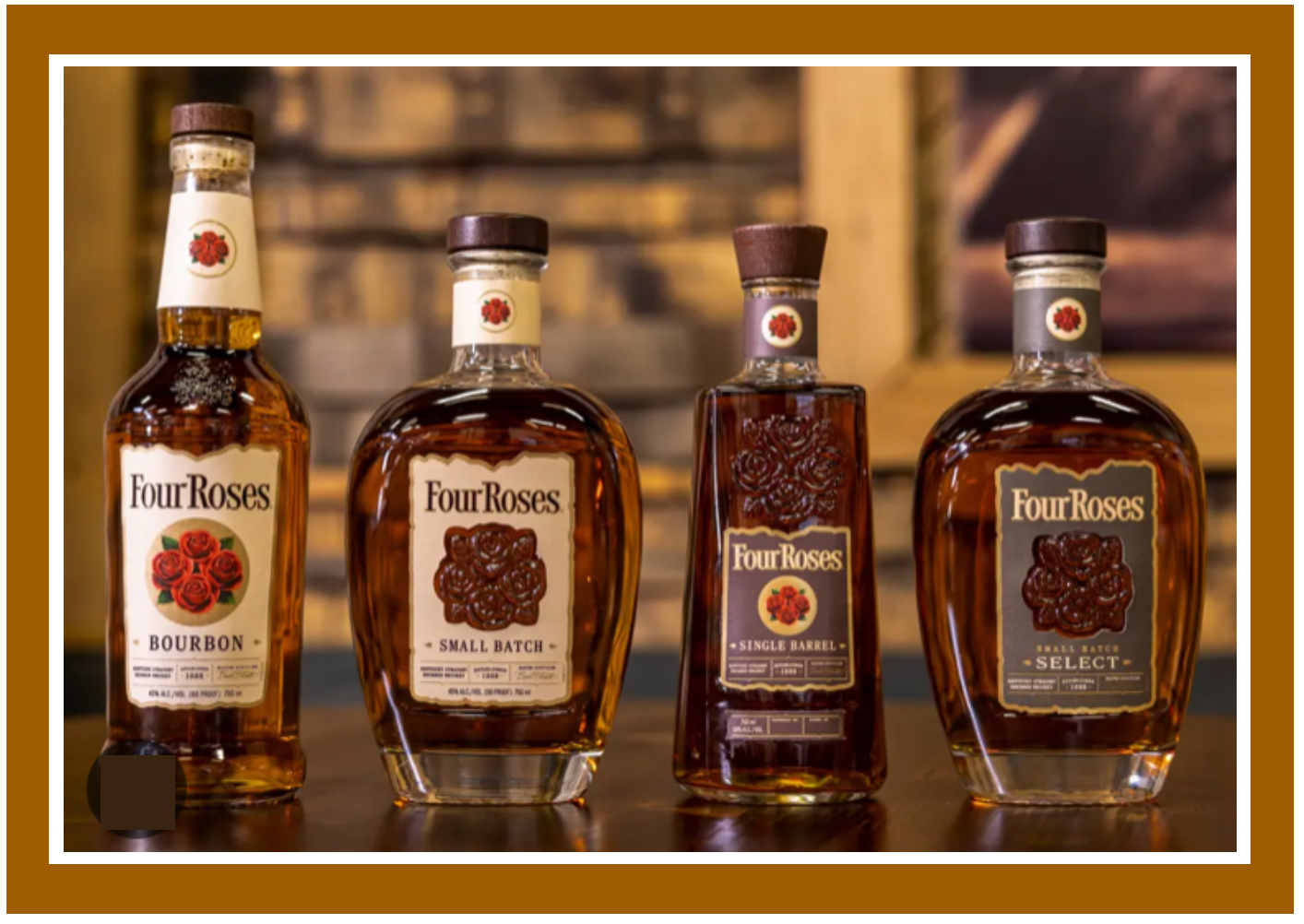
Saunders Paul Jones


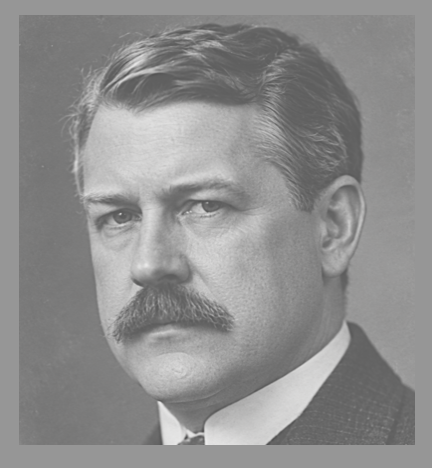
There are no known images of Saunders Paul Jones in existence
The above is an AI-generated image of him based on likely resemblance.
Saunders Paul Jones belonged to the generation that transformed Four Roses from the whiskey enterprise of Paul Jones Jr. into a durable family business. Born on September 16, 1857, Saunders was the middle of three sons of Colonel Warner Roland Jones: Warner Paul Jones, born in 1855; Saunders; and Lawrence Lavelle Jones, born in 1860. Their childhood changed abruptly during the Civil War when Colonel Jones, an officer in the Tennessee Infantry, was killed at the Battle of Atlanta in 1864, and the boys' mother also died soon afterward. Their uncle, Paul Jones Jr., took the three orphaned boys into his household and raised them as his own sons.
In about 1886, Saunders married Lavinia La Boudais “Baudie” Barnett, and they had three children: Warner Lavalle Jones, Sr., Lucy Jones, and Saunders Paul Jones, Jr. As an adult, Saunders did not have to look far for an occupation, since his family was by then already deeply tied to the liquor trade. Saunders's grandfather, Paul Jones Sr., had established a wholesale whiskey and tobacco business in Georgia after the Civil War, and Paul Jones Jr. continued the enterprise following his father's death in 1877. Saunders did not immediately follow his uncle into Kentucky, however. He and his older brother Warner worked in the grocery business in Columbus, Georgia, while Lawrence accompanied their uncle to Louisville during the 1880s. After Warner died in 1889, Saunders left Georgia and joined Paul and Lawrence in Louisville, placing all three men at the center of a whiskey enterprise that was becoming increasingly important.
Louisville was an ideal place for that enterprise. Paul Jones Jr. had established his company at on West Main Street—today’s “Whiskey Row”. The building they occupied served principally as a gathering and distribution facility for the company's whiskey business. Four Roses emerged as one of its important names, and Jones registered the Four Roses trademark for whiskey in 1892. By the 1890s, Saunders was working inside an important established Kentucky whiskey concern at precisely the time Four Roses was becoming a recognizable commercial brand.
Paul Jones Jr. died in Louisville in 1895 at age 55, leaving the enterprise to the nephews he had raised. Saunders then directed the family whiskey business and expanded it during the important transitional period between Paul Jones Jr.'s death and Lawrence Jones's later sole control. The whiskey sold by the Jones company during this period was part of a broader portfolio that included Four Roses, but also consisted of such names as Jones Four Star, Old Cabinet, Old Cabinet Rye and Small Grain. Saunders's career thus belonged to the era before the modern Four Roses distillery and its present ten-recipe system; his role was in the commercial development, management, and expansion of the earliest Four Roses whiskey brand.
Success in whiskey allowed Saunders and Lawrence to invest heavily outside the liquor trade. In 1899 the brothers purchased Louisville's Masonic Temple property for $275,000 (equivalent of about $11 million now), acquiring what was considered one of the city's best-located pieces of commercial real estate. The building contained retail space, a theater and lodge rooms, and the brothers considered expanding it before fire destroyed it late in 1903. They had already organized the Jefferson Realty Company that year, and rather than abandoning the burned property, Saunders and Lawrence decided to undertake a far more ambitious project.
Their answer was the Paul Jones Building, named for the uncle and adoptive father who had brought them into the whiskey business. By February 1904 the brothers had essentially decided to construct a skyscraper at Fourth and Jefferson streets, and prominent architect Frank Mills Andrews was engaged for the project. The eight-story steel-framed building opened in late 1906 with approximately 153,750 square feet of office space—far more than several taller Louisville buildings. A contemporary Courier-Journal account called it a monument to the "public spirit and enterprise" of Lawrence and Saunders Jones. The building stood not only as a major real-estate investment but also as physical evidence of the wealth and position the Jones brothers had achieved during their years in the whiskey trade.
At the same time, the whiskey industry itself was changing. The Pure Food and Drug Act of 1906 intensified a national argument over what products could legitimately be called whiskey, particularly the distinction between straight whiskey and products created through rectification and blending. The controversy continued until the Taft Decision of 1909 helped establish definitions that became important foundations of later American whiskey regulation. Four Roses was operating directly within that changing marketplace, and the Jones enterprise continued selling whiskey while the federal government was bringing greater precision to the language used to describe it.
The partnership between the brothers did not last. In 1910, an unpleasant separation occurred between Lawrence and Saunders over the Paul Jones Company, after which Saunders left the whiskey business and Lawrence obtained control of the company. To this day, the surviving sources for this story do not adequately state the cause of the brothers’ disagreement; instead, the transition is merely documented as a stock acquisition where Lawrence officially bought out his brother’s shares of the Four Roses parent company.
Saunders's later years were overshadowed by serious illness. He suffered from paralysis for many years before his death in 1916, at approximately 59 years of age. His death left Lawrence as the surviving owner, which meant that Saunders did not live to see the greatest crisis the American whiskey industry would face. National Prohibition arrived in 1920, meaning that it was Lawrence who subsequently guided the Jones whiskey interests through that period, including the 1922 acquisition of Frankfort Distilling Company and its valuable authorization to sell medicinal whiskey.
Saunders Paul Jones occupies a relatively short but important chapter in Four Roses history. He entered the family enterprise while his uncle was still alive, helped carry it forward after Paul Jones Jr.'s death, and shared with Lawrence the period in which the Jones family converted success in whiskey into substantial commercial influence in Louisville. His career ended before Prohibition transformed Four Roses yet again, and his long illness undoubtedly shortened his active business life. Yet the surviving record leaves a clear distinction: Saunders was not simply the brother of the man who eventually controlled Four Roses. For roughly two decades, his own name and work belonged to the family enterprise that carried Four Roses from its nineteenth-century beginnings into the modern American whiskey business.
Sources:
National Park Service/Kentucky Heritage Council, “National Register of Historic Places Registration Form: Paul Jones Building,” 2025, heritage.ky.gov
Four Roses Distillery official website, “Four Roses: Through the Decades (1888–1900),” January 18, 2018, fourrosesbourbon.com
The Filson Historical Society, Michael R. Veach, “Louisville's Whiskey Row,” 2009, filsonhistorical.org
Pre-Prohibition.com, “Paul Jones & Co., Louisville, KY (1887–1922),” accessed October 2026, pre-pro.com
Pearson Funeral Home, “S. Paul Jones III Obituary,” May 20, 2023, legacy.com
Contributed by Tracy McLemore, Fairview, Tennessee