Kirby Kallas-Lewis

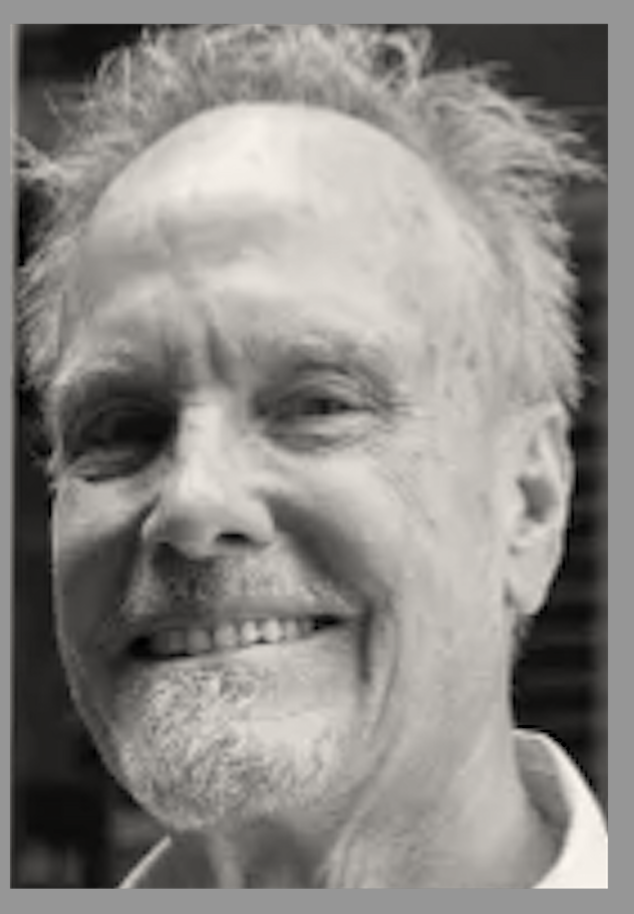
Kirby Kallas-Lewis was born in May of 1955 in central Minnesota and grew up in the St. Paul area making mischief, riding horses, and observing the world with a determined curiosity. One time, in his mid-teens, he saved up his grass-cutting money and used it all to go to an upscale restaurant in Minneapolis with his best friend Charlie. A few years later, he attended Minnesota’s prestigious St. Olaf college, obtaining a degree in sculpture and fine art, despite failing to attend many classes other than those pertaining to the fine arts.
Once done with his coursework, Kallas-Lewis resided for a time on a makeshift farm and decided to try to live on $1 a day. He worked in kitchens, milked goats, made sock cheese, baked bread, grew veggies, threw pots, and lived in a slightly altered chicken coop – his first building project. He hitchhiked to Alaska and worked on fishing boats where he admits to have often thought about pushing his sadistic skipper into the ocean. After his Alaskan adventure, Kallas-Lewis purchased a one-way ticket to the South Pacific. Finally putting his artistic skills to use, he threw pots by the piece in Australia, then painted and lived in Tahiti for a time. He also traveled through Papua New Guinea by canoe. All the while he ate lavishly— everywhere— from the most renowned restaurants to common street food. He learned all he could about wine, he made prosciutto, plucked chickens, broke down pigs and smoked meats—anything he could to earn a few cents and a delicious meal.
Returning to the States, Kallas-Lewis eventually developed a career as a very successful art dealer, operating galleries in both New York and Seattle, and selling South Pacific art to museums and private collectors in the United States and Europe. His work took him to Paris, Brussels, New York and San Francisco, where continued exposure to restaurants, wine and cocktails deepened his interest in fine foods. He also operated a residential construction and remodeling business in Seattle. Before establishing OOLA, he also raised a son and built his life with artist and choreographer K.T. Niehoff, his wife and longtime business partner.
Whiskey became a serious subject of study for Kallas-Lewis only a few years before he entered the distilling business. In 2008, he purchased a still and began experimenting with it at home, placing it in his bathtub. Washington had recently opened new possibilities for small distilleries through changes in state law, and Kallas-Lewis saw an opportunity to combine production, creativity and community-building. He founded OOLA Distillery in January 2010, leasing a raw commercial space with Niehoff at 14th Avenue and East Union Street in Seattle’s Capitol Hill neighborhood, and naming it after his faithful German shepherd, OOLA. There, Kallas-Lewis and Niehoff spent roughly a year building out the property. The completed complex included the distillery, restaurant spaces and Niehoff’s 10 Degrees art and event venue. OOLA began commercial operations in 2011 and became one of the first distilleries to open in Seattle after Prohibition. The company’s urban location reflected his intention to make the distillery part of the surrounding neighborhood rather than isolate production in an industrial park.
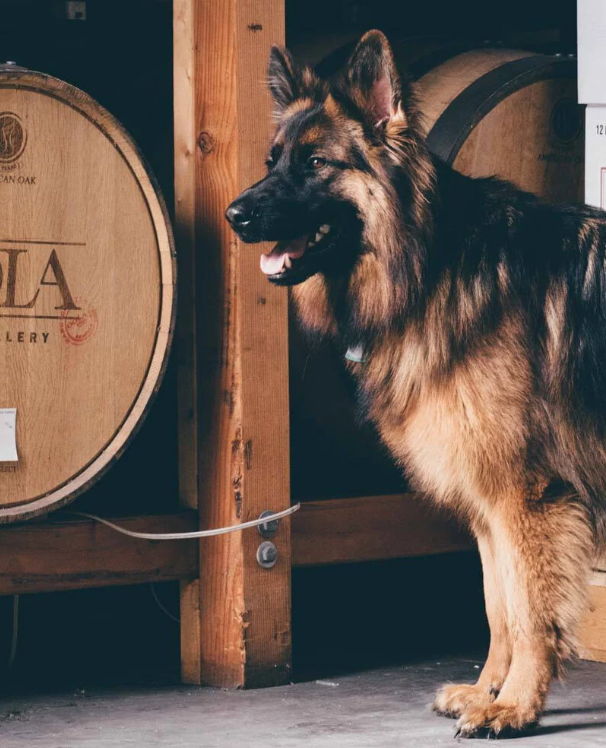
The late OOLA the German Shepherd: According to Kallas-Lewis, “The best dog that ever lived.”
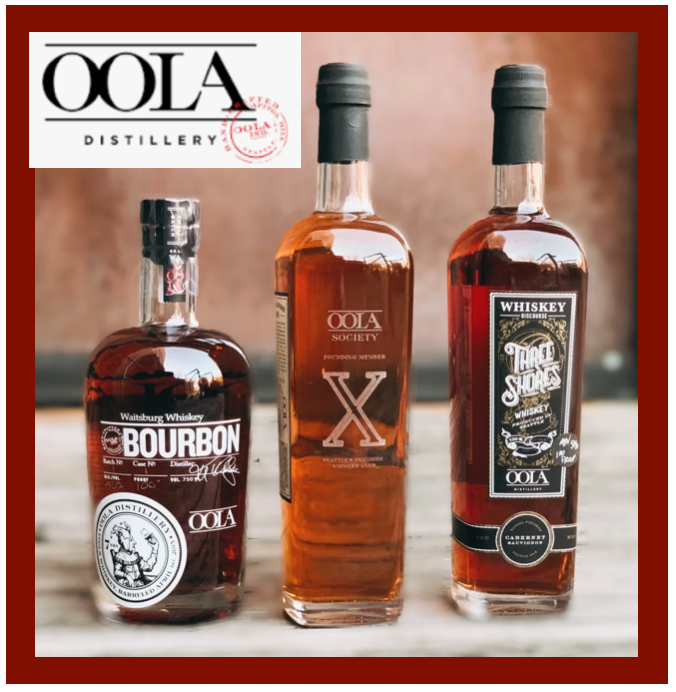
Waitsburg Bourbon Whiskey became the foundation of OOLA’s brown-spirits program. Early releases combined selected mature bourbon with OOLA’s own four-grain whiskey, while later versions were produced entirely from OOLA-distilled spirit. The whiskey incorporated corn, rye, wheat and malted barley, with the rye supplying spice and structural complexity and the wheat contributing softness. Kallas-Lewis rejected a bourbon dominated exclusively by corn sweetness; he sought balance among the four grains, complexity across the palate and a long, smooth finish. His production philosophy gave equal importance to every stage of whiskey making. Mash cooking, starch conversion and fermentation determined the quality of the liquid entering the still, while careful cuts required constant tasting and attention rather than automatic reliance on proof or elapsed time. Barrel selection completed the process. Kallas-Lewis treated the final decision about which matured barrels to combine as one of the most important opportunities to establish consistency and shape the finished whiskey.
The second Discourse release explored smoke. Kallas-Lewis combined peated whiskey with a sweeter smoked spirit made from malted barley exposed to cherry wood, applewood and used bourbon-barrel staves. His purpose was not to create an overpowering smoke-heavy whiskey, but to integrate smoke into a balanced composition. Another expression, Three Shores World Whiskey, blended OOLA bourbon with Canadian rye and lightly peated Scotch whisky, allowing the sweetness of American bourbon, the spice of Canadian rye and the smoke of Scotch to remain identifiable within one whiskey. Kallas-Lewis subsequently rested the Three Shores blend for an additional year in used French-oak wine barrels, producing a black-label Discourse release with a changed spice profile and greater liveliness on the palate. These experiments demonstrated the continuity between Kallas-Lewis’s earlier artistic work and his distilling practice: each component had its own character, but the completed work depended upon proportion and arrangement. His background in art did not replace technical discipline. It accompanied close control of fermentation, distillation, maturation and blending.
After approximately a decade on Capitol Hill, in 2020, OOLA moved production to Seattle’s Georgetown neighborhood. Its new 14,000-square-foot production facility was nearly three times the size of the original distillery, giving the production team more room for equipment, barrel handling and expanded distribution.
Through OOLA, Kallas-Lewis transformed an interest in food, wine, art and chemistry into a durable Seattle distilling business. Waitsburg Bourbon supplied the dependable center of the whiskey range, while the Discourse releases gave him room to investigate wine-cask maturation, smoked grain and multinational blending. The result is a whiskey program grounded in Washington grain, attentive production and the deliberate balance of corn, rye, wheat, barley, oak and time.
Sources:
Taste the Dram, “OOLA Distilleries Founder Kirby Kallas-Lewis Talks Post-Prohibition Whiskey, Seattle, WA,” Contributing Writer, January 13, 2017, tastethedram.com
OOLA Distillery official website, ooladistillery.com
Craft Spirits Magazine, “OOLA Distillery Relocates to Seattle’s Georgetown Neighborhood,” Staff, January 12, 2021, craftspiritsmag.com
Seattle Refined, “Seasonal Flavors Dance at OOLA Capitol Hill,” no author given, May 3, 2024, seattlerefined.com
Capitol Hill Seattle Blog, “With OOLA Capitol Hill, Kirby Kallas-Lewis and KT Niehoff Share Their ‘All Time Favorite Spot in Their All Time Favorite Neighborhood,’” CHS Staff, September 13, 2023, capitolhillseattle.com
Contributed by Tracy McLemore, Fairview, Tennessee