John Edward Locke

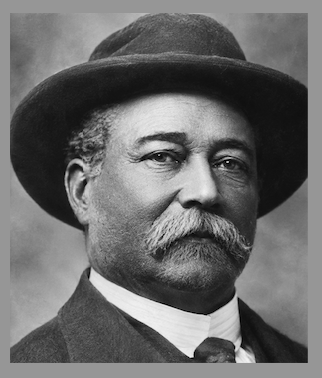
The AI-enhanced image of John Edward Locke shown is based on an authenticated likeness.
John Edward Locke was born in Kilbeggan, County Westmeath, in 1854, the son of John Locke Jr. and Mary Anne Theresa Devereux. His grandfather, John Locke Sr., had come from Monasterevin in County Kildare and acquired a 999-year lease on the Kilbeggan distillery in 1843. The elder Locke died in 1849, leaving the business to John Edward’s father, who expanded its markets through improved canal and railway transportation. John Edward’s mother belonged to the prominent Devereux family of Wexford, where her father, Nicholas Devereux, operated Bishop’s Water Distillery. The family therefore possessed substantial experience in Irish whiskey production on both sides of John Edward’s ancestry.
The death of John Edward’s father on August 13, 1868, brought another change in the family business. His mother then assumed control of the distillery and managed it successfully for approximately twelve years, expanding production and investing in buildings and equipment. She also became an important local philanthropist, helping establish the Convent of Mercy in Kilbeggan in 1879. Following her husband's death, the family moved from Brusna House beside the distillery to Ardnaglue House outside Kilbeggan. John Edward grew up alongside his younger brother, James Harvey Locke, who was born in 1860, and the two eventually became partners in the family's whiskey enterprise.
John Edward entered the distillery business in 1873, working under his mother and gaining experience in its operations. By 1880 he had assumed management, with James Harvey subsequently joining him in directing the expanding concern. John Edward concentrated on distilling and commercial management, while his brother devoted considerable attention to hunting, horse racing, and other sporting pursuits. Both brothers helped establish the Kilbeggan Cricket Club, reflecting the family's prominent position in local society. Their different interests nevertheless complemented a period of remarkable industrial expansion.
The distillery produced traditional Irish pure pot still whiskey, using carefully selected barley and production practices that gave Locke’s whiskey its distinctive mild character. John Edward participated in the Seed Barley Association, working with farmers to improve the quality of the grain supplied to the distillery. He also supervised the production of Locke’s Patent Oatmeal through the company's two mills, although oatmeal production ended in 1886 as increasing whiskey sales demanded additional storage space. By that year, whiskey output had reached approximately 150,000 gallons annually, compared with about 60,000 gallons in the late 1860s. The brothers continued improving the plant, purchasing a horizontal cross-compound mill engine from the Scottish engineering firm Turnbull, Grant & Jack in 1887.
John Edward’s personal life took a particularly colorful turn with his marriage to Mary Edwards, whose family circumstances differed considerably from his own. Born in 1863, Mary was one of ten children whose father had worked as a railway engineer under William Dargan at Mullingar. His death left the Edwards family in financial difficulty, and Mary married the prosperous distiller in 1890 at the age of seventeen. Following the wedding, the couple established their home at Brusna House beside the distillery, where John Edward could remain closely involved in the business. Mary Locke was an enthusiastic horsewoman who regularly rode with the Westmeath Hunt, acquiring the affectionate nickname “Muds” through her sporting activities. Her lively personality and participation in the county’s hunting society made her a familiar figure among Westmeath’s landed and sporting families. Meanwhile, John Edward and Muds had two daughters, Mary Evelyn Locke, known as “Sweet,” and Florence Emily Locke, known as “Flo.” Both girls would eventually become important figures in the family distillery's history, although their involvement came decades after their parents' marriage.
In 1893 John Edward and James Harvey incorporated the family enterprise as John Locke & Company Limited, with nominal capital of £40,000 divided into 4,000 shares of £10 each. The brothers became directors and initially retained the shares between them. The company enjoyed substantial profitability during its early corporate years, paying dividends of 10 percent in 1895 and 1896 and 15 percent in 1897. At its height, the distillery employed approximately 120 workers and supplied whiskey to markets throughout Ireland and Britain. Its traditional pot still whiskey was also purchased by northern Irish blenders, who valued its rich flavor for blending with lighter grain spirits.
While the distillery prospered, John Edward’s marriage deteriorated. Muds engaged in several extramarital relationships with gentlemen in the surrounding countryside, eventually prompting her husband to expel her from Brusna House in 1895. Divorce proceedings began in February 1896, attracting considerable attention because of the family’s social prominence and its close association with the Catholic convent established through John Edward’s mother. The divorce resulted in an annual allowance of £600 for Muds, who moved with Sweet and Flo to Ballinagore, near Kilbeggan. She continued participating in the Westmeath Hunt and subsequently became one of the first women in Westmeath to drive an automobile. Meanwhile, John Edward remained at Brusna House, maintaining a comparatively austere domestic life while continuing his involvement in the distillery. His housekeeper, Miss Cranley, prepared his meals, and one recollection preserved by historian Andy Bielenberg described him eating Christmas dinner alone, with two scrawny herrings constituting the meal. His younger brother continued living at Ardnaglue House and pursuing his extensive sporting interests. James Harvey also maintained a long-standing love affair with Florence Savage, Muds’ married sister (his ex-sister-in-law’s-sister), for whom he ultimately provided a cottage on the Ardnaglue property.
The early twentieth century brought increasingly difficult conditions for the whiskey business. Competition from more economical patent-still production reduced demand for traditional pot still whiskey, while a fire destroyed one of Locke’s mills in 1901. Annual sales declined to approximately 50,000 gallons by 1909. John Edward eventually retired from active management, leaving the distillery under James Harvey’s direction. Meanwhile, Muds undertook Red Cross work in French hospitals during the First World War before returning to serve at the Westmeath Auxiliary Red Cross Hospital in Mullingar. The French government subsequently recognized her wartime service with medals.
John Edward Locke died in January 1920, aged approximately sixty-five, leaving a whiskey business that had experienced both exceptional prosperity and substantial commercial difficulties during his lifetime. James Harvey continued managing the distillery, but production was suspended in 1924 and did not resume until 1931. James Harvey died in November 1927, and Muds subsequently became a company director, having held shares since her former husband’s death. Although she retained her directorship until her death in a Dublin nursing home in 1943, her participation in daily management remained limited.
The next chapter of the Locke family’s whiskey history belonged to Sweet and Flo. Both daughters married British Army officers, and Sweet subsequently entered a second marriage following the breakdown of her first. After their mother’s death in 1943, the sisters assumed more active responsibilities within the company, with Sweet becoming chairwoman and Flo serving as a director. Neither became extensively involved in daily distillery operations, but both participated in decisions affecting the company's future. In 1947 they agreed to sell the distillery to a purchasing syndicate, whose representatives subsequently proved to be involved in a fraudulent scheme concerning the distillery’s whiskey stocks.
John Edward Locke’s career encompassed the most successful period of the family’s nineteenth-century distilling enterprise, including substantial increases in production, modernization of equipment, and the establishment of a limited company. His marriage to Muds Edwards and the subsequent involvement of their daughters added an unusual family history to the commercial record of Locke’s Distillery.
Sources:
Dictionary of Irish Biography, “Locke, John”, Shaun Boylan, 2009, dib.ie
History Ireland, “The Locke Family and the Distilling Industry in Kilbeggan”, Andy Bielenberg, Summer 1993, historyireland.com
Beam Suntory, “Kilbeggan: The Locke Family”, founders.beamsuntory.com
Irish Distillery and Brewery Tokens, “Distillery & Brewery Tokens”, Barry Woodside, irishtokens.co.uk
Classic Whiskey, “Lockes Distillery Museum”, classicwhiskey.com
Contributed by Tracy McLemore, Fairview, Tennessee USA