Derrick Mancini


Derrick C. Mancini is one of the more unusual figures in the modern American craft-distilling movement. Mancini came to spirits from the world of science. Trained as a physicist and employed in advanced research, he eventually left his career to pursue a fascination with history, fermentation, and traditional methods of alcohol production. The result was the founding of Quincy Street Distillery in Riverside, Illinois, one of the earliest craft distilleries established in the state during the modern revival of American distilling.
Mancini was born in September 1956, and while relatively little of Mancini’s early life and family have been shared publicly, it is known that as an adult, Mancini pursued higher education ultimately leading him into physics, a field requiring rigorous analytical thinking and a deep understanding of chemistry, thermodynamics, and materials science. Those disciplines would later prove surprisingly useful in the distillery business, where successful production depends upon precise control of fermentation, distillation, maturation, and quality assurance. Mancini later studied at Sweden’s Uppsala University during the early 1990s, adding an international dimension to his scientific education.
Following his academic training, Mancini entered his professional career. He worked at Argonne National Laboratory, one of the nation’s premier scientific institutions. There he operated in a highly-technical environment focused on advanced research and experimentation. His later professional profile also shows involvement as a consultant and researcher, including authorship or co-authorship of scientific publications. These accomplishments demonstrate that long before he became known as a distiller, Mancini had established himself in a demanding scientific profession.
The path from physics to distilling was neither direct nor accidental. Mancini initially became interested in wine production and envisioned establishing a winery in Michigan. He believed that his study of Portuguese winemaking techniques and his understanding of traditional fermentation methods could form the basis of a successful venture. Yet circumstances eventually redirected his ambitions. Instead of opening a winery, he became captivated by the possibilities of producing historically-inspired spirits in Illinois. That shift proved decisive, as it placed him on the path toward becoming one of the pioneers of Illinois craft distilling.
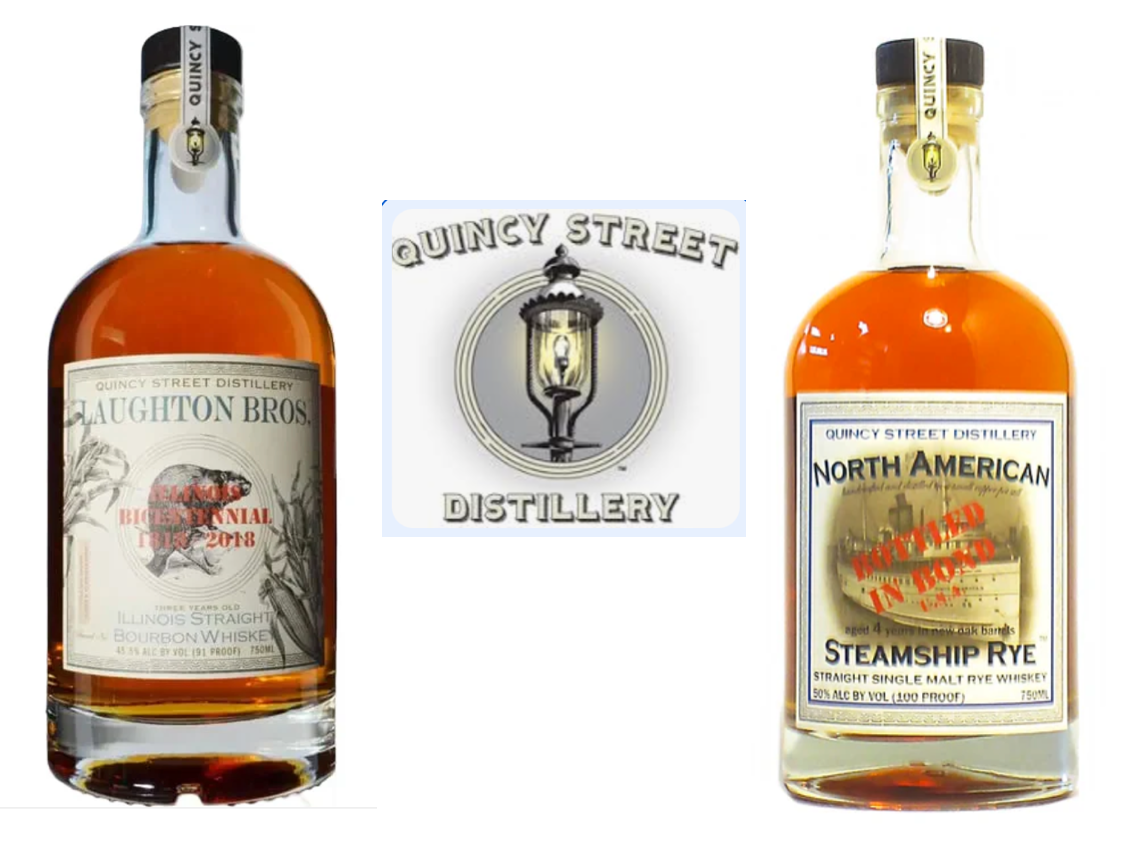
Mancini founded Quincy Street Distillery through his company, Blue Star Potables LLC, and began building the operation in Riverside, a historic suburban community west of Chicago. The distillery commenced operations in 2011 and began producing spirits in 2012. At the time, Illinois had only a handful of modern craft distilleries, making Quincy Street one of the earliest participants in the state’s craft-spirit renaissance. More than a decade later, the distillery remains among the oldest continuously operating craft distilleries in Illinois.
From the beginning, Mancini distinguished himself by combining historical research with distillation. Rather than simply producing conventional bourbon, he became interested in recreating spirits that reflected specific periods of American history. He studied nineteenth-century recipes, historic production techniques, transportation networks, and local Illinois heritage. This historical orientation became one of the defining characteristics of Quincy Street Distillery and helped separate it from many competitors in the crowded craft-spirits market.
His enthusiasm for whiskey has been equally significant. Quincy Street became known for rye whiskey and other grain spirits produced using methods that differ from industry norms. Mancini experimented with unusual mash bills and grain selections, including malted rye. His commitment to long maturation periods also demonstrated patience uncommon among small craft distillers seeking quick returns. In 2017, Quincy Street announced the release of what was described as Illinois’ first craft-distilled Bottled-in-Bond rye whiskey. The whiskey had been aged for four years in full-sized barrels and represented one of the oldest craft-distilled whiskeys then produced in Illinois.
As the Illinois craft-distilling industry matured, Mancini became a recognized voice within spirits production in that state. He has spoken publicly about regulatory issues affecting small distillers, including direct-to-consumer shipping and the effects of international tariffs on production costs. These comments reveal a business owner who not only understands distillation itself but also the economic and legislative challenges confronting independent producers. More than a decade after opening Quincy Street, he continues to guide the business through changing market conditions while maintaining its emphasis on historical authenticity.
Derrick C. Mancini’s career illustrates an uncommon combination of scientist, historian, entrepreneur, and distiller. Through Quincy Street Distillery, he has demonstrated that historical scholarship and scientific rigor can coexist in the production of whiskey and other spirits. In an industry often focused on tradition alone, Mancini brought the mindset of a researcher, using evidence, experimentation, and historical investigation to create a distillery whose identity is rooted as much in history as in the spirits themselves.
Sources:
Quincy Street Distillery official website, “People”, quincystreetdistillery.com
Oak Park magazine, “Sips of Significance at Quincy Street Distillery”, Melissa Elsmo, April 5, 2018, oakpark.com
Derrick Mancini (LinkedIn Profile), linkedin.com
Oak Park & Beyond, “Quincy Street Distillery: Meet Us Where History Is in the Mix,” oakparkandbeyond.org
Distillery Trail, “Quincy Street Distillery Releases …Bottled in Bond Rye Whiskey”, April 29, 2017, distillerytrail.com
Green City Market, “Quincy Street Distillery – Derrick Mancini”, greencitymarket.org
Contributed by Tracy McLemore, Fairview, Tennessee