John McKenzie


John Fraser McKenzie’s professional background began outside the whisky industry. McKenzie was born in January of 1975, and while not much is known about his early life, he served as a helicopter pilot in the British Army Air Corps before establishing The Flying Farmer business in 2007 near Dingwall. His aviation work included assignments involving film and television production, storm-related operations, and repairs. He also maintained a livestock farm and developed renewable-energy installations, establishing a foundation for the environmentally sustainable distillery he would eventually create.
His farm became an important demonstration of renewable-energy technology. McKenzie installed or developed hydroelectric generation, wind power, solar photovoltaic equipment, solar thermal systems, and biomass heating. These installations reduced dependence on conventional energy sources while demonstrating how several renewable technologies could operate together on a working agricultural property. His experience with these systems would become particularly important when planning the energy requirements of a whisky distillery, an industry traditionally dependent on substantial amounts of heat and electricity.
The idea for GlenWyvis emerged in 2011 during one of McKenzie’s helicopter assignments. While transporting Russian visitors around the Highlands, he overheard a tour guide discussing Dingwall’s former whisky industry. The account introduced him to a remarkable chapter of local industrial history and provided the inspiration for establishing a new distillery. McKenzie began investigating how whisky production could return to the area while generating employment, encouraging tourism, and retaining more economic benefits within the community.
Dingwall possessed a substantial distilling heritage. The nearby Ferintosh district had enjoyed a special exemption from whisky duties beginning in 1690, establishing an important early center of Scottish whisky production. During the nineteenth century, two distilleries became especially significant to the surrounding area: Ben Wyvis, established in Dingwall in 1879, and Glenskiach, which opened at nearby Evanton in 1896. Both closed in 1926, leaving the district without its former commercial whisky-making establishments. McKenzie subsequently combined elements of their names to create GlenWyvis, establishing a direct connection between his proposed enterprise and the area's distilling past.
Planning for the new distillery developed during the following years. McKenzie secured planning permission and organized the enterprise that became GlenWyvis Distillery Limited, incorporated on March 31, 2015. The project was structured around a community-ownership model rather than conventional private investment. McKenzie also made land on his farm available to the distillery through a long-term, nominal lease, allowing the proposed operation to benefit from the renewable-energy infrastructure already established there.
In 2016, GlenWyvis became a Community Benefit Society, placing collective ownership at the center of its business structure. Its first community share offer opened in April with an initial fundraising target of £1.5 million. The response substantially exceeded expectations: approximately £2.6 million was raised in just 77 days, attracting more than 2,200 investors. The campaign became a record-setting example of community share fundraising in the United Kingdom and demonstrated the capacity of individual investors to finance a substantial industrial project through collective participation.
Construction commenced in 2017, accompanied by another community share offering to finance the remaining development and operational requirements. The additional investment helped bring the total number of shareholders beyond 3,000. McKenzie also obtained assistance from The Hive, a cooperative business-support program, in developing the second share offer and strengthening investor confidence. The enterprise adopted a democratic ownership arrangement under which its members participated in the governance of the distillery, rather than concentrating decision-making authority solely in the hands of its founder.
GlenWyvis officially opened on November 30, 2017, St. Andrew’s Day, marking the return of whisky distilling to the Dingwall area after approximately nine decades. Duncan Tait, an experienced distiller who had previously worked at Mortlach, joined as distillery manager in November 2017. Whisky production began in early 2018, and the distillery also developed gin, providing a commercial product while its Scotch whisky matured.
The distillery's development also reflected McKenzie's wider commitment to community enterprise. By 2018, he had supported ten other community projects across Scotland, extending his interest in cooperative ownership beyond whisky production. His personal activities included charitable fundraising and endurance sports, with participation in ten Highland Cross events, mountain marathons, and road races. These commitments accompanied his continuing work in aviation, farming, and renewable energy.
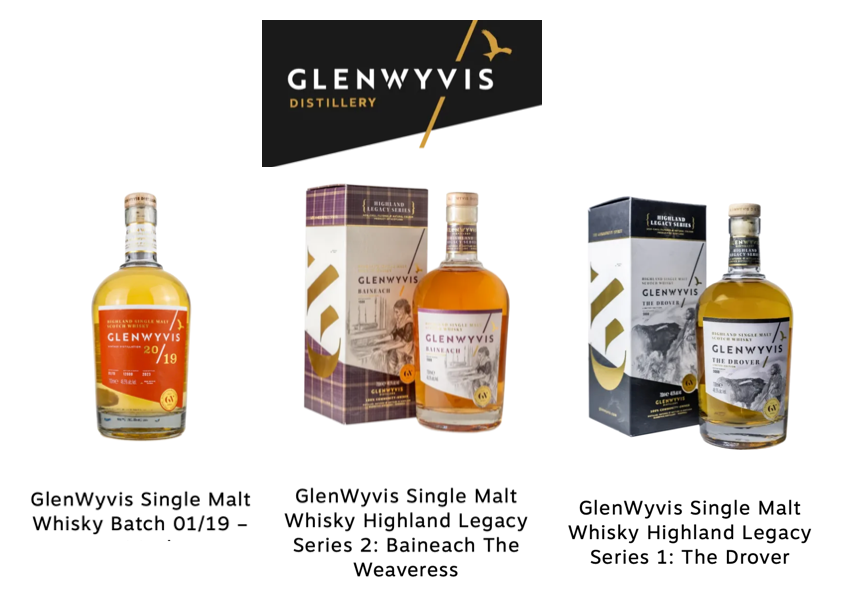
GlenWyvis released its first single malt whisky in 2021, completing the transition from an ambitious community-funded project to a producer of mature Highland Scotch. By February 2026, the distillery reported 3,796 members, each possessing an equal vote regardless of the size of their shareholding. McKenzie's founding concept had consequently developed into an enduring model of collective ownership, with whisky production, renewable energy, and community investment forming its principal foundations.
John McKenzie's contribution to Scottish whisky extends beyond the establishment of another Highland distillery. He demonstrated that a capital-intensive industry traditionally associated with private wealth and corporate ownership could also accommodate a democratically governed enterprise financed by thousands of individuals. GlenWyvis restored whisky production to Dingwall, but its greater distinction lies in the ownership model that made that restoration possible. McKenzie did not simply establish a distillery for a community; he established one that the community itself could own.
Sources:
Far Nearer, “GlenWyvis Distillery: John Mckenzie”, December 7, 2016, farnearer.org
Co-operatives UK, “The World’s First Community-Owned Distillery: Glenwyvis Distillery”, February 27, 2018, uk.coop
Sustainable: The Podcast, “79: The Impact of a Sustainable Distillery – John Mckenzie,
Founder of GlenWyvis Distillery”, Tabi Jayne, January 9, 2018, ivoox.com
GlenWyvis Distillery official website, glenwyvis.com
ScotchWhisky.com, “GlenWyvis Malt Launch Marks Distillery Build”, Melita Kiely, January 30, 2017, scotchwhisky.com
The Spirits Business, “GlenWyvis Gains £500,000 in Funding”, Nicola Carruthers, February 5, 2026, thespiritsbusiness.com
Contributed by Tracy McLemore, Fairview, Tennessee USA