

John McDougall

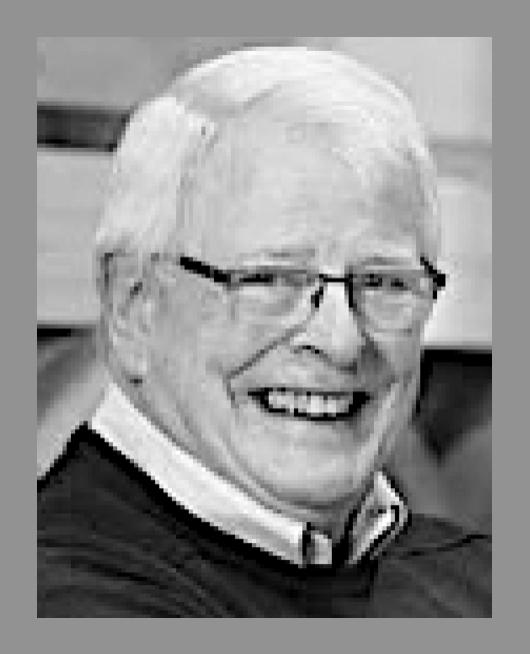
John C. McDougall’s “whisky life” began long before he ever played a significant role at a distillery. Courtesy of his father’s grain business, he grew up inside the world where barley was never just an ingredient, it was a commodity within a relationship-based marketplace. In that context, trust mattered as much as weight or moisture content. If one counts John’s childhood and teenage years spent around that family enterprise helping out where he could in the trading of grain, McDougall reckons that his work involvement in spirits has been seven decades. It turned into a career long enough and varied enough to see the inside of almost all of the industry’s biggest machines.
McDougall began his professional adult career at United Distillers (UD), the company that partially formed what is now spirits behemoth Diageo. From there, his working map of Scotland became unusually complete, and over time, he would be associated with distilleries in every one of Scotland’s traditionally recognized whisky regions. That in itself is an exceedingly rare distinction even among senior production people. In Campbeltown, he worked at Springbank, and on Islay, he worked at Laphroaig. In the Highlands, he worked at Balvenie, and in Speyside, he worked at Tormore; while in the Lowlands, he worked at Ladyburn. He later became manager of Balvenie, Laphroaig, and Springbank, positions that clearly demand more than simply making spirit. For sheer numerical scope of his involvement in Scotch, McDougall states that he has worked at or been directly involved in 28 other malt and grain distilleries.
If the distilleries show one side of his story, the early 1980s part of his career show another, and that is industrial scale and commercial stewardship. McDougall served as Director/General Manager of the Long John International complex in Glasgow, a massive warehousing, blending, bottling, and distribution operation described as the largest totally integrated facility of its kind in the industry at the time. The figure associated with that responsibility, stocks in excess of £1.8 billion in value stored there, captures what this role meant in practice: it was the management of maturing spirit as high-stakes asset. If the early 1980s were then defined by throughput and control, the 1990s, particularly at Springbank, are framed as a pivot back to heritage. There, he was made responsible for resurrecting the distillery’s floor maltings after they were first thought to have become “obsolete”. Floor maltings were important to Springbank because they are one of the few ways a distillery can keep physical control over how malt behaves before it becomes mash.
About that time, McDougall became known publicly beyond distillery gates, and was already a figure whose expertise could be packaged and exported. He had become a familiar voice in whisky education and media, appearing on radio and television in Britain and the United States, and taking part in a Scottish Television series titled Scottish Legends. In October 1999, his first book, Wort, Worms & Washbacks, was published. It sold widely around the world and is often described as among the best-selling books of its kind focused on the whisky business.
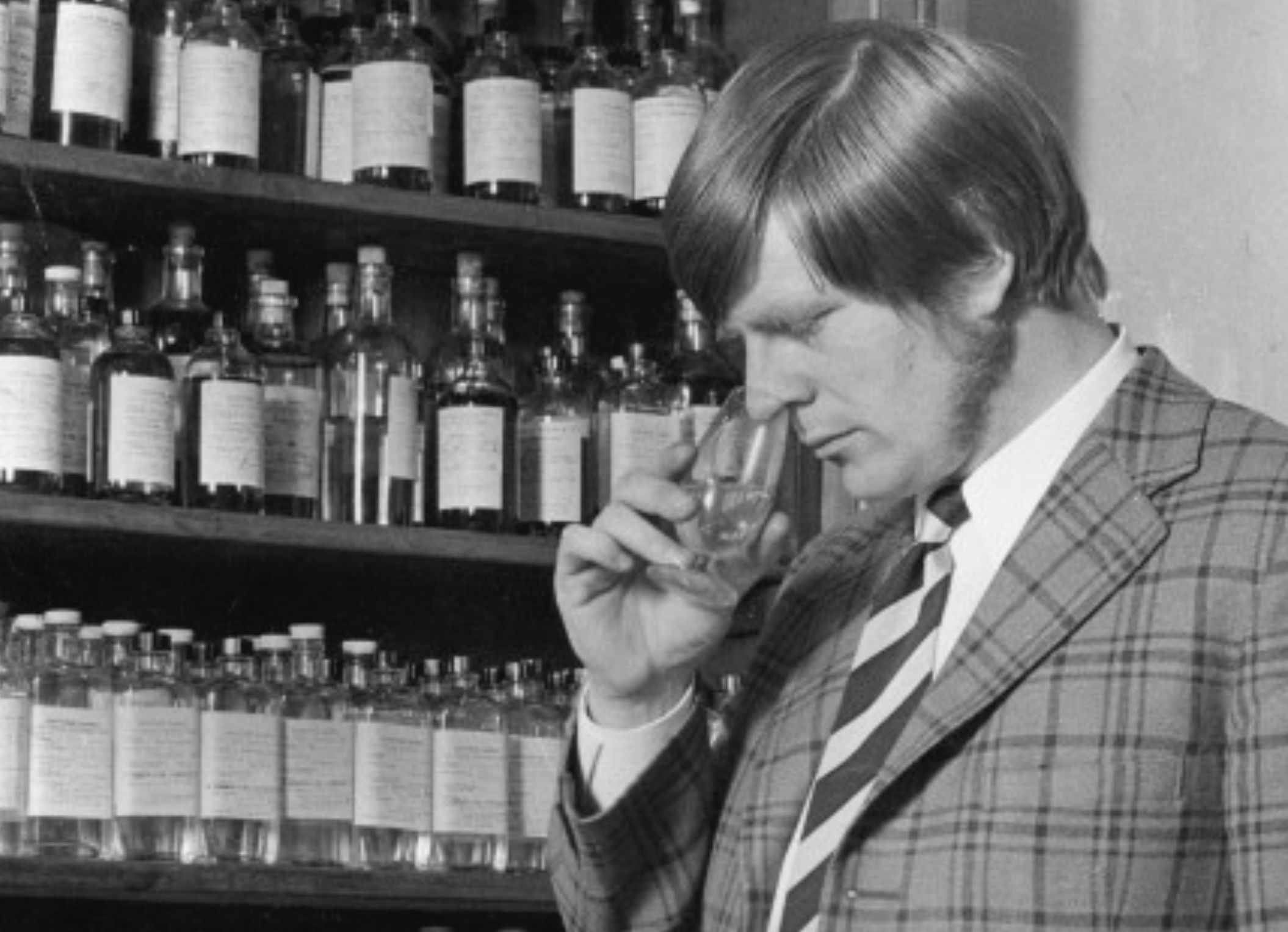
In the early “aughts,” McDougall invested some of his energy into bottling, specifically tiny-batch, single-cask single malt releases. With his partner Jane MacDuff, he developed the “Golden Cask Series,” and in May 2004 he first released “John McDougall’s Selection,” a single-malt, single-cask line that still rarely appears “only when I feel like doing it,” according to John.
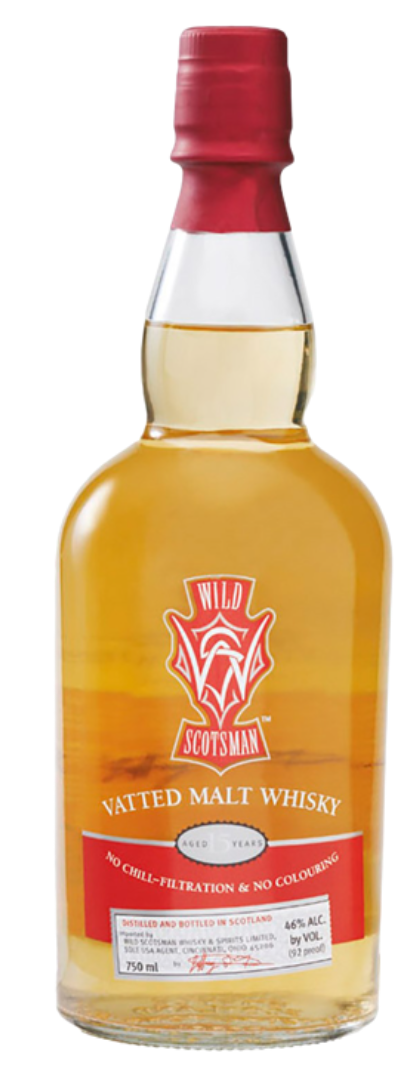
In 2004 he was also instrumental in formulating The Wild Scotsman Blended Malt for the States’ cigar-smoker’s market, which included malts from all of Scotland’s producing regions. More recently, he has formulated whisky products for the Indian market as a consultant to Radiant Distillers in Assam, India. He has also mentioned a personal affinity for Assam, because it is the region where his father was born and raised during the first years of his life.
Away from whisky, McDougall’s personal interests include motoring. He is passionate about cars and motorcycles, owning several premium nameplates, including Jaguar and Cadillac, as well as several vintage Norton motorcycles.
By 2025, McDougall is in his early 80s, yet his work has not narrowed into quiet retirement. Instead, it has taken the form that it sometimes takes for a truly seasoned production figure. His project is Knockhill Distillery in West Fife, a family-driven, independent distillery project at Din Moss Farm near Dunfermline. There, what had been a poultry shed is being repurposed into a distillery, part of a diversification strategy for a farm that produces sheep and poultry, but faces seasonal grazing limits that reduce income in the snow-covered months. The Knockhill project emphasizes sustainability by utilizing recyclable glass bottles, sharing distillery by-products with neighboring farms, and using water from an underground spring via a private borehole. The distillery is currently the only distillery in West Fife, with first-run production scheduled for late 2025.
In all, if McDougall’s story has a single through-line, it is that he never treated whisky as one job, he treated it as an ecosystem of grain and people, equipment and wood, process and patience, spirit and stock, branding and bottling, local tradition and global markets. Not many careers cover the scope of that spectrum, and fewer still new projects continue to truly matter to consultants well into their eighth decade. But McDougall’s authority comes from having done the work at every scale, and from still being willing and able to walk onto a new site and make the fundamentals behave every bit as well as he made them do in the 1960s.
Sources:
Knockhill Distillery official website, “Knockhill Distillery…”, knockhillspirits.com
John C. McDougall official blog page, “Home”, johncmcdougall.com
Drinks Adventures Podcast, “John McDougall ex-Balvenie, Laphroaig, Springbank…”, James Atkinson, 11 Oct 2022, drinksadventures.com.au
Some photographs courtesy of johnmcdougall.com
Contributed by Tracy McLemore, Fairview, Tennessee USA