King McClure

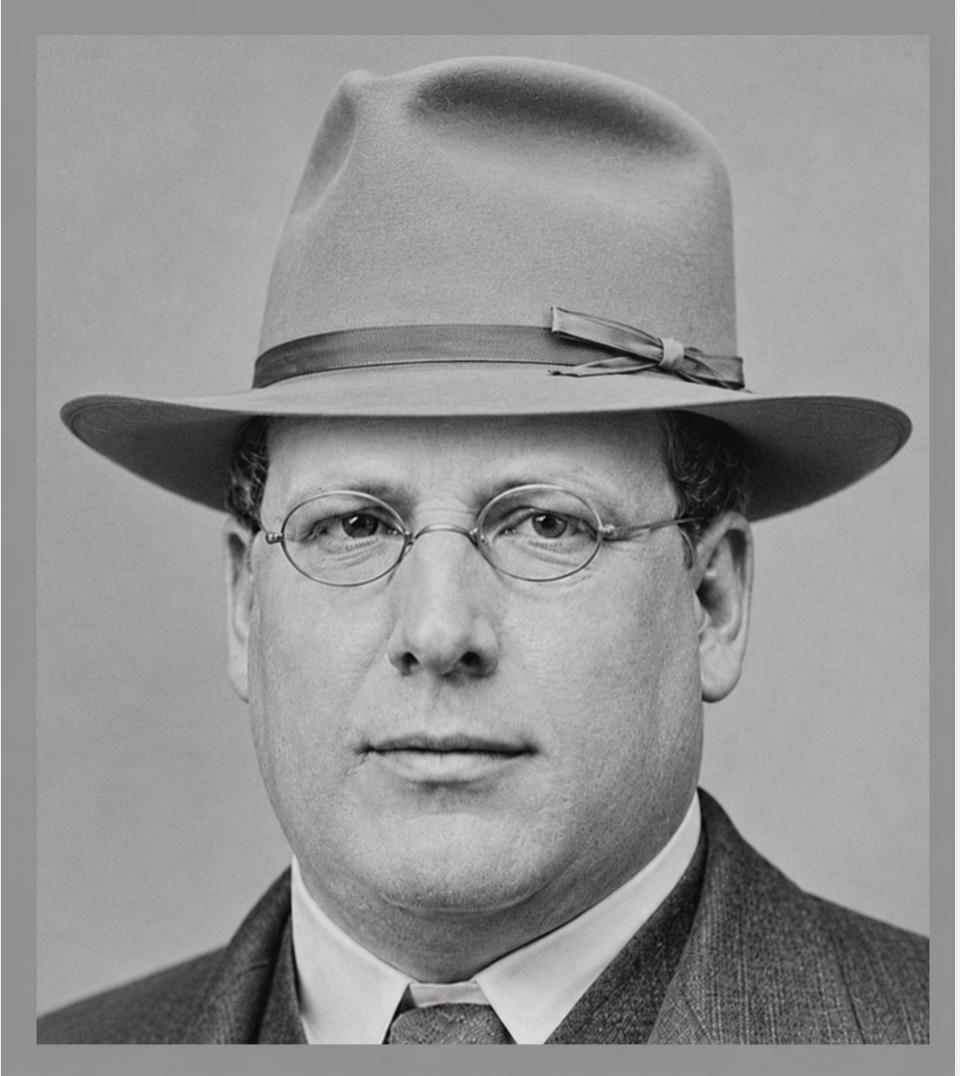
There are no known actual photographs of King McClure.
Above is an AI-generated image of him based on facts known about his life.
Charles "King" McClure occupies a distinctive place in the history of Stitzel-Weller Distillery because he represented a different kind of leadership than the Master Distillers whose names have become synonymous with the company's legendary bourbons. William "Boss" McGill, Andrew J. Corcoran, Roy Hawes, and Woodrow "Woody" Wilson built the whiskey itself, while McClure helped guide the company that produced it. As an executive, industry spokesman, and trusted member of the Van Winkle family, he became one of the principal architects of Stitzel-Weller's corporate reputation during the tough middle decades of the twentieth century. McClure’s influence also reached far beyond the walls of the Louisville distillery and into the legislative and regulatory affairs that shaped Kentucky's whiskey industry for an entire generation
McClure was born on July 10, 1910 in St. Louis, Missouri, the son of Charles King McClure, Sr. and Mary Hicks McClure. Young McClure’s father passed away when he was a child, leaving him to be raised primarily by his widowed mother, who made their home in the St. Louis suburbs, where “King” graduated from high school in 1928. He then attended and graduated from Westminster College, a private liberal arts college in Fulton, Missouri. King always maintained a strong affinity for his alma mater, later serving as a trustee and helping recruit students to the institution. After college, McClure moved to Louisville, Kentucky to find employment in the then-booming distilling industry.
Meanwhile, in 1935, Pappy Van Winkle had joined forces with Arthur Philip Stitzel and Alex T. Farnsley to construct the Stitzel-Weller Distillery, where the trio oversaw operations, while Boss McGill oversaw the development of the whiskey itself. McClure applied for a job at the distillery, and began employment in 1936.
From the time McClure started in the distilling business, his talents were recognized by Pappy Van Winkle. Before long, the good-looking and industrious McClure also attracted the attention of Pappy’s daughter, Mary Chenault “Rip” VanWinkle. The two began to date in 1938, and the following year, Charles King McClure Jr., and Mary VanWinkle married. The newlywed McClures soon had two children, daughter Chenault, and son Charles King McClure III.
King’s bosses and his colleagues at Stitzel-Weller quickly recognized, not only his understanding of the whiskey business, but also his ability to communicate effectively with government officials during a period when regulation touched nearly every aspect of American commerce. That confidence reached its clearest expression during the Second World War, when the bourbon industry unanimously selected McClure as its representative before the federal Office of Price Administration. The Office of Price Administration exercised enormous authority during the war years. Created to combat inflation and ensure fair distribution of scarce commodities, it regulated prices on countless consumer goods, including distilled spirits. For Kentucky's distillers, the challenge extended beyond simple pricing. Wartime restrictions affected raw materials, transportation, production priorities, and the financial stability of companies already recovering from the disruptions of Prohibition and the Great Depression. McClure served as the industry's principal voice before the federal government, helping explain the practical realities of whiskey production while protecting the interests of Kentucky distillers operating under unprecedented federal oversight.
Once the war ended, the bourbon industry entered a period of prosperity, where McClure's influence continued to grow. He served on the Board of Directors of the Kentucky Distillers' Association for more than twenty-five years, making him one of the organization's longest-serving leaders. During those decades Kentucky bourbon evolved into one of the Commonwealth's defining economic and cultural enterprises. The association became the principal voice for Kentucky distillers, addressing legislation, taxation, interstate commerce, and public policy. McClure's long tenure on its governing board placed him at the center of many of the decisions that shaped the industry's future. But his most significant public accomplishment came during his service as chairman of the Kentucky Distillers' Association in 1966. Since 1933, Kentucky's distillers had labored under a state production tax on distilled spirits that many within the industry regarded as an unnecessary burden on one of the Commonwealth's signature businesses. The tax increased production costs at a time when Kentucky distillers already faced growing competition from Canadian whisky, Scotch whisky, vodka, and other emerging spirits. Under McClure's leadership, the association successfully persuaded state lawmakers to repeal the production tax, removing an obstacle that had affected Kentucky distillers for more than three decades. The legislative victory represented one of the most important achievements of his career and demonstrated that his talents extended well beyond the executive offices of Stitzel-Weller.
Within Stitzel-Weller itself, McClure helped provide continuity during years of considerable transition. The deaths of Alex T. Farnsley in 1941 and Arthur Philip Stitzel in 1947 gradually shifted greater responsibility to Pappy Van Winkle and the next generation of company leadership. McClure worked alongside Julian Van Winkle, Jr., helping guide the company through changing consumer tastes, expanding national distribution, and the increasingly competitive bourbon marketplace of the 1950s and 1960s. While Master Distillers maintained production standards, McClure contributed to the executive stability that allowed those craftsmen to continue producing the wheated bourbons for which Stitzel-Weller became famous.
By the late 1960s the bourbon industry faced different challenges. American consumers began a shift toward a strong preference for vodka and lighter spirits, tanking bourbon sales and forcing many long-established distilleries to reconsider their future. Although Stitzel-Weller ultimately would be among the long-established distilleries to be sold in 1972 ending the Van Winkle family's ownership, the company maintained a reputation for quality and integrity that had been strengthened by decades of steady leadership from individuals such as McClure.
Charles King "King" McClure died on November 8, 1977 and was buried in Louisville’s famous Cave Hill Cemetery. Unlike the Master Distillers whose names are remembered for mash bills and warehouses, McClure's legacy rests upon the institutions he strengthened and the industry he helped protect. The bourbon renaissance of the twenty-first century owes much to celebrated brands and legendary Master Distillers, but it also rests upon the quieter work of executives like King McClure, whose steady leadership helped preserve the economic and legislative foundation upon which Kentucky's whiskey industry continues to thrive.
Sources:
Kentucky Distillers' Association, "Honorary Lifetime Members”, March 1, 2011, kybourbon.com
Stitzel-Weller Distillery official website, stitzelwellerdistillery.com
K&L Spirits Journal, "Kentucky: Day 5—Stitzel-Weller,” David Driscoll, October 26, 2013, spiritsjournal.klwines.com
Contributed by Tracy McLemore, Fairview, Tennessee