
Michel Marcil



Red Bank Whisky
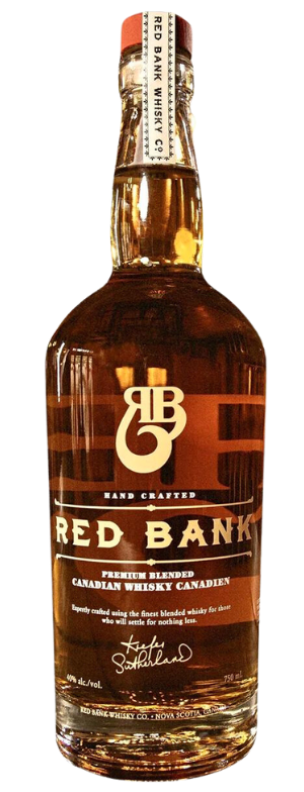
Michel Marcil’s name isn’t on the front label of Red Bank Whisky, but he’s the one who built what’s inside the bottle. Red Bank markets itself as a coastal Canadian whisky with roots on the rocky Atlantic shore of Nova Scotia; an easy-drinking blend meant to be shared around a fire, guitar in reach, friends nearby. The whisky is positioned as smooth, balanced, and approachable, but still structured: a marriage of rye, corn, and wheat whiskies, blended for spice, warmth, and texture. The person responsible for that marriage is Marcil, described consistently in public materials as an “award-winning Master Blender” with more than 40 years of experience in Canadian whisky.
Marcil’s role at Red Bank puts him in the classic Canadian whisky tradition: he is not presented as a distillery founder or as a celebrity face, but as the quiet technician whose palate, judgment, and discipline define the final liquid. Red Bank’s own profile says the whisky is “master crafted” by Marcil, and that it is “perfectly balanced for extra smoothness and complex notes,” language that signals deliberate blending rather than heavy-handed finishing or novelty cask tricks. Canadian whisky has always been blender-driven. Where bourbon makers talk about mash bills and single-site lineage, Canadian whisky leans hard on grain streams (rye, corn, wheat) distilled separately and then composed. Marcil is exactly that kind of composer: someone who can take separate whiskies made from those different grains and “marry” them into Red Bank’s house profile.
Red Bank’s developer, Kiefer Sutherland (who co-founded the brand in 2022 with Gary Briggs, Shawn Hiscott, and Rob Steele) has said that he told Marcil what he personally loved in whisky: something with rye-like character and structure, but still soft and welcoming. According to Sutherland, he described his ideal flavor direction, and Marcil went away, built multiple candidate blends, and came back with six samples. Out of the six people tasting, five chose the blend that ultimately became Red Bank. Sutherland jokes that the sixth taster “wasn’t invited back.”

Marcil himself has spoken a little, though only a little, about his priorities in the glass. In one interview about Red Bank, he said that “balance is important for me when I create something,” and he described Red Bank as something you can sip neat, over a single cube, or in a Manhattan. That’s revealing. Canadian whisky can be blended to lean sweet, lean spicy, lean grainy, lean woody. The way Marcil frames it, Red Bank was designed to be versatile without disappearing in a cocktail and without punishing a casual drinker. He also said that Sutherland “drinks whiskies from around the world,” and that Sutherland asked him for something “really appealing. Spicy like a rye but smooth too.” In the end, what Sutherland ordered and what Marcil then created was a San Francisco World Spirits Competition gold medal winner, which then subsequent rapidly expanded into every Canadian province and the U.K. market in by 2024.
Sources
Red Bank Whisky official site, redbankwhisky.com
Master of Malt, “Kiefer Sutherland launches…”, Adam O’ Connell, May23, 2024
The Whiskey Wash, “Red Bank Launches…”, May 24, 2024
VineRoutes, “3 Whiskys that Offer a Canadian…” , Andrew Coppolino, February 22, 2024
Craft Spirits Magazine, “Kiefer Sutherland Launches Red Bank Whisky”, May 25, 2023
Contributed by Tracy McLemore, Fairview, Tennessee