Sir Thomas Phillipps

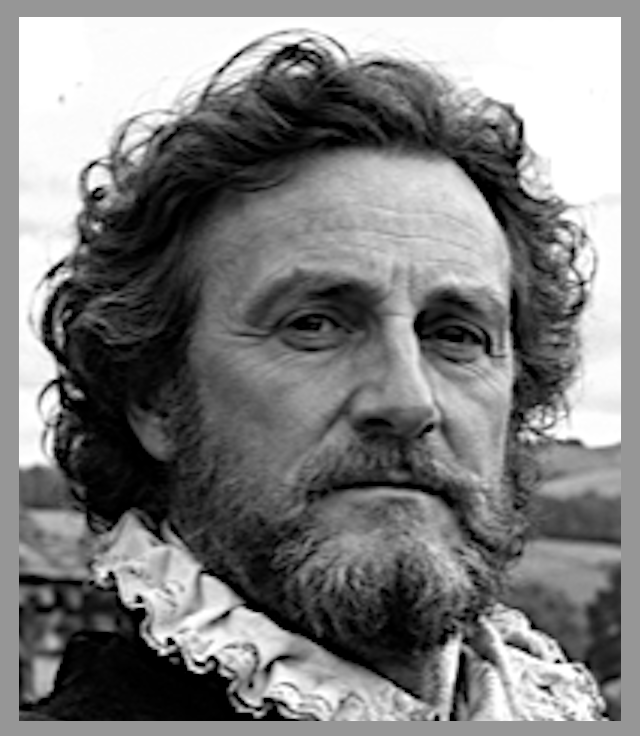
No actual photograph of Sir Thomas Phillipps exists. The AI-generated image
shown is an interpretive representation and not an authenticated likeness.
Sir Thomas Phillipps was born about 1560 in England. He was the eldest son of William Phillips, a prosperous London merchant involved in the wool trade, and his wife, Joane Houghton. His father accumulated substantial property in London, Middlesex, and Suffolk, leaving Thomas a considerable inheritance upon his death in 1590. Yet rather than pursuing his father's commercial interests, Phillipps established a military career that brought him to Ireland, where his name would eventually become permanently associated with one of the most celebrated dates in Irish whiskey history.
Phillipps had entered military service at the age of 18, and spent much of the following twenty years campaigning in continental Europe. He served principally in France, including approximately ten years as a captain under Henry of Navarre (who later became King Henry IV of France). His military experiences also took him to Italy, Spain, Portugal, and Africa, and as a result he became fluent in both French and Spanish. By November 1598, when he arrived in Cork with reinforcements for the English Crown during the Nine Years' War, Phillipps was an experienced officer with a real-world education and an established military reputation.
After serving in Munster and the Irish midlands, Phillipps was transferred to Carrickfergus in County Antrim. In July 1602, he captured the strategically important fort at Toome on the River Bann and subsequently commanded its garrison. Following the defeat of the Irish rebellion in 1603, his military accomplishments helped establish his position in Ulster. His commanding officer, Sir Arthur Chichester, became Lord Deputy of Ireland in 1605 and supported Phillipps in acquiring property and administrative authority throughout the region.
Phillipps obtained a lease at Portrush in June 1605, followed by one in Coleraine and six neighboring townlands that September. In February 1606, he secured the fort at Toome and thirty adjoining acres. He then invested extensively in developing Coleraine, encouraging commercial activity and surrendering his customs privileges on the River Bann for four years to stimulate trade. His standing continued to rise, and he was knighted in March 1607. By January 1608, he had become governor of Coleraine.
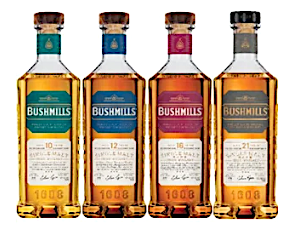
On April 20, 1608, Phillipps received the royal authorization that established his lasting connection with Irish whiskey. King James I granted him a seven-year license permitting the production and sale of distilled spirits within the County of Coleraine and the territory known as the Route in County Antrim. The authorization covered aquavite, usquabagh, and aqua composita, terms of the time that are associated with early whisky and other distilled alcoholic beverages. It permitted Phillipps, his servants, and approved assignees to manufacture and sell spirits throughout the designated territory in exchange for an annual payment of thirteen shillings and fourpence. The license was a substantial commercial privilege, extending beyond permission to operate a still. Phillipps received authority to pursue unauthorized distillers and enforce restrictions against competing production within the licensed territory, subject to specified exemptions. The grant demonstrated the Crown's increasing interest in regulating an established Irish distilling tradition and deriving revenue from its production. Distillation had existed in Ireland long before 1608, but Phillipps's surviving authorization became an important documentary landmark in the industry's history, and the connection between Phillipps and the Old Bushmills Distillery rests upon that historic license.
Phillipps's activities during the years following the license centered primarily on land development and the English plantation of Ulster. In 1609, he helped organize the involvement of London's commercial interests in the settlement of County Coleraine, accompanying representatives of the London companies during their inspection of the region. He subsequently surrendered his Coleraine holdings in exchange for property near Limavady and Toome. At Limavady, he developed a fortified residence, houses, an orchard, and elaborate gardens, establishing another substantial settlement.
During the 1610s and 1620s, Phillipps became increasingly involved in disputes concerning the administration of the Londonderry plantation. He criticized the London companies for failing to meet their obligations, particularly regarding fortifications and settlement conditions. His investigations eventually contributed to royal intervention and legal proceedings against the corporation. Although the Crown increasingly recognized his work, the prolonged disputes exhausted much of his personal fortune. By 1633, his properties were heavily mortgaged, and he faced serious financial difficulties.
Phillipps married twice. His first wife, Dorothy Paulet, was the daughter of Sir George Paulet of Hampshire and Jane Kyne; the marriage produced four sons and one daughter before Dorothy's death in 1612. His second wife, Anne Ussher, daughter of Sir William Ussher, clerk of the Irish council, bore him another daughter. His eldest son, Dudley, eventually succeeded him.
On November 8, 1635, King Charles I awarded Phillipps £5,000 in recognition of his services, although much of the money went toward satisfying creditors. Phillipps died in August 1636 at Hammersmith, west of London, approximately seventy-six years old. His military and administrative career occupied most of his adult life, yet his enduring place in whiskey history rests upon a single royal document issued in 1608. More than four centuries later, that authorization remains inseparable from the heritage of Bushmills Irish whiskey and the history of licensed distillation in Ireland.
Sources:
Dictionary of Irish Biography, “Phillips, Sir Thomas”, Terry Clavin, October 2009, dib.ie
Bushmills Irish Whiskey, bushmills.com
Causeway Museum Service, “The Project of Plantation: 17th Century Changes in North East Ulster”, 2013, niarchive.org
Royal Society of Chemistry, “Whisky's Historical Development”, 2020, books.rsc.org
Ireland's Eye, “Bushmills: 400 Years of Irish Whiskey Making, Chapter Five”, irelandseye.com
Whisky Magazine, “Journey from Hell to Reach Whisky Heaven”, 2001, whiskymag.com
Causeway Coast and Glens Heritage Trust, “Old Bushmills Distillery”, 2019, niarchive.org
Contributed by Tracy McLemore, Fairview, Tennessee USA