John Ramsay


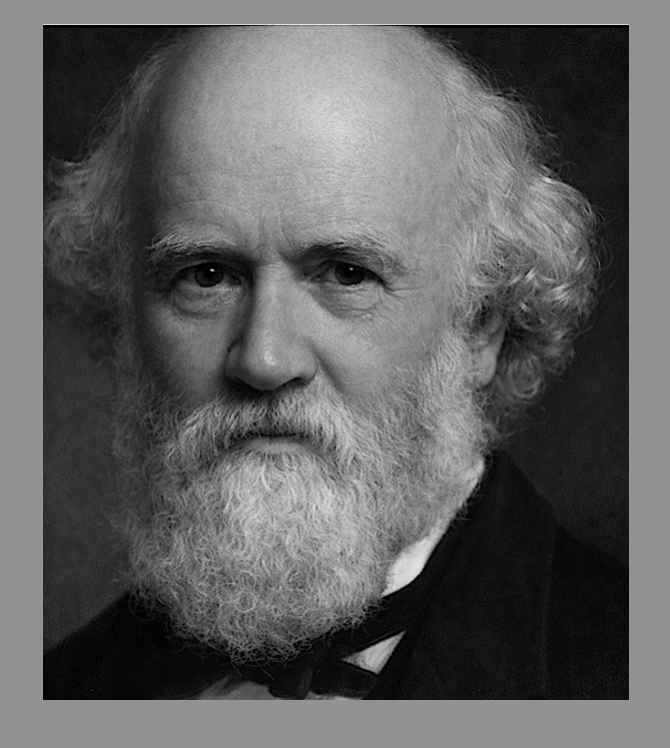
The above is an AI-enhanced image based on an actual portrait of John Ramsay.
John Ramsay was born on 15 August 1814. His parents were Robert and Elizabeth. Despite his standing at the end of his life, as a boy, he did not inherit security, but neither was his personality inclined to wait for permission to attain it. Ramsay was largely self-educated, leaving his schoolmaster in Stirling at age 12, then making his way toward Glasgow to work, first in Balfron, later as a clerk in a cotton mill at Eaglesham. At 13, he kept careful personal accounts, down to paying for his own Latin lessons, and education remained one of his lifelong fixations. He took classes at Glasgow University, but in April 1831, his father left for Montreal and started again, while John, still a teenager, looked for a different sort of future. That future came with a name that would later sound like a distillery label: Port Ellen.
Port Ellen had been founded in 1825 by Alexander Kerr Mackay on Islay’s south coast, built out of an older milling context and quickly swallowed by financial trouble. Mackay’s bankruptcy pushed control to others in his circle, and the place remained a struggling asset rather than a secure enterprise. By the early 1830s though, Port Ellen had become important enough to be watched even by people who didn’t live on Islay. Ramsay’s extended family had distilling interests and connections, and in 1833, at the age of 19, Ramsay was sent to Islay to assess whether Port Ellen was being managed properly. Contrary winds put him ashore away from Port Ellen, forcing a long trek overland before he reached the distillery, only to find that another family member had effectively given up on it, but Ramsay did not. He reported back that the distillery was workable, and the family decided he should be trained properly.
That training was not romantic. It was hard work, apprenticeship wages, and responsibility. He was trained in Alloa as a distiller by James Morrison, then returned to Islay to take on management at a stated salary. In short, Ramsay arrived as a very young man building competence in bookkeeping, production, and the hard practicalities of keeping a distillery alive. The turning point came when the legal and land framework shifted in Ramsay’s favor. The lease on Port Ellen was held by Major James Adair, whose death in 1840 opened the way for new arrangements. On Islay, land power mattered, and Walter Frederick Campbell, the island laird, used his right of pre-emption, bought the distilling business, and then a new lease was drawn that placed Ramsay in control on terms he could work alongside neighboring farms that anchored him as more than a distillery manager.
From there, Ramsay’s Islay story becomes bigger than stills. He modernized farming at Cornabus, drained bogland, and introduced new farm practices, becoming a known agricultural voice. This wasn’t a hobby. On Islay, distilling and farming were entangled irrevocably. Still, when the potato famine of 1846 struck, the island’s economy strained; rent arrears rose; Campbell’s estate went into administration, and Ramsay became part of the machinery trying to hold the place together.
Meanwhile, Port Ellen had become a platform for technical and commercial “firsts” that pushed beyond Islay. In 1848, Ramsay began to build the market side, targeting direct exports to the United States. He handed day-to-day distillery management to his brother-in law, James Stein, who had recently married Ramsay’s sister, Margaret, and moved to Islay. With someone trusted on the ground, Ramsay could spend more time building the mainland-facing side of the business, including imports and cask supply, and lobbying for structures like duty-free warehousing as part of the whisky trade.
In 1855, Ramsay acquired a large swathe of land around Port Ellen, later supplemented by further purchases, so that he effectively became landlord over the ground on which other famous distilleries operated. This is where “Port Ellen” stops being one distillery and starts being an axis: Ramsay’s position tied together Port Ellen, Laphroaig, Lagavulin, Ardbeg and the wider parish economy through leases and rentals. He then turned his attention to Port Ellen’s infrastructure. Ramsay is repeatedly credited with helping establish or operate steamship links between Islay and Glasgow, turning whisky from an island product into a scheduled cargo. In 1881, he enlarged and improved the pier at Port Ellen, explicitly connected with export trade. By that point, Ramsay was not merely Port Ellen’s distillery operator, but the dominant power along the entire Kildalton coast.
In April 1868, Ramsay was elected at a by-election as the Member of Parliament (MP) for Stirling Burghs when his predecessor gave up the seat. He only sat until the general election in November that year, when he lost the seat to the future prime minister Henry Campbell-Bannerman.
His private life sits beside his public work. Ramsay brought his first wife, Eliza Shields of Lanchester, to Ardimersay in 1857. Unfortunately, she died just six years later in 1864. By 1870, Ramsay was also commissioning a physical monument to his success and status: Kildalton Castle, in Port Ellen was designed in 1867. Construction was finished by 1870: an opulent, rambling, Scottish baronial country house built specifically for the popular, powerful man-about-town and his elegant new wife-to-be. He married again in 1871 to Lucy Martin of Auchendennan, and in 1878, John and Lucy had a son, Iain.
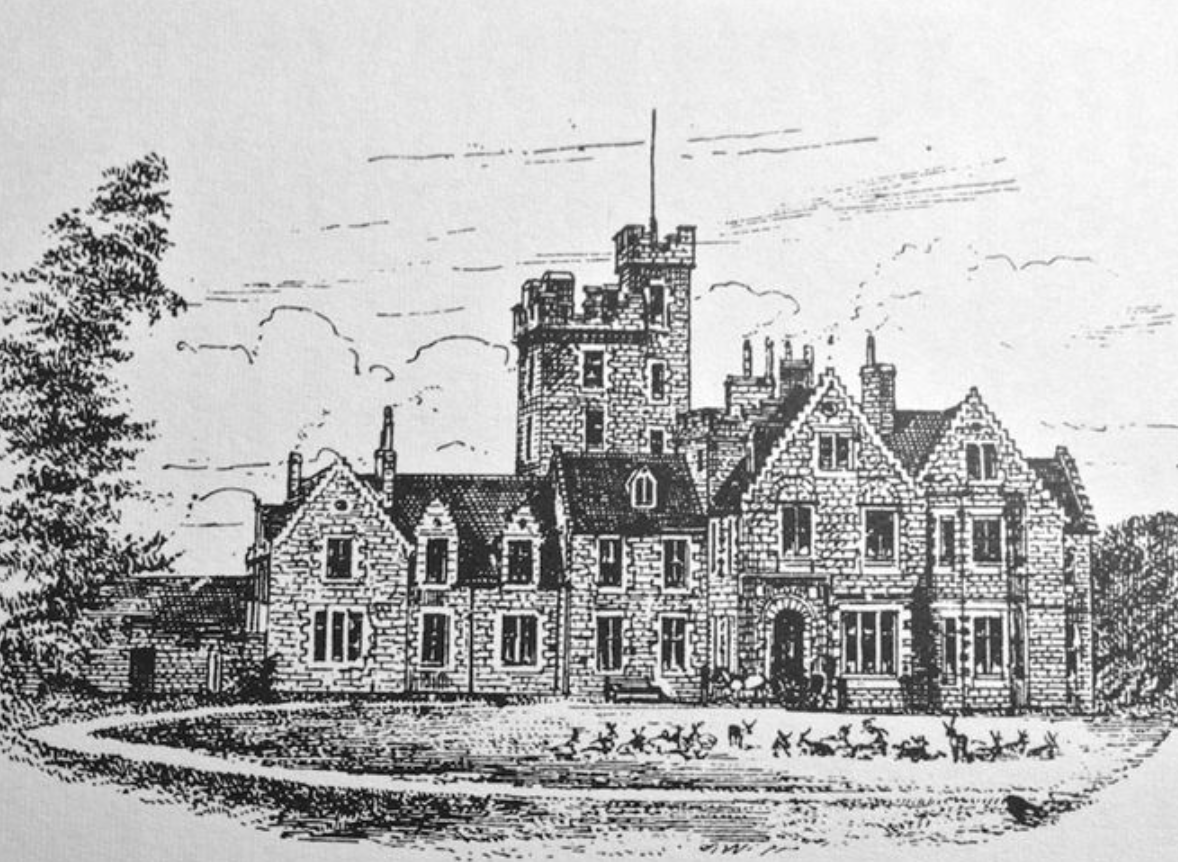
Rendering of Kildalton Castle, 1884
Ramsay was also a member of the Royal Commission on Endowed Schools in Scotland in 1872. In the 1874 general election, he was elected as the MP for Falkirk Burghs, but discovering he had been in breach of regulations as he held a government contract at the time, stood down in March, yet he was re-elected at a by-election that month. He held the seat until 1886; in the meantime was a member of Endowed Institutions Commission under an Act of 1878, and of Educational Endowments Commission under an Act of 1882.
John Ramsay died in 1892 at Kildalton, aged 78 years. After his death, Port Ellen distillery remained in Ramsay family hands under Lucy Ramsay, then passed to Captain Iain Ramsay, when Lucy died in 1906. Iain ultimately sold it in the early 20th century, amid the pressures that reshaped Scotch as a commodity: financial instability, war, and consolidation of distilleries.
In the end, John Ramsay’s story is less based on an ingrained love for distilling, and more on the sheer luck involved in being in the right place at the right time, coupled with the courage to act decisively when it would have been easier to go back to Glasgow. His legacy, then, is a learned love affair with a tiny Hebridean island and its inhabitants. To that end, John Ramsay may not have “founded” Port Ellen distillery, but he certainly used his judgment, wiles, and nerve to make sure that it stayed founded.
Sources:
ScotchWhisky.com — “Whisky heroes: John Ramsay, Port Ellen”
Mark Littler Ltd — “The History of Port Ellen: Everything You Need To Know”
UK Parliament Historic Hansard (api.parliament.uk) — “Mr John Ramsay” (constituencies; 1814–1892)
Publication, “John Ramsay of Kildalton,” Freda Ramsay, 1968, pub. Peter Martin Assoc., Ltd.
Publication, “The Legend of Port Ellen Distillery,” Holger Dreyer, 2015, Unibuch Verlag pub.
88 Bamboo, “Chapter 1: The Beginning; Port Ellen: Distillery and Maltings”, 5 January 2022 (excerpt from "Port Ellen: Distillery and Maltings" (pp. 2 - 6), by John A Thomson, published 2010 by Diageo Plc., 88bamboo.co/blogs
Contributed by Tracy McLemore, Fairview, Tennessee USA