Jörg Rupf


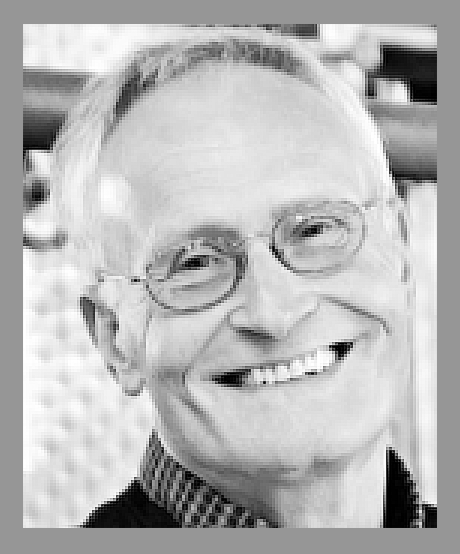
Jörg Rupf entered the American spirits trade from an unusual direction. Born in 1944 in Colmar, Alsace—then under German control and now part of France—he moved with his family first to Freiburg in Germany’s Black Forest and later to the Lake Constance region. Distilling was already part of his family’s heritage, particularly the European tradition of turning ripe fruit into clear, aromatic eau-de-vie. Rupf pursued a different profession at first, studying law, earning a doctorate, and becoming a judge in Munich before working for Germany’s Ministry of Internal Affairs and Ministry of Culture.
In 1976, Rupf took leave from government service and traveled to California to undertake postgraduate study at the University of California, Berkeley. His academic subject concerned the relationship between government and the arts, but Northern California’s emerging food and wine culture offered another education. The region possessed an abundance of high-quality pears, cherries, raspberries, and other fruit suitable for distillation, yet traditional European-style fruit brandy remained largely unknown in the United States. Rupf left the legal profession and began applying his family’s Black Forest distilling knowledge to California agriculture.
Rupf initially worked in Emeryville under the auspices of Veedercrest Vineyards. In 1982, he founded St. George Spirits, operating with a 65-gallon Holstein copper pot still and concentrating on eau-de-vie. Fewer than 20 distilleries then operated in the United States, and St. George became the country’s first modern small artisanal distillery. Rupf distilled pears, cherries, raspberries, and even kiwi fruit, preserving the character of the raw ingredient rather than masking it with flavorings or prolonged barrel aging. Television personality and culinary educator/chef Julia Child learned of his work and sent him a letter of encouragement, describing his efforts as newsworthy.
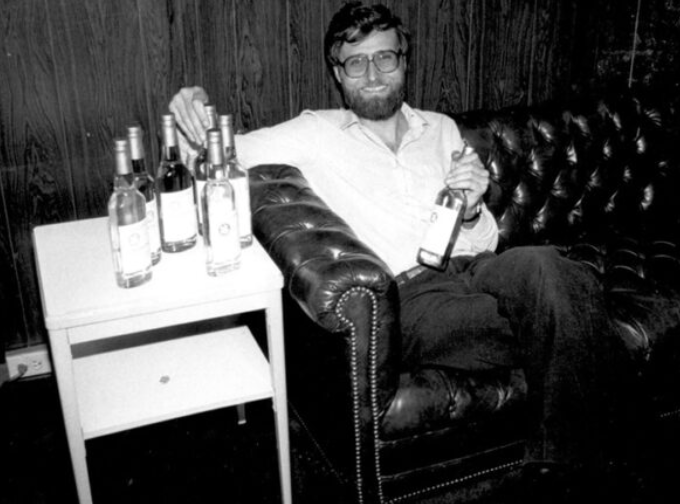
Rupf in the early 80s
The painstaking production of eau-de-vie established the technical principles that eventually carried St. George into whiskey. Rupf experimented with fermentation methods that were not common among traditional European fruit distillers, seeking greater aromatic intensity and cleaner expression from the fermented material. His Poire William pear brandy eventually defeated hundreds of European competitors in Austria’s Distillata blind tasting. Just as importantly, he created a culture in which the quality of the raw material, careful fermentation, and precise distillation took precedence over established categories or conventional expectations.
Rupf also helped build the wider American craft-distilling community. He mentored aspiring producers and assisted people who established such operations as Clear Creek Distillery, Bonnie Doon, Westford Hill, and CapRock Distillery. Bill Mannshardt became St. George’s first official employee and spent 12 years helping Rupf develop the operating infrastructure needed to move the business beyond its one-man beginnings. By the middle of the 1990s, St. George had survived long enough to demonstrate that a small American distillery could compete through technical rigor and distinctive products.
Whiskey entered the story in 1996, when Lance Winters arrived at St. George with an unconventional résumé: a bottle of homemade whiskey. Winters had served in the U.S. Navy as a nuclear engineer and had worked as a brewer, experience that gave him a practical command of grain, malt, fermentation, and flavor development. Rupf initially employed him on a 30-day trial, but the arrangement became a defining partnership. Rupf supplied years of distilling knowledge and exacting production standards, while Winters brought a brewer’s understanding of malt and a determination to create an American single malt whiskey.
Following extensive experiments with different mash bills, Rupf and Winters placed their first single malt spirit into barrels in 1997. Their whiskey used malted barley in several forms rather than imitating the corn-dominated formula of Kentucky bourbon. Different roasting levels contributed different flavors, while smoked malt added another layer to the distillate. The project applied St. George’s eau-de-vie philosophy to grain: fermentation and distillation had to capture the inherent character of the ingredient before maturation added the influence of wood.
St. George released Lot 1 of its Single Malt Whiskey in 2000, years before American single malt became an established commercial category. The distillery’s early description of the product as an “American Scotch” reflected the difficulty of explaining it to consumers, although the whiskey was made in California and developed according to St. George’s own methods. Each annual lot became a blend assembled from the distillery’s inventory rather than a mechanical reproduction of the previous release. Over time, St. George employed barrels that had held bourbon, Tennessee whiskey, brandy, rum, port, and dessert wine, allowing successive lots to express both continuity and variation.
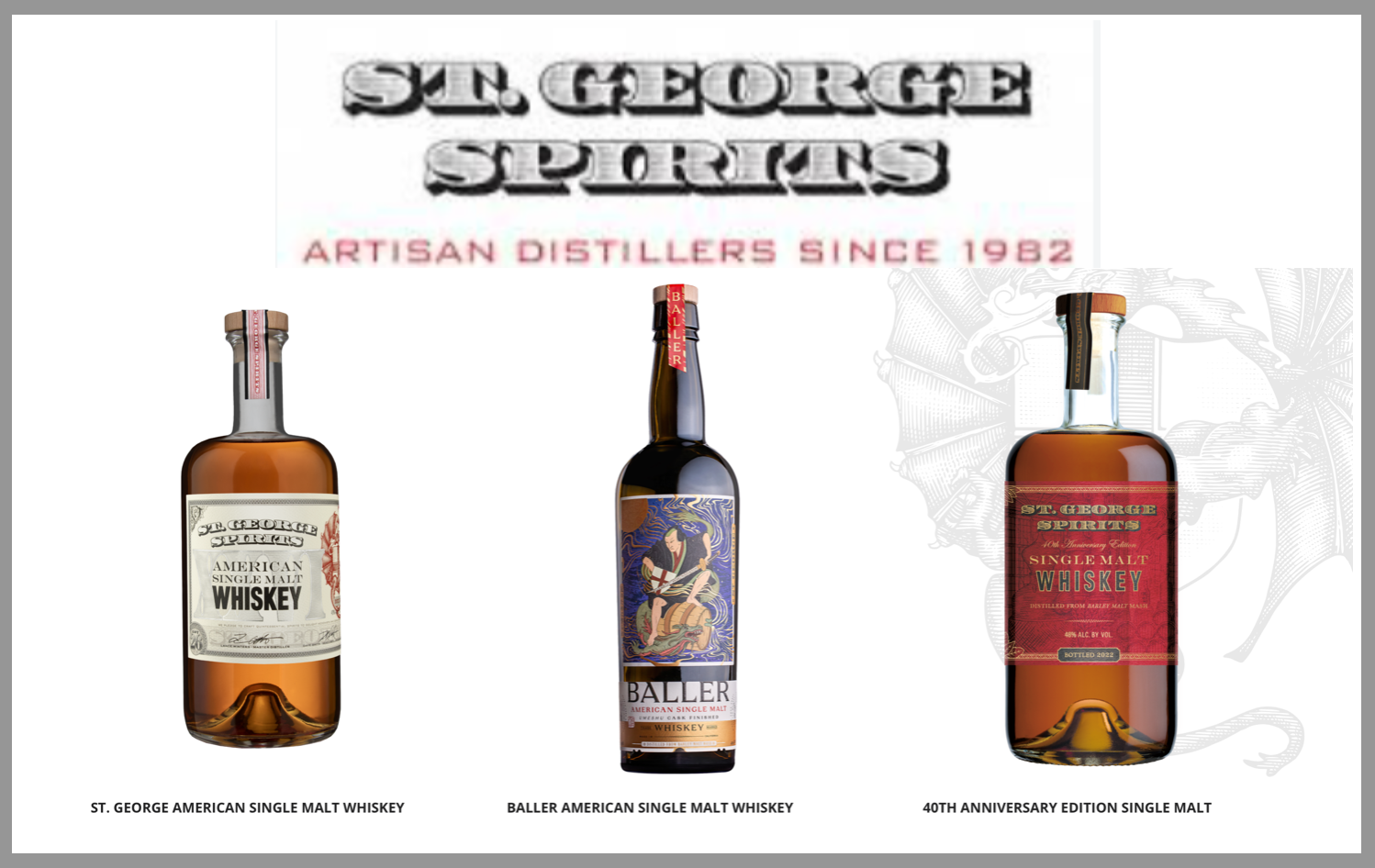
In 2010, Rupf retired after 28 years at the head of the distillery. Winters succeeded him as master distiller. St. George subsequently introduced Breaking & Entering Bourbon, later reformulated as Breaking & Entering American Whiskey, as well as Baller American Single Malt and a limited 40th Anniversary Edition Single Malt. These later releases belong to the Winters-Smith period rather than to Rupf’s active distilling career, but they continued within the enterprise and production culture Rupf had built.
Though he stepped away from day-to-day operations at St. George in 2010, his reverence for extraordinary raw materials and exacting technical standards still continue to shape every spirit St. George produces. Rupf, at the age of 82 (in 2026), is said not to "retire well" according to Winters. Rather than stepping completely away from the craft, Rupf still spends time in his retirement continuing to tinker with distillation experiments.
Rupf received a Lifetime Achievement Award from the American Distilling Institute and was nominated five times for the James Beard Foundation’s Outstanding Wine & Spirits Professional award. He transformed a family connection to Black Forest fruit distillation into one of the foundational enterprises of modern American craft spirits, then helped other distillers establish like businesses of their very own.
Sources:
St. George Spirits official website, stgeorgespirits.com
The Oxford Companion to Spirits & Cocktails, “Rupf, Jörg,” Paul Clarke, 2021, spiritsanddistilling.com
University of California, Berkeley, Oral History Center of the Bancroft Library, “Jörg Rupf: A Distiller’s Perspective on Contemporary Cocktail Culture,” Shanna Farrell, 2016, berkeley.edu
American Whiskey Magazine, “Quick Fire Questions: St. George Spirits”, June 25, 2025, americanwhiskeymag.com
Contributed by Tracy McLemore, Fairview, Tennessee