

Dr. Jim Swan

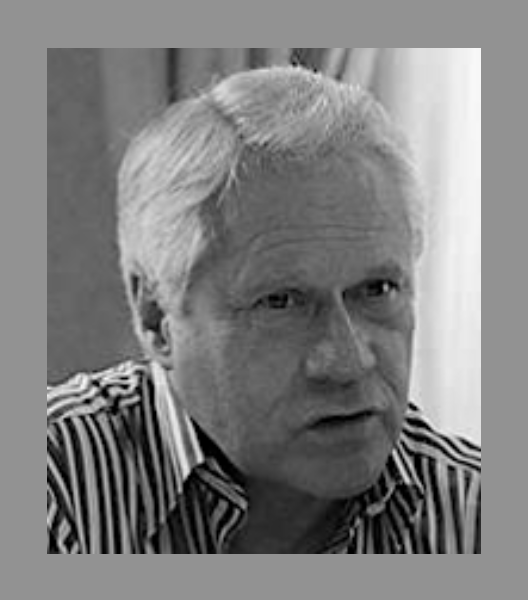
Jim Swan’s influence is easiest to spot in places where, not long ago, there was no distillery at all, but only an idea, a set of drawings, and a founder trying to guess what “good spirit” would look like in ten years. Swan was the person many of those founders called when they needed fewer guesses and more controlled outcomes. He brought a scientist’s insistence on measurement to an industry that still ran, in many corners, on inherited habit. In the years when Scotch was rebuilding confidence and the wider whisky world was learning how to make credible single malt far from Scotland, he became the calm voice that could translate chemistry into production decisions that actually worked on the floor.
Swan was born on Christmas Day of 1941. Decades later, when people called him “the Einstein of whisky” or “the ultimate whisky troubleshooter,” the titles were less about showmanship than about the way he moved through problems. That was, methodically, politely, and with an unusual ability to connect lab results to the smell and feel of spirit coming off a still.
His formal route into the drinks world ran through Heriot-Watt University in Edinburgh, where he earned a bachelor’s degree in applied chemistry in 1965. Not long after graduating, he began work at the Arthur D. Little Research Institute in Inveresk, East Lothian, an environment where modern instrumentation and industrial problem-solving were the point of the job. The skills that later made him invaluable to distillers, including analytical chemistry, careful sensory work, and a habit of testing assumptions were already being sharpened in a setting built for applied science.
In the early 1970s, a very practical issue helped define the trajectory of his research reputation: haze formation in bottled whisky. Work in this area fed into a broader push toward collaborative research among Scotch companies, and Swan became known as a scientist who could work “with the men at distillery sites,” not just with test tubes. In 1974, that research effort took a more formal shape when Pentlands Scotch Whisky Research Ltd emerged, and Swan became part of the team that helped make scientific whisky research directly relevant to everyday production. By the late 1970s and into the 1980s, Swan was deep in the kind of work that quietly changes how an entire industry speaks and thinks. In 1979, he helped create the first Scotch whisky flavor wheel, developed with colleague Sheila Burtles (among others). It’s hard to overstate what that meant: whisky already had language, of course, but it was often personal, inconsistent, and difficult to teach. A structured flavor vocabulary helped distilleries, blenders, and assessors align their sensory discussions, making it easier to troubleshoot faults and to define “house style” with more precision.
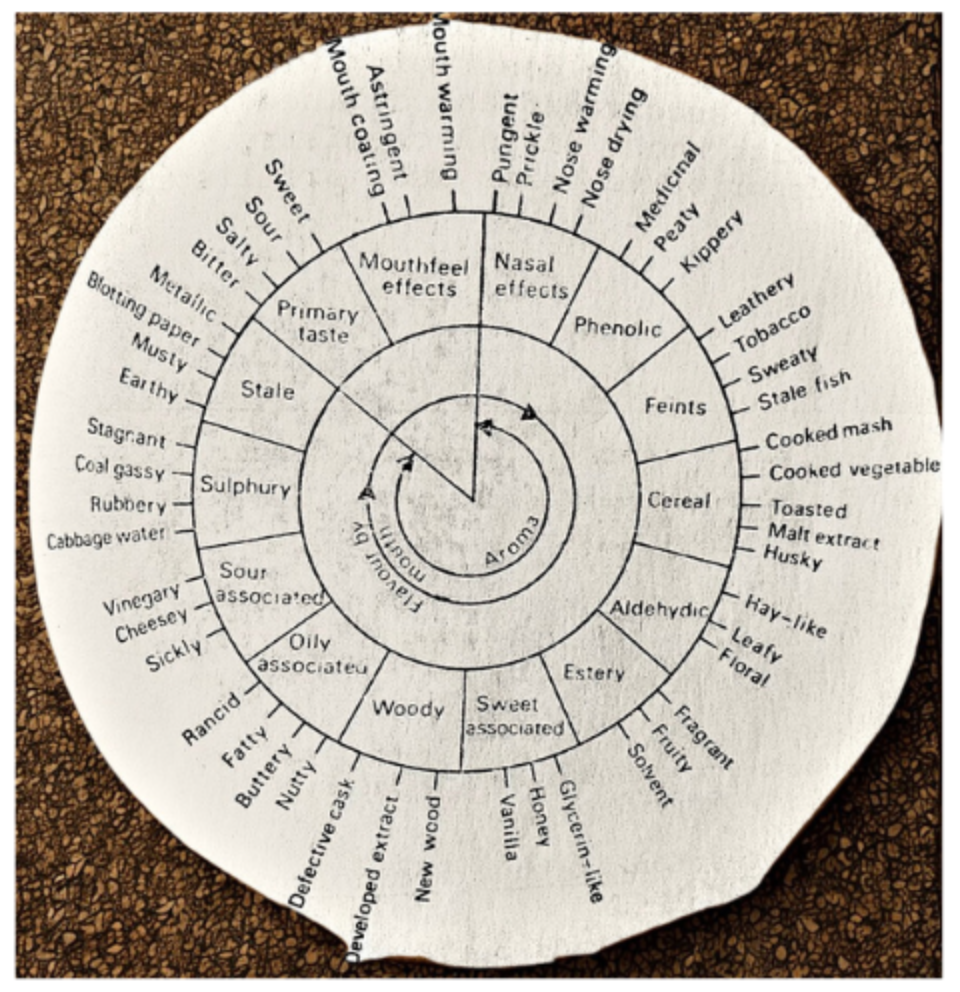
Prototype flavor wheel (1979)
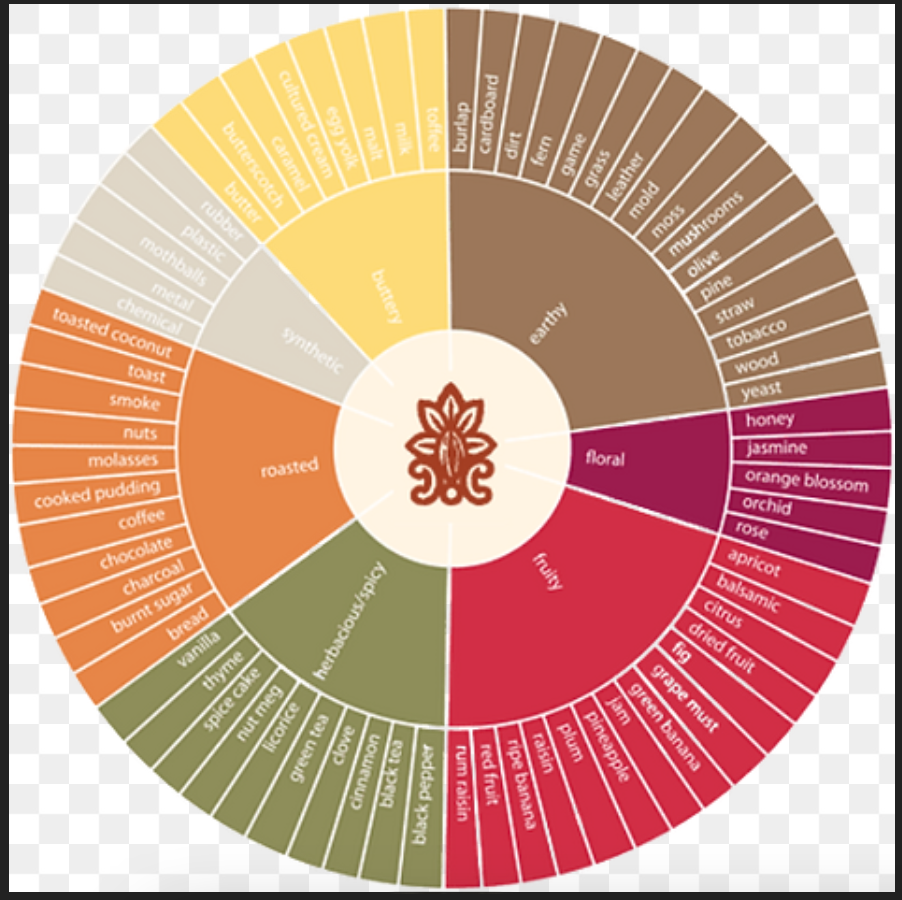
Final product - Scotch Whisky Flavor Wheel
Swan’s long-running obsession—one that would later echo through the new-wave distilleries he advised, was wood. He spent years building expertise in maturation science, and in 1988 he completed a PhD in chemistry and biological sciences at Heriot-Watt, with a thesis titled Wood extractives in relation to the maturation of scotch whisky. Within the Scotch Whisky research world, he became known especially for understanding how casks shape spirit: not as mysticism, but as chemistry, time, and process control.
In 1993, his career turned outward from institutional research and into the wider commercial ecosystem of the drinks industry. That year he and fellow scientist Dr Harry Riffkin bought Tatlock & Thomson, a long-established analytical business in Glasgow, and helped grow it into an internationally recognized operation serving wine and spirits. The work kept him close to the practical questions about stability, trace compounds, flavor development, and quality control, all questions that alcohol producers pay to have answered. By the late 1980s and 1990s, Swan’s wood work expanded into a broader study of how barrels are made, seasoned, and treated. He became a familiar figure in the American cooperage world, participating in barrel symposiums and building relationships that later proved invaluable to start-up distilleries hunting for reliable wood. At Kilchoman, for example, he first influenced fundamental production choices: still design, fermentation and distillation parameters, and then their wood policy, all aimed at a spirit profile that would mature relatively quickly while staying clean and fruity.
In 2002, Swan left Tatlock and Thomson and founded his own consultancy. Around the same time, he became closely associated with the STR approach to casks—“shaved, toasted, re-charred,” a method of rejuvenating used wine casks to make them perform differently in maturation. In the broader whisky world, especially in warmer climates where evaporation and extraction behave differently, Swan also became a key figure in demonstrating that strong whisky could be made outside Scotland when fermentation, distillation, and wood management were adapted intelligently.
Recognition followed. Whisky Advocate named him Pioneer of the Year in 2005, reflecting how widely his behind-the-scenes work was being felt in bottle after bottle coming out of young distilleries that had no right—on paper—to be that good that soon. After his death, the Scotch industry created a formal tribute in the form of The Dr Jim Swan Award for Services to Scotch Whisky, underscoring that his impact was not confined to one brand or one region, but woven through an entire era of whiskey management.
Swan died on 14 February 2017, at his home in Longniddry, East Lothian, aged 75. He was married to Thelma, and they had two daughters, Caroline and Victoria, and three grandchildren. In the tributes that followed, colleagues returned again and again to the same qualities: calmness, courtesy, a soft voice that still carried authority, and the rare gift of teaching without condescension.
If Scotch’s resurgence is partly a story of new distilleries and revived regions, then Jim Swan’s chapter is the one written in production logs and cask schedules; those unseen architecture of quality. He helped define a modern standard for how whisky could be described, measured, and improved; then he spent his final fifteen years turning that knowledge into real spirit in real warehouses, often for the newest and riskiest projects. The whisky boom produced plenty of charismatic founders, but Swan’s legacy is different: he made other people’s dreams technically possible, and he left most of them with both a production vocabulary and a wood stratagem.
Sources:
1. Scotch Whisky Magazine, “Obituary of Dr. Jim Swan”, Richard Woodard, 17 February 2017
2. Whisky Advocate, “Remembering Dr. Jim Swan”, Jonny McCormick, 22 February 2017
3. Highland Research Archive (Heriot-Watt University), Dr Jim Swan File, www.ros.hw.ac.uk
4. Kilchomania, “Dr James Swan has Died”, Hans-Peter Neumann, 17 February 2017, www.kilchomania.com
5. Scottish Whisky Awards, “The Dr Jim Swan Award,” www.scottishwhiskyawards.org
6. Dr. JimSwan.com, “Dr. Jim Swan – A Life in Whisky Science”, www.drjimswan.com
7. Whisky.com, “Personalities of the whisky world”, 12 November 2025, www.whisky.com
Contributed by Tracy McLemore, Fairview, Tennessee USA