Tad Seestadt


Tad H. Seestedt was born in November of 1965 and raised on a small farm in northern New York’s Finger Lakes region. As a teen, he left farm life for New York City and a job in corporate America, but that arrangement did not last, neither professionally nor personally. Seestedt missed working with the land and ultimately traveled west to Oregon, where he began making wine from grapes in 1993.
Distilling entered Seestedt’s life during that period as well. A girlfriend returned from France with homemade mirabelle plum liqueur made by her stepfather, and the quality of that homemade spirit convinced Seestedt that small-scale distillation deserved serious exploration. He began experimenting in 1997 and established Ransom Distillery later that year, financing the young business with his savings and credit cards, leading to the distillery’s name: the debt incurred in creating an independent business represented the “Ransom” he had to pay for his freedom.
Still, whiskey was not Ransom’s original focus. Seestedt initially concentrated on grappa, eau-de-vie and brandy, drawing naturally upon his experience as a winemaker. Ransom added small-batch wines in 1999, and for roughly the first seven years Seestedt’s distilling remained centered on grape and fruit spirits. The company itself was almost nomadic during those years, operating at various times from Salem, Corvallis, Portland and McMinnville while Seestedt himself handled much of the work.
The decisive move toward grain spirits came around 2007. By then, Ransom was producing whiskey along with gin and vodka, bringing grain into a distillery that had been founded around fruit. A year later Seestedt purchased a 40-acre farm outside Sheridan, Oregon, finally utilizing his agricultural instincts, and putting farming, winemaking, and distilling together at a permanent location. Barley was planted there beginning in 2008, vines followed in 2010, and the farm became certified organic in 2011, while the distillery itself received organic certification ten years later.
At Sheridan, Seestedt developed a whiskey-making philosophy that differed markedly from the conventional bourbon model. Ransom uses hand-hammered, direct-fired French alembic copper pot stills, and distillation cuts are made through taste and smell rather than automated controls. Seestedt wanted the character of grain to survive distillation and maturation, and that objective influenced everything from mash bills to barrels. Rather than assuming that heavy new-oak influence was essential to premium American whiskey, he increasingly used toasted French oak and previously filled Pinot Noir barrels when the whiskey style permitted it, allowing oak to support rather than overwhelm the grain. One of Ransom’s earliest grain experiments was WhipperSnapper Oregon Spirit Whiskey. It is the result of a blended spirit made from Pacific Northwest malted barley and Willamette Valley unmalted barley with corn whiskey from Kentucky that was redistilled through Ransom’s copper alembic still. The resulting whiskey matured for approximately a year in a mixture of French Pinot Noir barrels, American oak and used bourbon barrels. WhipperSnapper deliberately occupied territory between familiar categories: its corn component suggested bourbon, while its substantial barley component and pot-distilled character moved it toward the flavors associated with unpeated malt whiskey.
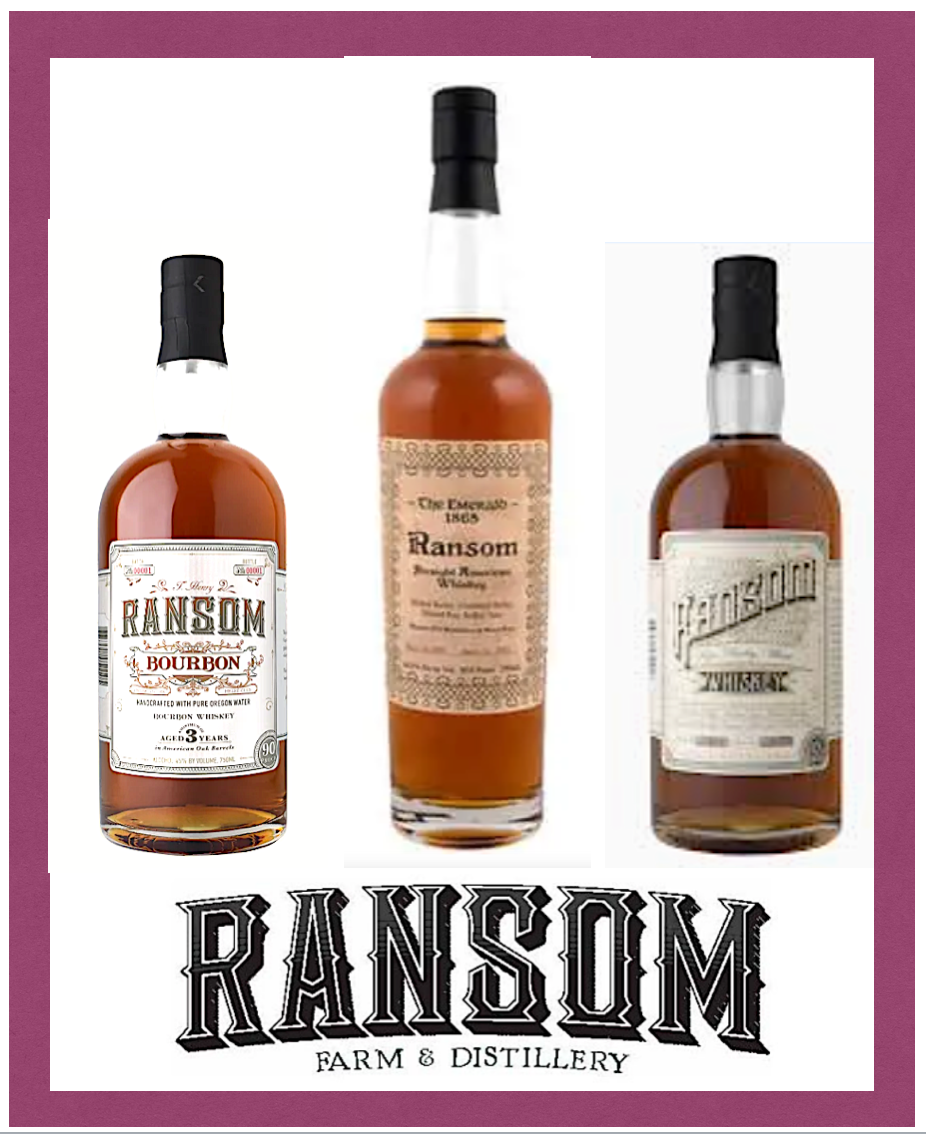
Seestedt’s most historically ambitious whiskey grew from his friendship with drinks historian David Wondrich. Wondrich discovered records of nineteenth-century Irish whiskey mash bills preserved by a British excise officer and shared them with Seestedt. The recipes were striking because they included oats, a grain that largely disappeared from Irish whiskey production during the twentieth century. Seestedt selected an 1865 formulation as the basis for what became The Emerald 1865, creating an American interpretation of whiskey as it had been made in Ireland nearly 150 years earlier. The Emerald combines malted barley, unmalted barley, malted rye and oats, with some of the barley grown organically at Ransom’s own farm. The grain is milled, mashed and fermented in small batches before being distilled in Ransom’s pot still. The whiskey then matured for three years in a combination of French and American oak. The oats were more than historical decoration; Seestedt found their aroma readily apparent in the new spirit, although their lower yield of fermentable sugars and difficult behavior during mashing helped explain why distillers might eventually have abandoned them.
The result established Ransom as a serious whiskey producer rather than simply a distillery with whiskey in its portfolio. The Emerald received Double Gold at the 2014 San Francisco World Spirits Competition and was later recognized as a World’s Best Pot Still Whiskey. Wine Enthusiast continues to rate the whiskey highly for years after its initial attention, awarding a later release 90 points in 2021. Its importance lay as much in its method as its awards: Seestedt had demonstrated that historical whiskey research could provide the foundation for a commercially viable modern American spirit.
Ransom also moved into more recognizable American whiskey territory. Henry DuYore’s Straight Bourbon uses a high-rye mash bill of approximately 56 percent corn, 31 percent rye and 13 percent barley. Distilled in Ransom’s 300-gallon copper alembic pot still, it spends at least two years in new charred American oak and receives additional maturation in French oak. Henry DuYore’s was released in 2016, uses a mash of approximately 78 percent rye and 22 percent barley, with portions distilled separately through pot and column stills before blending and 18 months of maturation in new charred American oak.
Meanwhile, Ransom’s Rye, Barley, Wheat Whiskey pushes the Seestedt back toward the grain-centered approach that became Ransom’s signature. The whiskey incorporates six grain components and is pot-distilled before maturation primarily in 60-gallon toasted French oak barrels that previously held Pinot Noir. The choice was intentional. Seestedt believes that heavily charred new oak can obscure the flavors he had worked to create through grain selection, fermentation and pot distillation; used wine barrels supplied oak influence and maturation without erasing the underlying cereals. The whiskey subsequently received recognition, including a World Whisky Awards honor for Best American Grain Whisky and 91 points from the Ultimate Beverage Challenge.
A major business transition arrived in 2020. Integrated Beverage Group acquired Ransom Wine Co. & Distillery in partnership with Seestedt, with the transaction closing on February 28. Rather than ending Seestedt’s involvement, the agreement kept him with Ransom as master distiller. He explained that production, winemaking, distilling, farming and education were his principal interests, while the partnership gave the business additional management, sales and marketing resources and allowed him to concentrate more heavily on those production responsibilities. Ransom continued expanding its whiskey program after the transaction. In 2021 it introduced a bourbon blending Ransom’s own 12-year-old bourbon with sourced bourbon, adding another dimension to a portfolio already ranging from historically reconstructed pot-still whiskey to grain-forward experimental blends.
Seestedt’s contribution to Oregon whiskey is therefore difficult to reduce to a single expression. He began distilling in 1997, moved seriously into grain spirits a decade later, planted barley on his own farm, reconstructed a nineteenth-century whiskey recipe and repeatedly challenged the assumption that American whiskey should be defined principally by new charred oak. His work at Ransom instead places grain, agriculture and traditional pot distillation at the center of the whiskey. From oats resurrected from an 1865 mash bill to barley grown on an Oregon farm and whiskey matured in barrels that once held Oregon Pinot Noir, Seestedt built a distilling career around connecting what grows in the field with what eventually reaches the glass.
Sources:
Ransom Spirits official website, ransomspirits.com
Oregon Wine Press, “A Handsome Ransom”, Karl Klooster, February 1, 2012, oregonwinepress.com
Men’s Journal, “The Rise of West Coast Whiskey”, November 10, 2015, mensjournal.com
Taste The Dram, “Ransom Spirits—How to Make Sensational Spirits with Tad Seestedt”, May 16, 2017, tastethedram.com
Whisky Advocate, “Oregon’s Whiskey Makers”, whiskyadvocate.com
Wine Enthusiast, “Ransom The Emerald 1865 American Whiskey”, Kara Newman, April 1, 2021, wineenthusiast.com
Distiller, “Ransom The Emerald 1865 Straight American Whiskey”, distiller.com
Distiller, “Henry DuYore’s Straight Bourbon Whiskey”, distiller.com
Business Wire, “Integrated Beverage Group Acquires Oregon’s Ransom Wine Co. & Distillery”, March 5, 2020, businesswire.com
Contributed by Tracy McLemore, Fairview, Tennessee