Sean Copeland

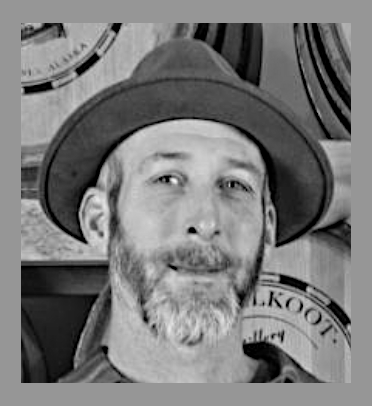
Sean Brian Copeland was born in June of 1970, and while publicly available information about his early life is extremely limited, it is known that as an adult, Copeland spent more than twenty years working as a carpenter in the Pacific Northwest. In that field, Copeland quietly developed the precision and patience that would later become central to his future work.
Copeland eventually ended up in Haines, a small, scenic hamlet in the Alaska panhandle north of Juneau. There, he met Heather Shade, and quickly discovered that both of them wanted to make Haines their permanent home, despite the limited professional opportunities available. Together, they determined that creating their own business offered a way to remain in Haines while building something rooted in place. In 2012, the couple married, became business partners, and established the Port Chilkoot Distillery. In doing so, Copeland and Shade created Alaska’s very first whiskey distillery.
The physical construction of the distillery naturally suited Copeland’s background. One of his first acts was to purchase a neglected historic building in the former Fort William H. Seward complex. It was a facility originally constructed in 1904 as the local Army post’s bakery. With Copeland managing the construction, the couple quickly restored the building themselves, and assisted by friends, turned it into a quaint home for their fledgling distillery. Their business plan received assistance from the Alaska Small Business Development Center, and their financial projections helped them secure grant funding for equipment used in restoring the historic bakery. Production began in 2013, with whiskey among the spirits being made from the outset.
Starting a distillery in archipelagic Alaska presented obstacles that went well beyond fermenting grain and operating a still. Haines is geographically remote, and transportation and manufacturing costs there are high. Further, when Port Chilkoot first began production, Alaska distilleries could not legally offer tastings nor sell bottles directly to visitors. That restriction was particularly damaging to a small distillery in a tourism-dependent community like Haines. So Shade became active in the effort to change the law, and working with other Alaska distillers, she helped get Alaska House Bill 309 passed in 2014. The change permitted Alaska craft distilleries to offer limited tastings and direct sales, and Port Chilkoot was soon able to open its tasting room.
Meanwhile, Copeland’s contribution increasingly centered on the part of whiskey production where time becomes an ingredient: barrel maturation. And while Shade became Port Chilkoot’s head distiller, Copeland concentrated on maturation. It was a division of responsibilities well matched to each person’s professional background. Carpentry had taught Copeland to work carefully with wood, measurements and long projects whose quality depended upon attention to detail.
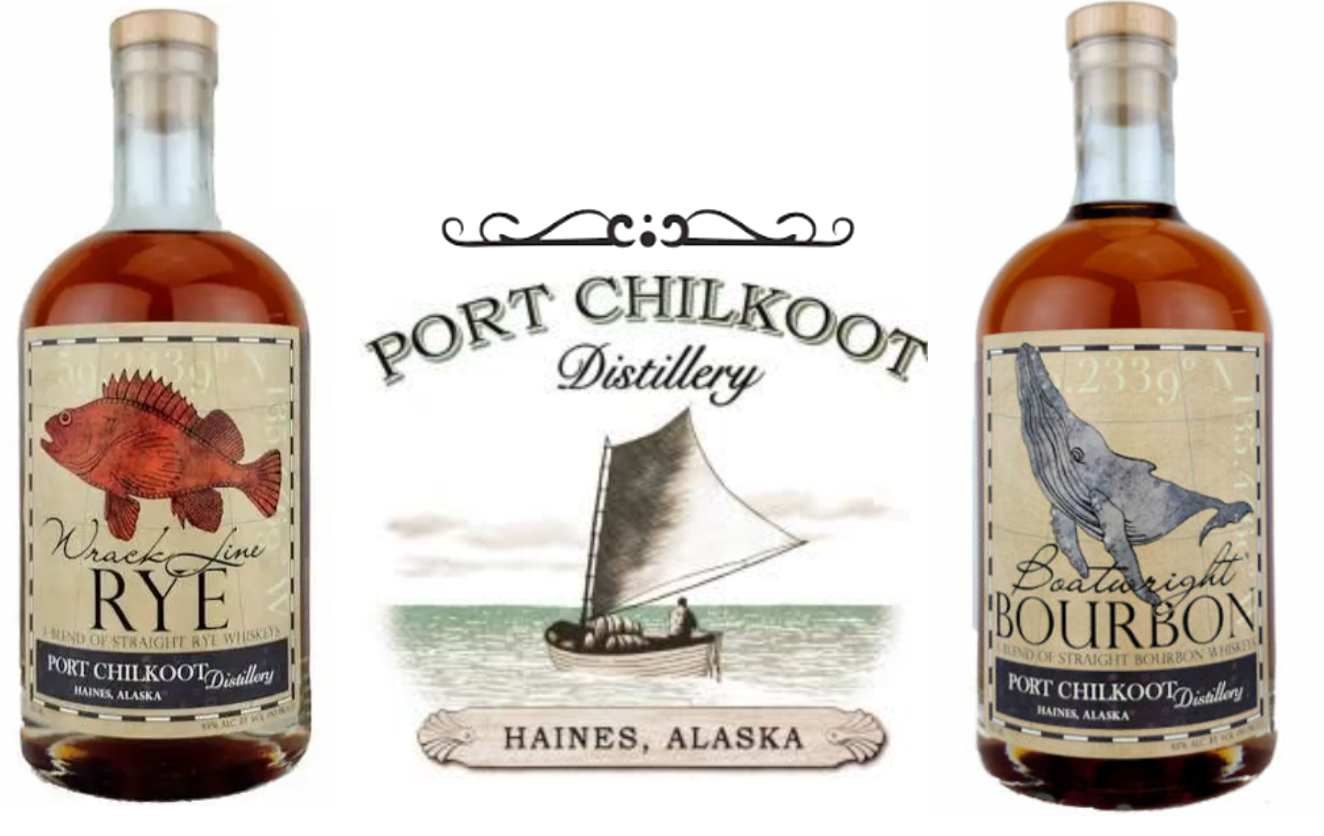
Whiskey quickly became an important part of Port Chilkoot’s identity. Boatwright Bourbon is a blend of two straight bourbons: bourbon made from Shade’s own recipe and produced grain-to-barrel at the Haines distillery, blended with straight bourbon made in Kentucky. The name is particularly appropriate for a company whose co-founder built much of the distillery himself. In 2016, Boatwright received a bronze medal from the American Distilling Institute, providing early recognition for Copeland’s and Shade’s whiskey program. Soon following, Wrack Line Rye pushed the distillery further into American whiskey. The rye whiskey uses a mash bill containing 70 percent rye, with the remaining a combination of corn and barley. Copeland mills its grain and conducts small-batch grain-to-barrel distillations in Haines, with the Alaska-made rye matured on site for at least three years before being combined with straight rye whiskey produced in Indiana. The result is a whiskey designed to retain the spice and grain character expected of rye while remaining versatile enough for cocktails. Wrack Line Rye also earned recognition in the 2020 American Craft Spirits Awards.
The whiskey operation also gave Port Chilkoot a way to extend the usefulness of its barrels. Old School Whiskey, produced as a limited release, is made from barley, rye and corn, triple distilled, and matured for three years in previously used Boatwright Bourbon barrels. For that expression, Shade deliberately distills deeper into the tails and at a lower proof, producing a lighter whiskey that the company compares stylistically with Irish whiskey. Only two barrels of Old School are released each year, making it one of the smaller and more locally-focused products in the Port Chilkoot portfolio.
As the growing Alaska operation matured, Copeland changed roles to again become a builder. In 2018, plans were submitted for a new 3,300-square-foot production and warehouse building while the original historic building would remain in service as an expanded tasting room, office and storage space. Copeland constructed the new production building from scratch, completing it in 2019. The expansion gave the company a dedicated production facility and barrel space while preserving the restored bakery as the public face of the business. The expansion represented considerable progress from the couple’s early years working through business plans, financing, restoration, and Alaska’s restrictive liquor laws.
Sean Copeland’s work at Port Chilkoot is therefore inseparable from both whiskey and the buildings in which that whiskey is made. He restored the historic structure that gave the distillery its first home, constructed its later production facility, and took responsibility for an element of whiskey making that rewards the same qualities demanded by skilled carpentry. And while his talented wife supplied the scientific background and became the company’s head distiller, as well as an important advocate for Alaska’s craft-distilling industry, Copeland developed his own place in the whiskey operation. Their complementary skills turned a neglected Army bakery in a remote Southeast Alaska town into a popular and awarded working distillery.
Now, more than a decade after its founding, Port Chilkoot remains a Haines success story. Yet Sean Copeland’s route into distilling was not through chemistry school, a Kentucky bourbon dynasty, or an apprenticeship at an established whiskey house. It came through more than two decades of building things carefully; in Haines, that experience ultimately led him from working with wood as a carpenter to working with oak barrels as an Alaska distillery owner and whiskey maker.
Sources
Port Chilkoot Distillery official website, portchilkootdistillery.com
National Institute of Standards and Technology, “Alaskan Distillery Offers Local Options…”, Manufacturing Innovation Blog, 2022, nist.gov
Alaska Small Business Development Center, “Port Chilkoot Distillery,” November 4, 2013, aksbdc.org
Alaska Public Media, “After Lobbying Effort, Haines Distillery Opens Newly Legal Tasting Room,” Emily Files, December 11, 2014, alaskapublic.org
Spruce Root, “Port Chilkoot Distillery,” accessed August 20, 2026, spruceroot.org
American Craft Spirits Association, “2020 American Craft Spirits Awards”, americancraftspirits.org
Haines Borough, “Historic Review—Copeland: Port Chilkoot Distillery Expansion,” April 5, 2018, hainesalaska.gov
Contributed by Tracy McLemore, Fairview, Tennessee