Frank Thomson

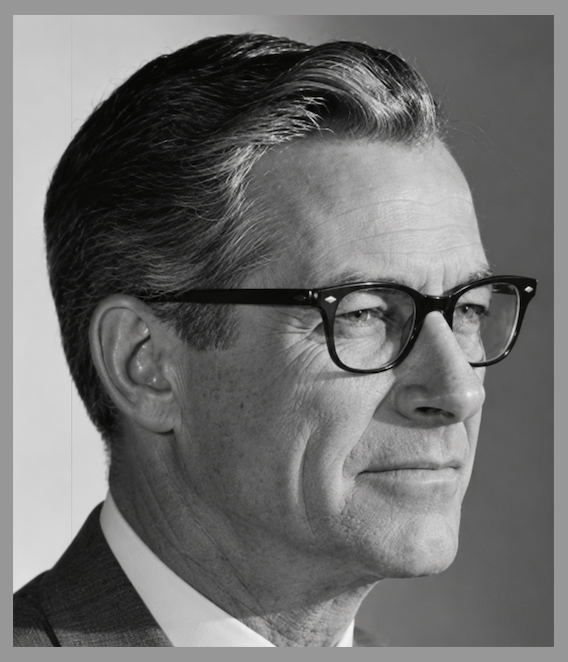
No known photograph of Frank Thomson exists. The AI-generated image
shown is an interpretive representation and not an authenticated likeness.
Frank George Thomson was born in April 1927 in Ellon, Aberdeenshire, Scotland, and ultimately became one of the most colorful entrepreneurs associated with the Scottish whisky industry during the twentieth century. Trained as a chartered accountant, he began his professional career in Dingwall, a Highland town north of Inverness. An accomplished track athlete in his youth, Thomson eventually established a business career extending into whisky production, industrial development, and the preservation of Highland traditions. His most enduring achievement was helping establish Invergordon Distillery, a grain whisky operation that introduced an important new manufacturing industry to the northern Highlands.
By the late 1950s, Thomson had become involved in a project to establish a large grain whisky distillery at Invergordon, on the Cromarty Firth. The proposed facility represented a substantial industrial undertaking in a region traditionally associated with smaller malt whisky distilleries. In 1959, Thomson and a business partner took over the enormous but unfinished distillery, securing financial backing from London Merchant Securities, an investment company associated with financier Max Rayne. Thomson became managing director of the enterprise, assuming responsibility for bringing the ambitious project into commercial operation.
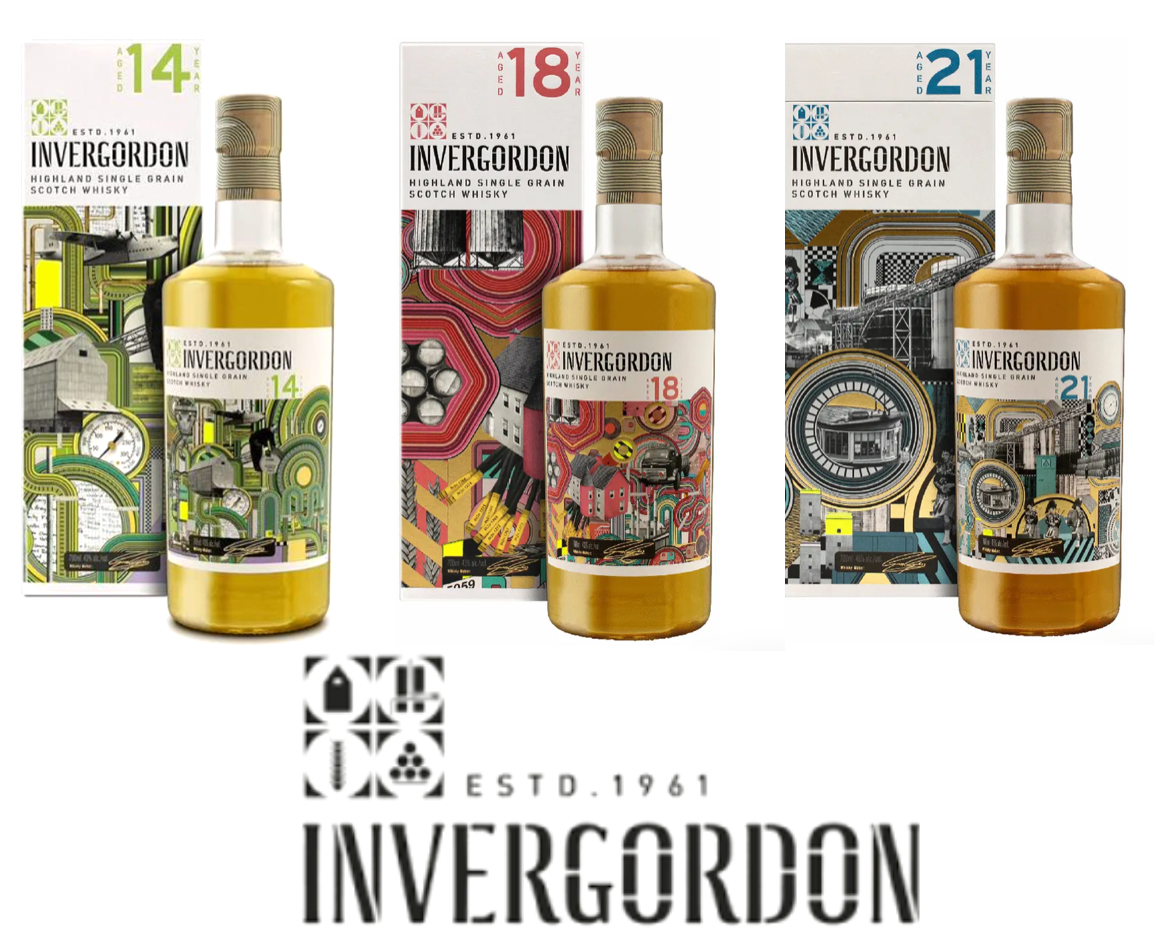
Invergordon Distillery commenced production in 1961, introducing a different approach to whisky manufacturing in the Highlands. Unlike traditional malt distilleries, which employed copper pot stills, Invergordon utilized large continuous column stills designed to produce grain whisky on an industrial scale. Its location provided access to the Cromarty Firth and established a major whisky manufacturing presence in Easter Ross. The distillery's output was particularly important to the blended Scotch whisky industry, which depended upon grain whisky as a principal component of its products.
Thomson's ambitions extended beyond the production of whisky. During the early 1960s, he became associated with one of the most unique and remarkable musical organizations in Scotland: the Invergordon Distillery Pipe Band. The original proposal came from Willie MacDonald, a production manager at the distillery who played drums with the Dingwall British Legion Pipe Band. Thomson embraced the project and committed company resources to establishing an elite musical organization capable of competing against Scotland's finest pipe bands.
In 1964, Thomson traveled to California and approached Donald Shaw Ramsay, an accomplished pipe major who had previously led the Edinburgh City Police Pipe Band to World Championship victories. Ramsay had been shot in the line of duty and subsequently relocated to the United States to establish a business supplying Highland merchandise. Thomson persuaded him to return to Scotland and organize the new Invergordon band. Under Ramsay's direction, the organization recruited distinguished musicians, including pipers John D. Burgess and John MacDougall, and renowned drummer Alex Duthart.
The Invergordon Distillery Pipe Band made its first public appearance on May 9, 1964, marching through the streets of Invergordon. Its musicians wore distinctive red Gordon tartan uniforms, and Thomson provided financial support that enabled the organization to attract exceptional performers. The band rapidly became a formidable competitor, winning the European Championship within approximately nine months of Ramsay's appointment. Between 1965 and 1967, Invergordon captured every major championship title except the World Championship, establishing an extraordinary competitive record during its brief existence.
Thomson also pursued opportunities in Highland industrial development outside the whisky business. On March 7, 1966, he joined the Highlands and Islands Development Board, a public organization established to encourage economic growth throughout northern Scotland. His appointment followed the death of businessman William Logan, who had been killed in an aircraft accident. Thomson's commercial interests included proposals for a substantial petrochemical development in the Invergordon area, reflecting his continuing involvement in efforts to expand the region's industrial economy.
Thomson also served as Lord Rector of Aberdeen University from 1966 to 1969, and was Chairman of the Board of Ross County FC from 1964 to 1972. He was instrumental in establishing the club's board structure when it officially became a limited company around 1964, and he served as chairman until his resignation in 1972 to join the board of Greenock Morton FC.
By 1967, Thomson's responsibilities and business interests were attracting considerable public attention. His association with the Highlands and Islands Development Board placed him within an organization concerned with employment, investment, and the economic future of the region. During a parliamentary discussion in March 1967, the Scottish Secretary acknowledged Thomson's contribution to examining industrial opportunities in the Highlands. The same period marked a transition in Thomson's direct involvement with Invergordon Distillers, as he relinquished his managing directorship.
The Invergordon Distillery Pipe Band also ceased operating in 1967, ending an extraordinary chapter in Scottish piping history. Although the organization existed for only four years, its collection of distinguished musicians and championship achievements established a reputation that survived its dissolution. Ramsay subsequently returned to California, while former band members continued their individual musical careers. The Invergordon name nevertheless remained closely associated with one of the most celebrated pipe bands of its generation.
Thomson himself eventually relocated to California, where he spent his later life. Among the possessions accompanying him was a 1964 Rolls-Royce Silver Cloud III, purchased new through Macrae and Dick of Inverness during his years at Invergordon. He retained the automobile until 1996, when it passed into another private collection. His later years also remained associated with his advocacy for Highland railway services, an activity that earned him the nickname “Mr. MacPuff.”
Frank Thomson's contribution to Scotch whisky extended beyond the establishment of a successful distilling enterprise. Invergordon continued producing grain whisky long after his departure, becoming an enduring component of Scotland's whisky industry. His support of the Invergordon Distillery Pipe Band also demonstrated how a commercial enterprise could contribute directly to the preservation and advancement of Scottish musical traditions. Together, these achievements established Thomson as an entrepreneur whose influence reached beyond the distillery gates and into the economic and cultural life of the Highlands.
Sources:
University of Glasgow, “The Highlands and Islands Development Board: A Study of Regional Development,”doctoral research, theses.gla.ac.uk
Invergordon Whisky official website, invergordonwhisky.com
The Scotsman, “Frank George Thomson,” March 17, 1967, britishnewspaperarchive.co.uk
Piping Press, “P/M Trevor Dear 1939–2019,” October 2, 2019, pipingpress.com
Box and Fiddle Archive, “Donald Shaw Ramsay,” February 1989, boxandfiddlearchive.weebly.com
Pipetunes, “Donald Shaw Ramsay”, biographical profile, pipetunes.ca
UK Parliament, “Highlands and Islands Development Board,” House of Commons, March 23, 1967, hansard.parliament.uk
Dore & Rees Auctions, “1964 Rolls-Royce Silver Cloud III,” historical vehicle provenance, March 11, 2023, auctions.doreandrees.com
The Piping Times, “The Bagpipes and the Red Flag,” Christine M. MacLellan, June 1967, archives.thepipingcentre.co.uk
Contributed by Tracy McLemore, Fairview, Tennessee USA