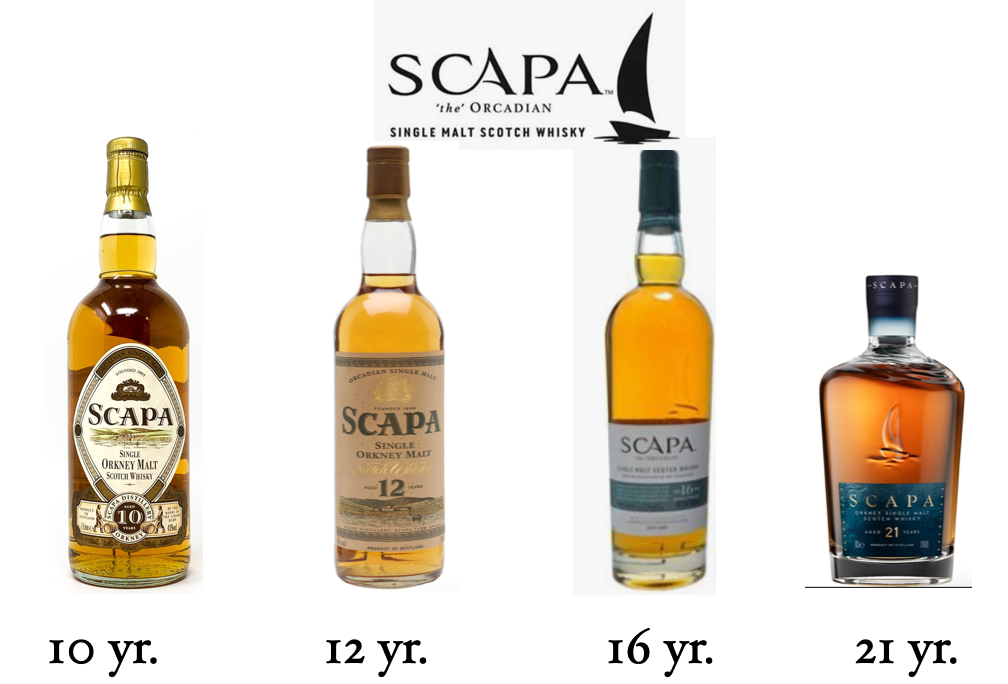
John Townsend

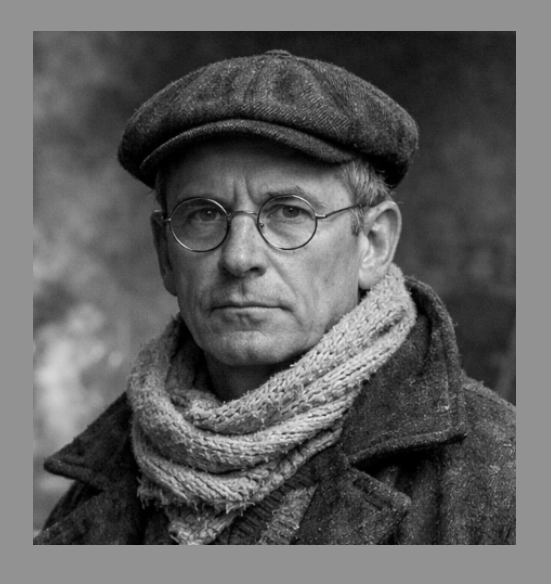
There are no known photographs of John Townsend known to exist. Above
is an AI-generated image of him based on facts known about his life.
Joseph T. “John” Townsend is one of those Victorian-era whisky figures who, somewhat surprisingly, shows up often in stories about the early infrastructure of Scotch. Townsend helped carry a Glasgow blending business north, chose a physically remote but strategically useful site on Orkney, and then ran his distillery, Scapa, through the long, uneven years when blended whisky was booming and small distilleries lived or died on cashflow, logistics, and dependable spirit for fillings.
By the mid-1880s, Glasgow’s whisky trade had become a city of brokers and blenders as much as distillers. Firms bought spirit, built brands, and, when it suited the business, created distilleries to secure supply. Scapa was born in exactly that world. In 1885, the distillery was established at Scapa Flow near Kirkwall on Orkney by Macfarlane & Townsend, a Glasgow blending concern, with John Townsend taking the leading operational role. The site choice was important. Scapa was built on the ground of a former mill, a practical reuse of a working location with access to water and space, but also a statement: this was not a farm still drifting in and out of legality; it was a purpose-built distillery created to feed the late-19th-century whisky economy, especially blends, at a time when demand could justify a new plant even on a far northern island.
Very quickly, Townsend’s name became the distillery’s backbone. By 1888, the original Macfarlane & Townsend arrangement had shifted. At that time, the original business administrative arrangement was dissolved, and Scapa continued under Townsend’s own firm, “J.T. Townsend & Co.” That detail indicates that Townsend was not just a passive investor or occasional visitor. The operation was identified with him directly, and it stayed that way for decades.
On Orkney, Townsend’s firm dealt with the unglamorous necessities of distilling: securing supply, bonded storage buildings, and excise compliance. Business archives from the time describe a Customs & Excise file relating to Scapa that includes applications for warehouse extension and other alterations made for J.T. Townsend & Co. in the late 1890s and again in 1909, complete with plans of the distillery. It’s a small archival window, but an important one: it shows ongoing capital work and regulated expansion under Townsend’s stewardship, the kind of incremental building that keeps a distillery functional in the long run.
In 1908, there arose a trademark dispute over use over the “Old Orkney” name, and Townsend’s was among the firms challenging an attempt to claim exclusive rights to the term. The suit was brought by Townsend, William Teacher, and the Cursiter Brothers of Kirkwall, all three alleging that the Stromness Distillery shipped in whisky from Belfast to be used in the Stromness scotch-making operation. In the hearing, Stromness also failed in their claim to register ‘Old Orkney’ as a trademark for which they wished to have exclusive use of in connection with bottled whisky. Though the aforementioned trio all also used the term ‘Old Orkney’ to describe the whisky they were selling, they won the case and Stromness desisted use of the name.
On a personal level, the surviving paper trail shows a businessman who kept one foot in Orkney and the other in the commercial lanes of Glasgow. There is some debate about whether business listing named Townsend as “J.T.”, “John,” or “Joseph”. Perhaps because of this, any publicly available information regarding Townsend’s personal life (i.e., wife or children) is sparse. Address-directory research tied to Glasgow’s West End places a J. T. Townsend & Co., Scapa Distillery office at 47 Hope Street, and lists “Joseph T. Townsend” in connection with that firm and address, along with a West End residence at 4 Bowmont Gardens in the mid-1890s, but again, no spouse or children are mentioned. Likewise, no exact birthdate for Townsend is suggested, though based on records, his birth year is thought to have been around 1848.
Townsend remained the key operational figure at Scapa until 1919, when a new corporate structure called Scapa Distillery Company Ltd., was founded and took over the distillery. It was also the year of Scapa’s most dramatic crisis—a major fire broke out and threatened to consume the distillery. The blaze was spotted by sailors from the British fleet in Scapa Flow, who sailed in to help. Townspeople and sailors formed a human chain and carried buckets of seawater to suppress the flames. That episode is often told as a distillery anecdote, but it casts light on the world Townsend had built into. Scapa sat beside one of Britain’s most important naval anchorages. The distillery’s fate, in that moment, depended on the proximity of ships and sailors as much as on masonry, cooperage, and insurance. Ironically, during the First World War, the Scapa distillery had been utilized by Admiral Jellicoe as his base. Following 1919’s corporate takeover followed by the fire, the visible trail of Townsend himself fades in common public sources; another reason it is difficult to responsibly fill in the details about his private life.
After the worldwide affects of the Great Depression, Scapa Distillery Company later went into liquidation in 1934 but production resumed under new owners in 1936. Hiram Walker took over production in 1954. In 1978, the Scapa distillery underwent a massive modernization, but was mothballed 16 years later. Extensive refurbishing took place at the site in 2004, which resulted in the site being opened fully. The same year, production at the site was taken over by the Chivas Brothers through the acquisition of Allied Domecq by Pernod Ricard, who still controls operations at the Scapa distillery today.
In the end, Joseph T. “John” Townsend’s professional footprint extends beyond Orkney. He was not remembered as an overtly charming character with a famous nose for casks, or born into a colorful family saga preserved in glossy brand histories. He is to be remembered in a plainer way: in the fact that a small distillery in a frozen outpost exists at all, and in the administrative record that shows it being carefully managed, expanded, and kept compliant. In Scotch, that kind of legacy is often the most real. Distilleries don’t last because someone has a good story; they last because for long stretches of time, someone negotiates the grain, concocts the spirit, patiently waits on the verdict, and markets and sells the outcome of his labor, year after year.
Sources:
Whisky.com — “Scapa Distillery” (history summary; Townsend heading operation until 1919):
Scotchwhisky.com (Whiskypedia) — “Scapa” (timeline; ownership milestones):
whiskipedia.com, “Scapa whisky distillery” ,
Whisky Antique SRI, “Scapa History”, www.whiskyantique.com/en/scapa
The Orkney News, “The Man O’ Hoy Distillery”, July 11, 2022, theorkneynews.scot