Alex Villicana


Alex Villicana is a graduate of the University of Southern California with a degree in communications who began working seasonal wine harvests while employed full-time in real-estate development. He and his wife, Monica, produced their first Villicana Winery vintage in 1993, when Paso Robles had only a small fraction of the wineries that would later establish the region as a major American wine destination. For six years, Alex and Monica commuted from Pasadena while developing their wine business. In 1996, they purchased property on the west side of Paso Robles and began planting an estate vineyard, personally establishing the vines that would supply their wines. After the birth of their second child in 2001, they moved their family permanently to Paso Robles. They opened their winery and tasting room on Adelaida Road in 2002, building Villicana Winery into a small, family-operated producer whose annual production remained at approximately 2,000 cases. Alex made the wines, while the couple jointly managed a business that required them to farm grapes, oversee production, receive visitors, and sell what they produced.
The idea for a distillery emerged directly from Alex’s winemaking. Beginning in 2005, Villicana Winery used saignée while producing Rhône-style wines from grapes such as Syrah, Grenache, and Mourvèdre. In this process, a winemaker removes—or “bleeds”—a portion of the free-run juice from freshly crushed grapes so that the remaining must contains a greater proportion of skins, increasing the concentration of the eventual red wine. The withdrawn juice is valuable, but a winery may have no practical market for it. Alex watched this premium Paso Robles grape juice go unused and began looking for a productive alternative to discarding it.
Alex and Monica concluded that the saignée could be fermented and distilled into spirits. They established Re:Find Distillery in 2011, creating the first craft distillery in San Luis Obispo County and placing a working distillery alongside their existing winery. The unusual name expressed the central idea behind the enterprise: they had found a new use for an underused winemaking resource and “Re:fined” it through distillation. It established a name broad enough to encompass the couple’s continuing interest in reclaiming agricultural ingredients and collaborating with neighboring producers.
Re:Find initially concentrated on grape-derived spirits, but also vodka and gin. Alex and Monica obtained a custom-manufactured German still and brought their winemaking experience into distillation, emphasizing the quality of fermentation and raw ingredients rather than relying on repeated filtration to correct an inferior base spirit. Their original model eventually recovered saignée representing the production of approximately 60 to 70 acres of premium wine grapes in a single harvest year. That approach conserved the agricultural work, water, fuel, and vineyard resources already invested in growing the grapes.
Villicana developed his whiskey through partnerships with Central Coast brewers. For the distillery’s rye whiskey, a proprietary grain bill containing rye, heirloom wheat, and two-row barley was created. A collaborating brewery prepared an unhopped wort and transported it the short distance to Re:Find. Alex and his team then controlled the stages that legally and practically transformed that wort into their whiskey: fermentation, distillation, barrel maturation, blending, and bottling all took place at the Paso Robles distillery. This arrangement used the brewers’ grain-processing equipment and expertise without turning Re:Find into a company that merely purchased finished whiskey from an outside distiller.
The rye was double-distilled and matured in small barrels, generally 10 or 15 gallons, for periods ranging from 12 to 36 months. Small cooperage exposes a greater proportion of spirit to oak than the standard 53-gallon barrels commonly used by large American whiskey distilleries, allowing the wood to influence the whiskey more rapidly. Re:Find nevertheless monitored the barrels and selected the final blends according to flavor rather than treating barrel size as a substitute for judgment. Its rye established the essential pattern of Alex’s whiskey work: locally prepared grain wort, fermentation and distillation in Paso Robles, small-barrel maturation, and transparent identification of the people and businesses involved.
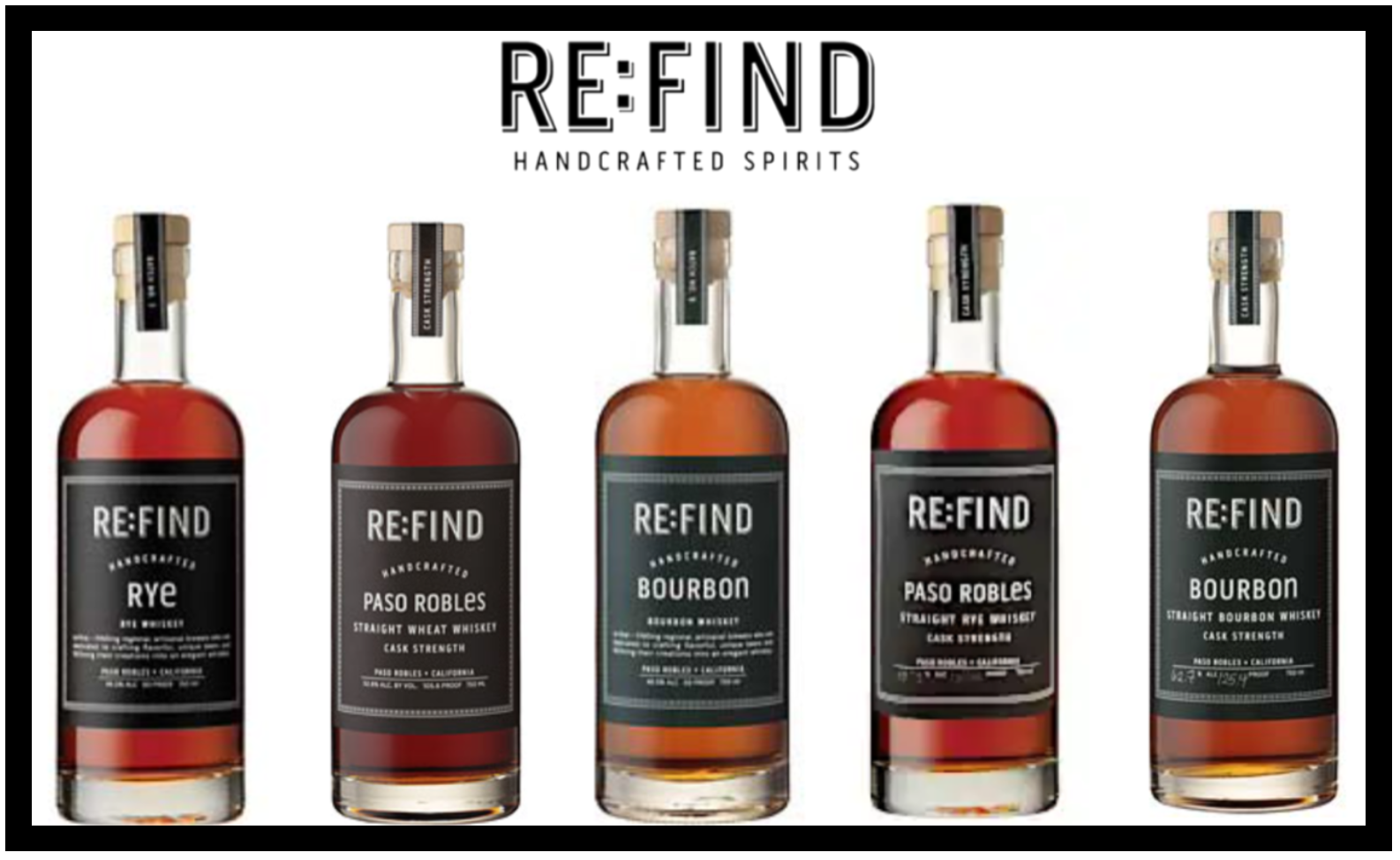
Bourbon followed as a further development of the grain program. Re:Find worked with BarrelHouse Brewing Company in nearby Templeton on a proprietary combination of corn, heirloom wheat, and two-row barley. Re:Find fermented and distilled the resulting wort, then aged the bourbon in 15-gallon barrels. One documented release, Batch No. 7, matured for four years and was bottled at 93 proof. Re:Find’s lineup subsequently expanded to include straight bourbon, straight rye, wheat whiskey, and cask-strength expressions, demonstrating that grain spirits had become a substantial component of the distillery rather than a brief departure from its grape-based origins.
Alex’s work at Re:Find also became part of a broader effort to establish the Central Coast as a distilling region. He helped lead the Paso Robles Distillery Trail and has served in industry and civic positions, including chairman of the Paso Robles Wine Country Alliance and a member of the Wine Institute’s board. He later became a San Luis Obispo County planning commissioner and served in leadership within California’s distilling community. These roles accompanied the daily work of operating a winery and distillery whose products remained closely tied to Paso Robles agriculture and neighboring businesses.
In 2023, members of the Paso Robles Wine Country Alliance selected Alex and Monica Villicana as the Paso Robles Wine Industry Persons of the Year, recognizing three decades of production, regional leadership, and community involvement. The honor encompassed both the winery they began while commuting from Pasadena and the distillery created from a difficult question about wasted grape juice. Re:Find’s name still summarizes the progression: recover an ingredient, determine its value, and refine it into a finished spirit. In Alex Villicana’s grain whiskeys, that principle moved beyond rescued wine juice to a cooperative production system linking California grain, Central Coast brewers, Paso Robles fermentation, hands-on distillation, and local barrel maturation.
Sources:
Re:Find Distillery official website, refinddistillery.com
Villicana Winery, “Paso Robles Craft Distilling Unveils Re:Find Handcrafted Spirits,” no author given, accessed August 30, 2026, villicanawinery.com
Taste the Dram, “Re:Find Distillery—From Wine to Vodka, Gin and Whisky with Monica Villicana”, April 24, 2017, tastethedram.com
Paso Robles Distillery Trail, “Re:Find Distillery,” no author given, accessed August 30, 2026, pasoroblesdistillerytrail.com
Contributed by Tracy McLemore, Fairview, Tennessee