
Andrew Watt

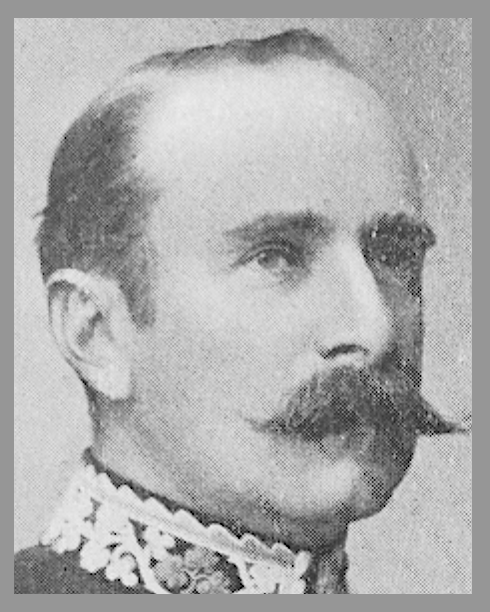
Andrew Alexander Watt was born on November 4, 1853, into one of the most prosperous mercantile families in Londonderry, Ireland, now commonly known as Derry, Northern Ireland. His father, Samuel Watt, was a member of the prominent Ulster-Scots Watt family, while his mother, Jane Newman, was the daughter of Captain Robert Newman of the Royal Navy. The family's roots extended to Ramelton in County Donegal, where earlier generations had established themselves as landowners before developing extensive commercial interests in Londonderry. Andrew received his education at Foyle College and subsequently studied under private tutors, an upbringing that prepared him for a career managing the family's considerable business interests.
The Watt family's association with whiskey production predated Andrew's birth by several decades. In 1826, an earlier Andrew Watt acquired an interest in the Abbey Street distillery, situated near the historic city walls in the Bogside district. The enterprise expanded significantly under Andrew's uncle, David Watt, who assumed full ownership in 1839. The distillery had adopted Aeneas Coffey's patented continuous still in 1833, placing it among the early Irish producers to embrace technology capable of manufacturing substantial quantities of grain whiskey. David subsequently acquired the Waterside distillery around 1870, adding an important malt and pot-still whiskey operation to the family's growing enterprise.
On October 7, 1875, Andrew married Violet Flora de Burgh, daughter of George de Burgh and Constance Matthews. Their marriage produced six children, four sons and two daughters, establishing another generation of the Watt family. During the 1870s, Andrew succeeded his uncle David in the distilling business, assuming responsibility for an enterprise already recognized as a substantial Irish whiskey producer. Under his leadership, Andrew A. Watt & Company developed into one of Ireland's largest distilling concerns, with an international reputation built upon substantial production capacity and successful whiskey brands.
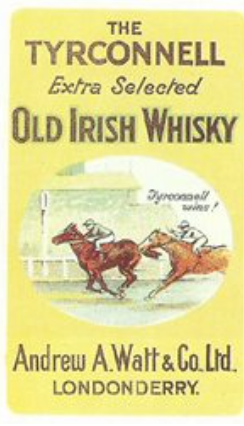
One of the most enduring achievements of Watt's career originated not in a distillery but on a racetrack. In 1876, a chestnut colt named Tyrconnell, associated with Watt, unexpectedly won the National Produce Stakes at odds of 100 to 1. The horse's name referred to Tyrconnell, the historic Gaelic territory encompassing much of County Donegal, the ancestral home of the Watt family. Andrew commemorated the victory by introducing a whiskey bearing the horse's name, initially as a limited release. The Tyrconnell subsequently became the company's flagship brand and developed a substantial international following, particularly in Britain and the United States. Its distinctive association with the celebrated racing victory became an enduring element of the whiskey's identity.
Watt's growing commercial success was accompanied by an increasingly prominent position in Irish society. In 1882, he began developing Thornhill, an imposing country residence on Culmore Road overlooking the River Foyle, which was completed during the middle of the decade. The estate incorporated substantial grounds and equestrian facilities, reflecting his continued interest in horses and country pursuits. He also maintained the family's association with Claragh in County Donegal, where an impressive Victorian residence was constructed around 1890. His standing within County Londonderry was further recognized through his appointment as High Sheriff for 1886–1887, and he subsequently held the positions of Justice of the Peace and Deputy Lieutenant.
By the closing decades of the nineteenth century, Watt's distilleries had reached extraordinary levels of production. In 1887, the Abbey Street operation manufactured approximately 1.26 million gallons of patent-still grain whiskey, while the Waterside facility concentrated upon traditional Irish whiskey production. By 1892, annual production had increased to approximately 1.5 million gallons of grain whiskey at Abbey Street and 180,000 gallons of malt whiskey at Waterside. The Abbey Street complex included enormous grain-storage facilities and seven-story still houses that ranked among Londonderry's tallest industrial buildings. The company's commercial offices and bottling operations were situated at 33 Shipquay Street, close to the city's important trading and shipping facilities.
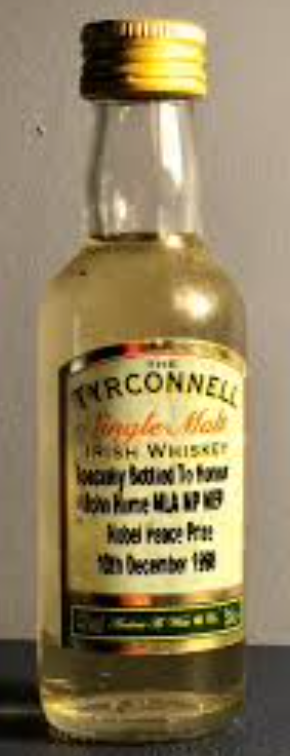
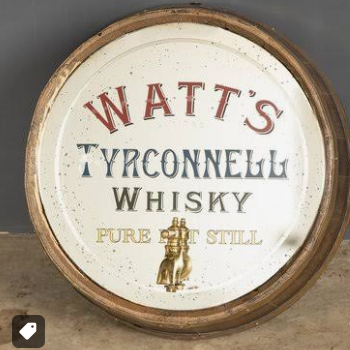
The scale of Watt's operations made the distilleries important contributors to Londonderry's economy. Their activities supported hundreds of employees, together with coopers, carters, blacksmiths, merchants, and numerous other trades associated with whiskey production and distribution. The city's port provided access to international markets, enabling Watt's whiskey to reach Britain, North America, Australia, and other destinations. The Tyrconnell became particularly successful in export markets, helping establish Londonderry as an important center of Irish whiskey production. By the beginning of the twentieth century, Andrew Watt had transformed an established family concern into a substantial international enterprise.
In 1902, Watt participated in the formation of United Distilleries Company, combining his interests with two Belfast distilling concerns. The arrangement was intended to strengthen the participating companies' commercial position and improve their ability to compete in the expanding international spirits market. The new organization also negotiated trading arrangements with the powerful Distillers Company of Scotland. Although the consolidation represented an important development in the Irish whiskey industry, the enterprise subsequently encountered commercial and financial difficulties as competitive conditions changed.
The First World War brought substantial disruption to the British and Irish distilling industries, affecting supplies, production, and international commerce. Further difficulties followed the introduction of Prohibition in the United States in 1920, which eliminated a major legal export market for Irish whiskey. Political upheaval and the partition of Ireland in 1921 added further complications to commercial operations in Londonderry. These developments occurred during a period of increasing industrial unrest, culminating in a dispute between Watt and employees at the Abbey Street distillery in 1821. The confrontation was over wages and working conditions, and resulted in the closure of the distillery. According to a frequently repeated local account, Watt arrived at the premises and demanded that striking employees reopen the gates. When they refused, he declared that the gates would remain closed, bringing an end to whiskey production at the historic facility. Approximately 300 employees lost their positions, and the closure represented a substantial loss to Londonderry's industrial economy. Although whiskey production ceased, the company continued trading The Tyrconnell from existing stocks for several years afterward.
Following the closure, Watt relocated to England, establishing his residence at Easton Hall near Grantham in Lincolnshire. He remained a wealthy landowner and businessman, although his direct involvement in the Irish whiskey industry had effectively ended. On May 18, 1927, he executed his final will, and he died at Easton Hall on October 11, 1928, aged 74. His estate was valued at more than £900,000, a substantial fortune reflecting the family's accumulated wealth and his decades of commercial activity.
The Tyrconnell name eventually returned to the Irish whiskey market following its acquisition and revival by Cooley Distillery in the late twentieth century. Its continued production preserved the identity of Watt's most celebrated whiskey, together with the image of the racehorse whose unexpected victory had inspired its creation. The original Abbey Street distillery did not reopen, but its surviving warehouse and the history of the Watt family remained important reminders of Londonderry's former position in the Irish whiskey industry.
More than a century after Watt's distillery ceased production, proposals emerged to restore the family's whiskey-making legacy to Londonderry. In 2022, businessman Garvan O'Doherty announced plans for a £20 million investment incorporating a revived Watt's whiskey enterprise, a visitor attraction known as Watt's Whiskey Emporium, and a new craft distillery capable of producing more than one million bottles annually. Derek Hardy, formerly associated with Hinch Distillery, was appointed to lead the whiskey project, while experienced distiller Aaron Flaherty was named Head Distiller and Chief Operating Officer. The development was intended to reestablish whiskey production in the city while celebrating the achievements of the Watt family and the historic significance of their enterprise.
The proposed revival had still not been confirmed as completed by this writing, and in January 2026, Flaherty and Hardy had become involved in a separate proposed whiskey distillery, Sacred Oak Spirits, near Comber in County Down, leaving their continued participation in the Watt project uncertain. Nevertheless, the renewed interest in the Watt name demonstrated the enduring historical importance of Andrew Alexander Watt, whose whiskey enterprise had once placed Londonderry among Ireland's foremost distilling centers.
Sources:
Derry Journal (multiple articles), derryjournal.com
Foyle Civic Trust, “Thornhill”, architectural and historical survey, foylecivictrust.org
Northern Scrivener, “Andrew Alexander Watt - A Distiller's Will”, February 13, 2017, northernscrivener.blogspot.com
The Irish News (multiple articles), irishnews.com
Burke's Irish Landed Gentry (publication), “Watt of Thorn Hill, Formerly of Claragh”, Bernard Burke, p. 746
Contributed by Tracy McLemore, Fairview, Tennessee USA