Hedley Wright

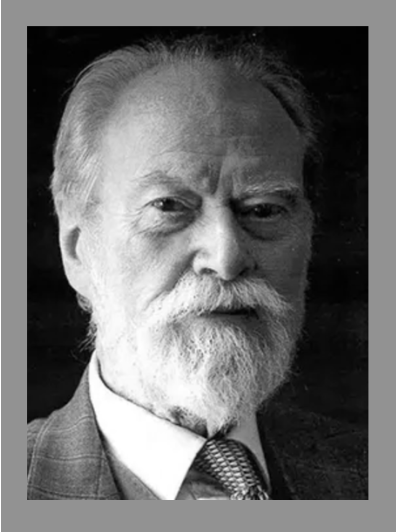
Hedley Gordon Wright spent most of his life doing something increasingly rare in Scotch whisky: keeping a distilling company independent, local, and unmistakably itself at a time when the wider industry was consolidating, modernizing, and, in some cases, flattening regional distinctions in the supposed name of efficiency. His career was not defined by celebrity or flamboyance. Instead, it was marked by patience, structural foresight, and a sustained commitment to continuity.
Wright was born in March of 1931. In 1963, he became chairman of J&A Mitchell & Co. Ltd., the Campbeltown firm that has owned Springbank Distillery continuously since 1837. He would work for the company for more than sixty years. While many whisky executives of the late twentieth century cultivated public profiles, Wright developed a reputation for modesty and privacy. He rarely granted interviews and often moved through Campbeltown’s whisky festival crowds anonymously. From those fixed points, his story is less about a charismatic “whisky celebrity” than about a long-serving owner-chairman who deliberately stayed out of the spotlight while shaping the long-term survival strategy of one of Scotland’s most traditional distilleries.
One early window into Wright’s direct involvement with the business appears in 1963, the same year he assumed the chairmanship. That year, he authored an article in The Wine and Spirit Trade Record discussing Springbank’s plant and production practices. The piece described changes at the distillery and reflected on modernization within the facility. This places Wright not merely as an owner in name, but as someone engaged in the operational and technicaldimensions of the distillery who was concerned with how it functioned, how it was evolving, and how it could adapt without surrendering its character.
Wright’s influence, however, is most clearly visible in two areas: the protection of Campbeltown’s regional status and the engineering of long-term independence for the company.
Campbeltown is one of Scotch whisky’s officially recognized regions, yet its status has not always been treated as untouchable. During periods when production numbers fell and only a handful of distilleries remained active, some argued that Campbeltown should be merged into the Lowlands for classification purposes. Wright led the effort to resist that change. He understood that regional identity affects how whisky is categorized, discussed, and marketed. It shapes tourism, trade perception, and the internal confidence of a place that once dominated Scotch whisky production before entering a long period of contraction. By maintaining Campbeltown’s separate designation, Wright helped preserve not only a label on a map, but the legitimacy of a distinct local tradition.
The second area—structural independence—was handled with foresight that became fully visible only after his death. Years earlier, Wright had placed the majority of J&A Mitchell’s shares into a trust designed to protect the company’s independence while allowing profits to support projects benefiting the people of Campbeltown. Following his death, ownership arrangements were formalized into three trust funds, with a member of the Wright family appointed to the board to maintain the family link. Shares in the company operating Glengyle Distillery were also transferred to three local trust funds so that the community would continue to benefit from its success. This form of trust-based planning rarely generates headlines, yet it determines whether a distillery remains a local enterprise or becomes an asset on a former competitor’s external balance sheet. It also connects directly to Wright’s most visible strategic move; an act often described as expansion, though in practice it was closer to restoration.
In 2000, the old buildings of Glengyle Distillery, closed since 1925, were purchased by a Mitchell-linked company led by Wright. The acquisition brought Glengyle back under the same family ecosystem that had sustained Springbank for generations. Production resumed there under the Kilkerran name, placing a second active distillery in Campbeltown under local control. The move was consistent with Wright’s broader philosophy: protect what exists, and when conditions permit, revive what has been lost. The reopening of Glengyle was not an abandonment of tradition in favor of growth, but a reinforcement of Campbeltown’s historical fabric.
When Hedley Wright died on 5 August 2023 at the age of 92, J&A Mitchell publicly stated that there would be no change in the day-to-day running of the company because “necessary arrangements” had been made years earlier. That continuity is perhaps the clearest epitaph for Wright’s style of ownership. He built structures intended to outlast him so that Springbank could remainSpringbank without depending on a single personality for stability.
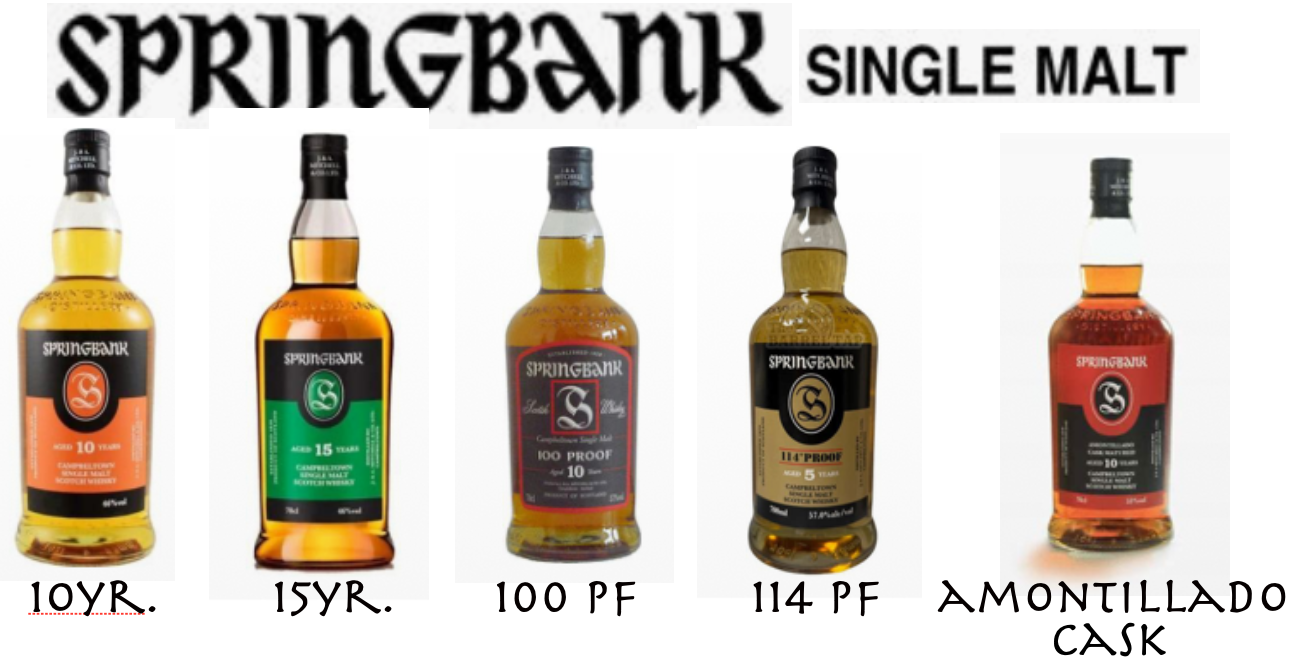
Springbank’s present reputation, which is defined by traditional production methods, limited output, strong global demand, and a pronounced sense of place anchored firmly in Campbeltown, did not develop by accident. It required decades of resisting short-term pressures, declining acquisition opportunities, and maintaining a “not for sale” position even when industry consolidation made such independence increasingly uncommon. It also required careful decisions about modernization, ensuring that investment strengthened rather than diluted identity.
In the public record, Hedley G. Wright is the name most consistently associated with that long, quiet discipline. His leadership was not theatrical, but structural. He did not seek to redefine Springbank; he sought to ensure that it endured. More than any other individual in its modern history, Wright shaped the conditions under which both Springbank and Campbeltown itself could remain distinct. His contribution was measured not in sudden transformation, but in continuity that was maintained year after year, decade after decade, until independenceitself became the defining feature of his tenure.
Sources:
UK Government Companies House, “Hedley Gordon Wright–personal appointments” information.service.gov.uk
WhiskyCast, “Hedley G. Wright: 1931–2023”, whiskycast.com
Springbank Distillery official website, “Story”, springbank.scot/about/story
Glengyle Distillery/Kilkerran official website, “The Glengyle Distillery”, kilkerran.scot
Whiskypedia, “J&A Mitchell & Company”, scotchwhisky.com
Watt Whisky, “Springbank–A Blast from the Past?”, 1 September 2022, wattwhisky.com
Contributed by Tracy McLemore, Fairview, Tennessee USA