Russell Wedlake
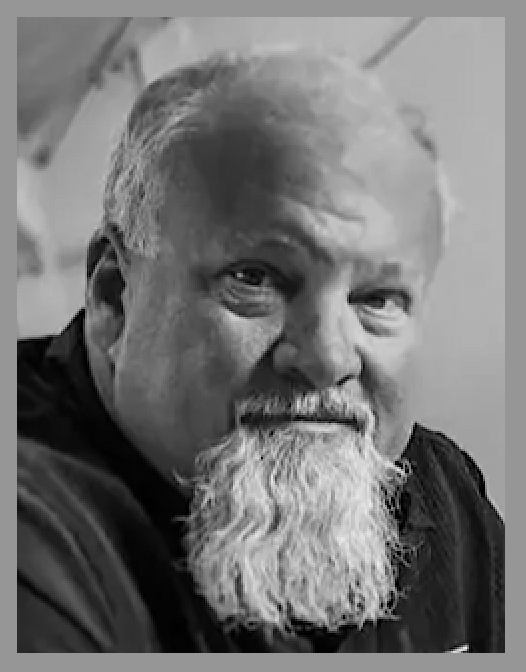
Russell Wedlake arrived at whiskey by way of military electronics, crop science, and Nevada agriculture rather than through a conventional distilling apprenticeship. He was born in July of 1967, but began his working life in the United States Navy, servicing aircraft avionics. After leaving that field, he entered agriculture and built a career that eventually made him both a certified crop adviser in the Pacific Northwest and a licensed pest-control adviser in California. By 2026, he had spent more than three decades in farming and agriculture, experience that became the foundation of his work as Master Distiller at Frey Ranch Distillery in Fallon, Nevada.
The tiny town of Fallon is known as the home of the U.S. Navy’s Top Gun School, but also as the self-proclaimed “cantaloupe capital” of the United States. Agricultural consulting, then, brought Wedlake to Fallon first, then into the orbit of Frey Farms. He advised the Freys on crops, irrigation, fertilizers, soil amendments, and other farm practices, forming a working relationship with the family years before he joined the distillery full time. Wedlake’s job required him to investigate problems in a field, examine samples, diagnose the cause, and recommend a response. Once he delivered that recommendation, however, he generally did not follow the crop through harvest—a limitation that would disappear when he began working at Frey Ranch.
The Freys had obtained a federal distilling license in 2006, but Nevada then lacked a state framework that allowed a commercial craft distillery to operate in the manner they envisioned. When state legislation opened that path in 2013, Colby and Ashley Frey moved ahead with a distillery designed to transform their own grain into a finished product. Colby wanted a day-to-day operator who understood the farm, shared the family’s outlook, and could translate its crops into whiskey. Wedlake joined Frey Ranch full time in 2013 as its agronomist and became Master Distiller despite having no formal spirits-industry training.
That appointment made agricultural knowledge, rather than inherited distilling practice, the starting point of the Frey Ranch production system. Wedlake had also made wine for Churchill Vineyards, the winery associated with the property, giving him direct fermentation experience before whiskey became his principal work. He and the Freys developed the distilling program without bringing in industry consultants to dictate a standard method. The aim was to make whiskey their own way, using control of the farm as a technical advantage rather than treating agriculture as background scenery.
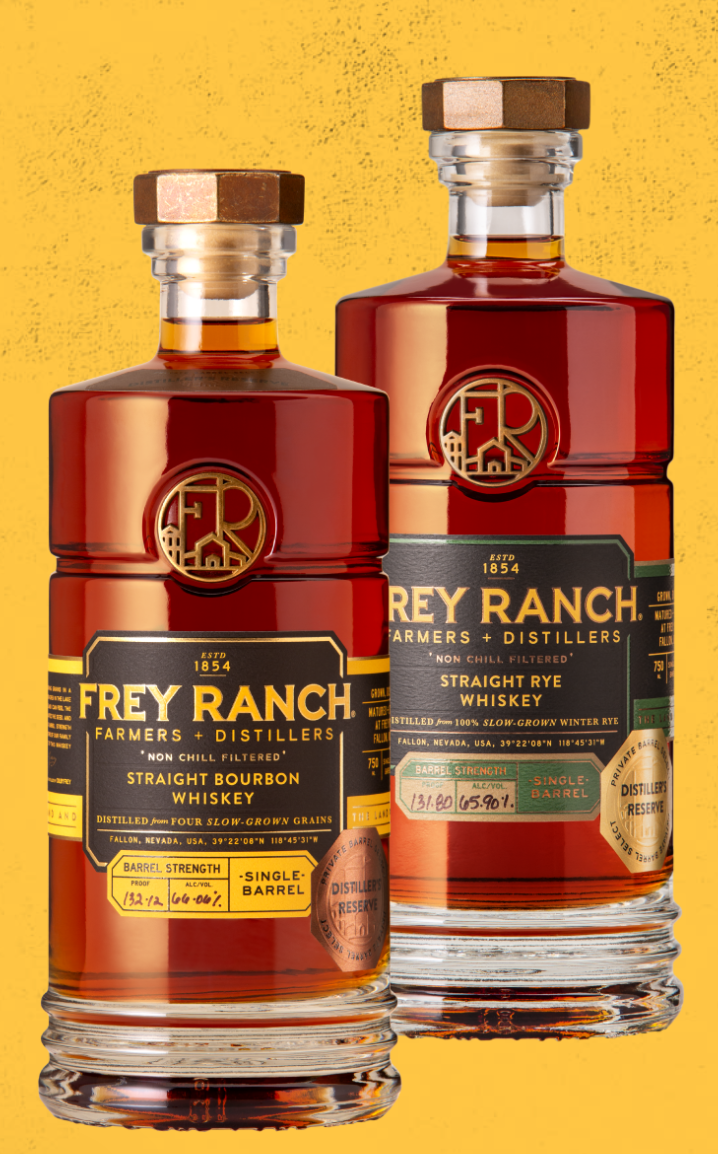
Frey Ranch began distilling commercially in 2013 and held its whiskey until it had reached the maturity the team wanted. Its first whiskey, a four-year-old four-grain bourbon matured in full-size barrels, appeared in November 2018, and bourbon remained the center of the operation. The mature flagship recipe combines roughly two-thirds corn with malted barley, wheat, and rye, all raised on the ranch. Wheat reinforces the corn’s sweetness, rye supplies spice and contrast, and barley contributes malt character, allowing the four grains to produce balance rather than serving as a novelty. As the inventory matured, Wedlake helped broaden Frey Ranch beyond its core bourbon. The distillery developed a 100-percent rye whiskey, single-barrel bottlings, uncut farm-strength releases, and experimental whiskeys built around wheat, barley, corn, and oats. A viscous 100-percent rye mash is difficult to process, yet Frey Ranch pursued it because it revealed the character of the ranch’s rye without another grain moderating it. The same experimental impulse produced smoked single malt and other limited expressions, all grounded in crops grown and processed on the property.
Barrel evaluation became another important part of Wedlake’s work. He and Colby Frey taste prospective single barrels blind, without knowing proof, age, or warehouse position, and choose by sensory quality rather than by a marketable number. Wedlake places particular weight on texture and finish: whether the whiskey feels silky across the palate and whether it invites another sip. When larger selections are evaluated, other employees and occasional guests with trusted palates may join the tasting so that the final judgment does not depend on one person alone.
Wedlake’s career at Frey Ranch joins two occupations often separated in modern whiskey production. He understands what a grower can do to improve grain for a distiller and what a distiller requires from a grower because, at Frey Ranch, he performs both roles. The former crop consultant who once left a field after issuing a recommendation can now follow a seed through every stage until its whiskey is bottled. That continuity—from soil and irrigation to fermentation, copper, oak, and final selection—is the defining fact of Russell Wedlake’s work.
Sources:
Binny’s Beverage Depot, “Frey Ranch—Barrel to Bottle Chats with Master Distiller Russell Wedlake”, May 15, 2026, binnys.com
Ohio Liquor Control, “Russell Wedlake: Meet the Master Distiller of Frey Ranch”, June 5, 2026, ohlq.com
Forbes, “Frey Ranch Master Distiller Brings Crop-First Focus to the Brand”, Emily Cappiello, January 29, 2025, forbes.com
Bourbon+, “Young Spirits: Frey Ranch Estate Distillery”, Jake Emen, 2021, bourbonplus.com
Frey Ranch Distillery official website, freyranch.com
Food & Wine, “Frey Ranch Sampled More Than 100 Barrels to Create This Anniversary Whiskey”, April 28, 2025, foodandwine.com
Contributed by Tracy McLemore, Fairview, Tennessee