James Allardice

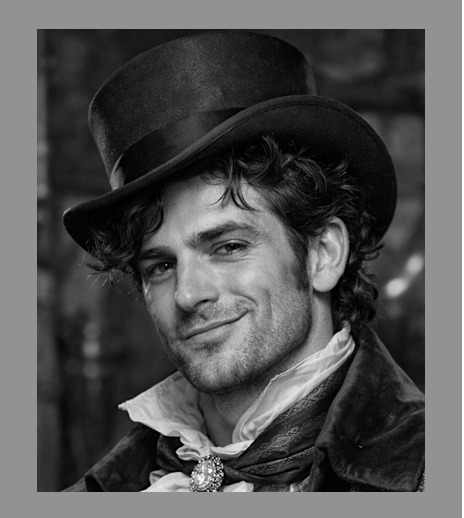
There are no known photos of James Allerdice. Above is an AI-generated image based on facts that are known about his life.
Born 12 February 1772 in Forgue, Aberdeenshire, James Allardice was the oldest child of William and Ann Henderson Allardes. James had 4 siblings, but when his mother died, his father remarried Katherine Stuart, and James gained 2 half-siblings. Not much else is known about James’ early life. However, as an adult, he entered Scotch whisky history at a colorful and historic moment when the business was being dragged, sometimes willingly, sometimes not, out of the gray shadows of illegality and into the complex but profitable framework of law.
The Excise Act of 1823 reshaped the incentives around distilling in Scotland, making it more practical to operate openly under permit than to gamble everything on unlicensed production. Within a few years, the rolling farmland of Forgue near Huntly in Aberdeenshire was busy with new government-sanctioned distilleries appearing on hillsides hither and yon; James Allardice aimed for his venture to be the grandest one of all. As a result, GlenDronach, the distillery that Allardice founded, still defines his identity over two centuries later.
The site Allardice chose was not a blank slate. GlenDronach’s distillery history points back to Boynesmill House, which was built in 1771. GlenDronach stood beside the burn that still gives the whisky its water source and a large part of its character. When Allardice arrived, the place was pre-anchored in a working estate setting: a house, a burn, farmland, and the kind of steady resources a licensed distillery needed: water, grain, and access to people who could supply and finance a stillhouse. On those foundations, Allardice established his distillery three years after the Excise Tax became law.
Allardice was the principal founder of GlenDronach, but in reality, there was a small partnership or consortium of local farmers and businessmen that were also part of the distillery from the beginning. In that respect, Allardice was not simply a tenant with a still, but someone who could organize capital and convince others that a legal distillery in this valley could sell spirit beyond the local parish. His hard work, sense for opportunity and sales ability quickly drove GlenDronach from an early startup, one of many in the Aberdeenshire hills, to prosperity fairly quickly. Personally, Allardice was framed by observers in his day as “characterful” and “flamboyant”; a man with a taste for flair, and for attention. He frequently spelled his last name Allardes or Allardyce, possibly as a point of stylishness, deliberate enigma, or both, making his later history harder to follow. For instance, there is some evidence that he married in 1804 when he was 32 and in the midst of building his distillery, but his wife’s name remains unknown, and in fact, that event cannot even be confirmed with certainty. In any case, James’ vivid personality undoubtedly drove GlenDronach forward to relative success from the start.
Allardice’s earliest challenge would have been the same as any new distiller’s: turning spirit into sales fast enough to keep the enterprise solvent. In GlenDronach’s case, the surviving public narrative emphasizes reputation-building in the cities. He was soon found in Edinburgh’s Canongate, where he promoted his whisky by handing out drams to the “ladies of the night,” creating talk that led to customers asking for GlenDronach by name. The distillery’s early identity, then, was linked to marketing as much as manufacture. Allardice was remembered not only as a license-holder, but as someone willing to push his product into the public ear, even at the expense of taking some moral risk in doing so.
If that early push was a climb, the fall came quickly. In 1837, a devastating fire struck GlenDronach and virtually destroyed the distillery. The event shows up again and again in the distillery’s historical outline, not as a colorful aside but as the central rupture of Allardice’s tenure. Fire was a familiar hazard in early whisky-making; open flames, hot stills, flammable vapors, and wooden structures, but familiarity did not make it survivable as a business shock. Rebuilding required capital and time; interruption threatened cash flow; and in a licensed operation, fixed costs did not conveniently disappear just because the buildings were gone. Allardice by then would have been 65; too old to rebuild and promote another distillery. The record that follows is blunt. Within five years of the fire, Allardice was bankrupt. Whatever combination of debt, rebuilding cost, and lost production drove that outcome, the practical result was that James’ direct control of GlenDronach ended relatively early in the life of the distillery.
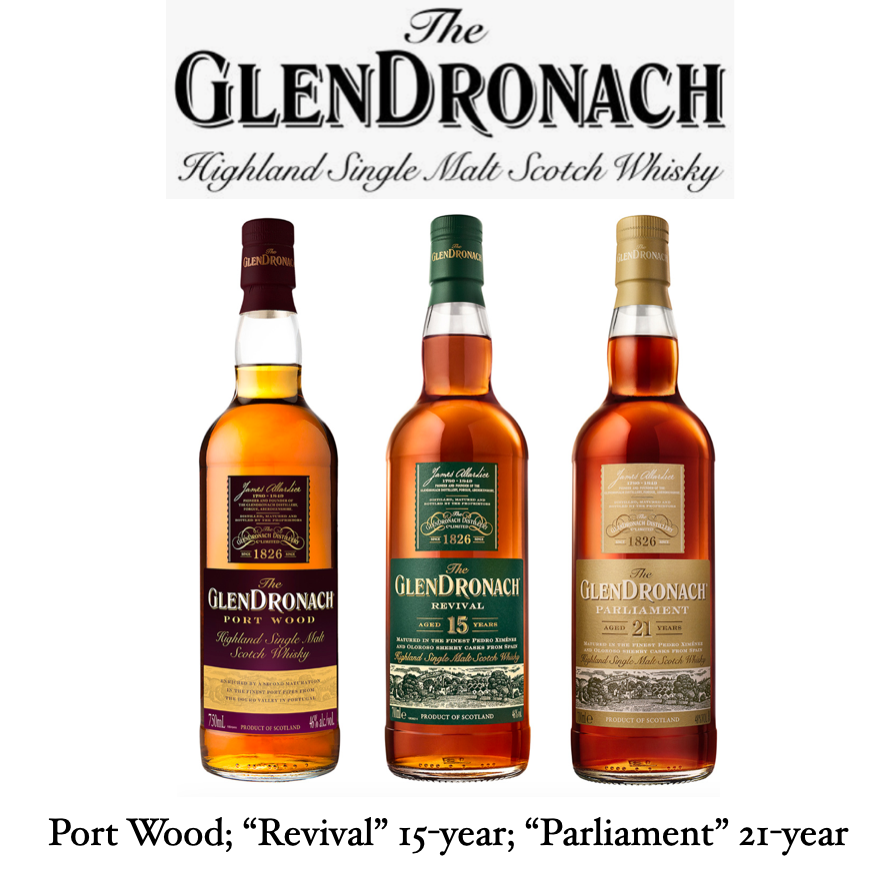
The distillery continued, then, but Allardice’s ownership did not. That pivot, founder and initiator rather than long-term proprietor, explains why later GlenDronach history is dominated by subsequent names and companies, while Allardice remains, paradoxically, both central and elusive: central because he starts the story and is initially successful, elusive because he exits it quickly and tragically. While Allardice’s name outlived his balance sheet, he is still considered GlenDronach’s “visionary founder,” also placing him at the start of a tradition of maturation linked closely with Spanish sherry casks. That continuity is not only a marketing flourish; it is a statement about style. The distillery’s modern identity still leans heavily into Oloroso and Pedro Ximénez casks, and its flagship bottlings keep the founder’s name in circulation, most explicitly in “The GlenDronach Allardice” 18-year-old expression. In other words, even though the dashing man who built the distillery lost it within a generation, the brand has chosen to make him its long-term emblem.
James died 15 Apr 1853, aged 81 years, penniless and heartbroken. What remained of the site of GlenDronach lay dormant for several years before it was rebuilt, then went through several hands successively: In 1881, it was purchased by a man named Walter Scott, who held it for nearly 40 years. Charles Grant, son of the founder of the The Glenfiddich, purchased it in 1920, and also owned it for 40 years. The distillery was purchased by William Teacher & Sons in 1960. Teacher increased the number of stills from two to six; it was then sold in 1976 to the company that would become Allied Domecq. In 1996, GlenDronach was mothballed, but reopened again in 2002 by Allied Domecq. In 2006, the distillery passed into the hands of Chivas Brothers, Ltd., (part of the Pernod Ricard group), and in 2008, it was sold to the BenRiach Distillery Company. In April 2016, GlenDronach distillery was acquired, along with BenRaich and Glenglassaugh, by the Brown–Forman Corporation, where it remains today.
In the end, the most historically defensible portrait of James Allardice is less a complete cradle-to-grave distillery owner than a sharply lit chapter in early-licensed Scotch. He wan organizer who established a distillery at a specific place with a specific water source and estate infrastructure. He is then a salesman willing to push “Guid GlenDronach” into public notice in Edinburgh, and he appears, finally, as a cautionary symbol, caught by the realities of fire and debt, and removed from his own creation by bankruptcy. GlenDronach’s later owners would rebuild, expand, and remake the business across eras, but the brand still chooses to begin with him, because the founding moment in 1826 remains the first, essential fact: the point when a bold valley distillery founder stepped into legality and started trying to sell his spirit to the world in ways no one had thought of before.
Sources:
GlenDronach Distillery official website, “Our Story”, www.glendronach.com
Whiskypedia, “Glendronach Distillery Company”, scotchwhisky.com
The Whisk(e)y Wash, “GlenDronach 18”, Mark Bostock, 01 September 2024
Whisky Magazine Issue 206, “The sherry on top: The Glendronach…”, Liza Weisstuch, 02 Jul 2025
Master of Malt, GlenDronach 18 Year Old “Allardice”, www.masterofmalt.com
Contributed by Tracy McLemore, Fairview, Tennessee USA