Alex Bruce


In 1971, Alexander Bruce was born into one of Scotland's oldest whisky families. Unlike the heirs to many famous distilling names, however, he did not inherit a vast operating distillery empire. Instead, his reputation in whisky emerged through his role in reviving a historic whisky name and helping transform a respected independent bottler into one of the most influential small whisky companies in modern Scotland.
Bruce was born into the Bruce family of Kinnaird, an ancestry with longstanding ties to Scotch whisky through blending firms such as William Cadenhead and Duncan Taylor. He was also connected to the historic Adelphi name through family and business relationships that reached deep into the old Scotch whisky trade. On his mother's side, he was a direct descendant of Andrew Usher, the influential whisky merchant associated with DCL, one of the companies that later became part of Diageo. Despite those connections, Bruce initially pursued a professional life outside whisky before eventually returning to the industry.
By the 1990s, the Scotch whisky industry was changing rapidly. Large multinational corporations increasingly controlled production, blends dominated global sales, and many historic distilleries had either closed or become anonymous production facilities supplying major brands. During that period, independent bottlers occupied a narrow but important niche within the industry. These companies purchased casks from distilleries and released them under their own labels, often emphasizing individuality and character rather than absolute consistency.
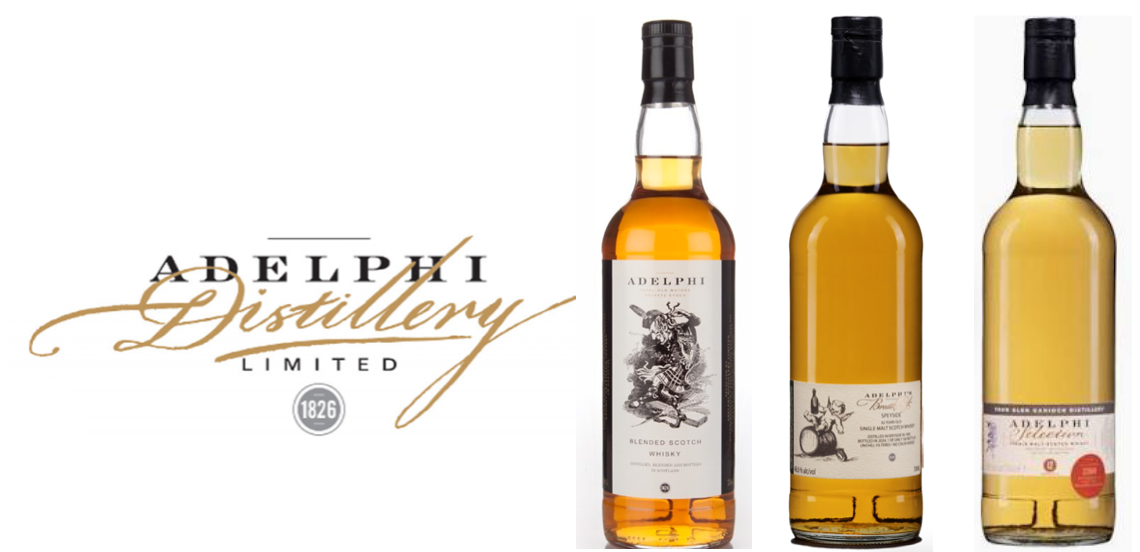
It was within that environment that the Adelphi name returned to prominence. The original Adelphi Distillery had been built in Glasgow in 1826 by Charles and David Gray on the banks of the River Clyde. In 1880, the distillery was purchased by Archibald Walker & Co., owners of several other distilleries. Walker & Co. invested heavily in the site, expanding production to include both grain and malt spirit primarily intended for the blended whisky market. By 1886, Adelphi had become one of the most advanced distilleries in Scotland, complete with its own blending and bottling facilities and an annual output approaching half a million gallons.
In 1903, the distillery was acquired by the Distillers Company Ltd. Malt whisky production ceased by 1907, although grain production and warehousing continued for several decades afterward. Over time, the buildings fell into disuse and were eventually demolished in 1971, the former site later becoming home to Glasgow's Central Mosque.
More than two decades later, whisky entrepreneur Jamie Walker revived the Adelphi name in 1993 as an independent bottling company dedicated to selecting rare and distinctive Scotch whisky casks. Bruce soon became closely associated with Walker's operation and eventually emerged as one of its defining figures.
Adelphi entered the whisky market at a time when single-cask bottling remained a comparatively specialized corner of Scotch whisky culture. The company quickly distinguished itself through an unusually strict cask selection philosophy. Bruce and the Adelphi team rejected far more casks than they accepted, often bottling only a small percentage of the whisky they sampled. Adelphi developed a reputation for whiskies that emphasized texture, distillery character, and natural presentation rather than aggressive branding or marketing gimmicks.
Bruce became particularly associated with Adelphi's uncompromising standards. Under his leadership, the company emphasized non-chill filtration, natural color, and high-strength bottlings long before such practices became widespread marketing language throughout the Scotch whisky industry. Adelphi releases frequently appealed to enthusiasts seeking individuality rather than uniformity, and the company earned a reputation among collectors and serious whisky drinkers for consistency of selection rather than consistency of flavor.
During the early 2000s, independent bottlers faced mounting pressure as major distilling companies tightened access to mature casks. Large producers became increasingly protective of stock inventories as single malt Scotch whisky grew in prestige and global value. For companies like Adelphi, securing exceptional whisky became progressively more difficult. Bruce recognized both the opportunities and the risks created by those industry changes. Independent bottling continued to hold strong appeal among enthusiasts, but long-term survival required careful stock management and strong industry relationships. Adelphi responded by becoming even more selective in its purchasing and bottling practices.
Throughout those years, Bruce helped position Adelphi as a bridge between traditional Scotch whisky values and modern enthusiast culture. The company's bottlings frequently highlighted obscure distilleries, refill maturation styles, and heavily textured spirits that differed sharply from heavily engineered modern flavor profiles. Adelphi became especially respected for old-style sherried whiskies and mature coastal malts.
By 2007, Adelphi had become successful enough to begin considering ownership of its own distillery. Returning to the original Glasgow site was impossible, so the company searched elsewhere for a location that matched its philosophy and ambitions. The site eventually chosen was Ardnamurchan, and construction began in 2013 at Glenbeg.
Even as Adelphi expanded into distilling through Ardnamurchan, Bruce remained deeply connected to the company's original identity as an independent bottler first. His work ultimately helped preserve an important part of Scotch whisky culture during a transformative period for the industry. Independent bottlers had once been common throughout Scotland, but by the late twentieth century many had disappeared or become marketing subsidiaries of larger corporations. Adelphi survived by remaining highly selective, deeply traditional, and closely connected to whisky enthusiasts who valued authenticity over scale.
In an industry increasingly shaped by branding, luxury positioning, and global expansion, Bruce helped maintain a quieter but highly influential vision of Scotch whisky: casks selected for character, bottled with minimal interference, and presented with confidence that the whisky itself remained the central attraction.
Sources:
Adelphi distillery official website, www.adelphiselection.com
Ardnamurchan distillery official website, ardnamurchandistillery.com
Whisky magazine, “Alex Bruce Interview”, Gavin D. Smith, whisky-magazine.com
Charles MacLean, “Malt Whisky Almanac”, Charles MacLean, Birlinn Ltd., 2010
“Adelphi Selection History and Company Background,” various company releases and bottling notes, adelphidistillery.com
Contributed by Tracy McLemore, Fairview, Tennessee USA