Andrew Biggs

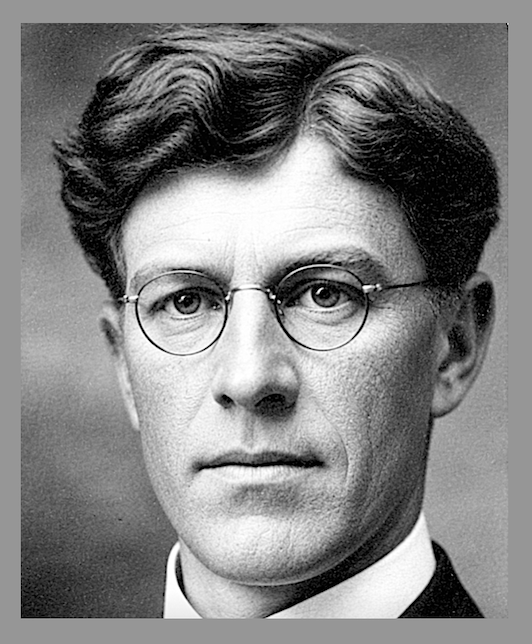
There are no known actual photographs of Andrew Biggs.
Above is an AI-generated image of him based on facts known about his life.
During the crucial years when the Mellwood Distillery evolved from a promising post-Civil War enterprise into one of Louisville's leading whiskey producers, Andrew J. Biggs served as one of the principal figures directing its growth. Biggs was born on July 16, 1828, in Greenup, Kentucky, to his mother, Lucy Blakemore Davis and his father, William Biggs. Not much is known about Biggs early life except that he was raised on his father’s small farm in the extreme Eastern part of that state, a hardscrabble area known primarily for coal mining and moonshining. It is highly likely that Biggs engaged in one or both of these activities at some part of his life, the latter of which probably stirred a lifelong interest in whiskey production.
In about 1858, Biggs married a local girl named Mariah Kouns. Five children quickly followed the union, prompting Biggs to move his family to a more prosperous part of the state. The young family landed in Louisville just as tensions between North and South reached a boiling point, where Biggs found employment sufficient to keep his family fed, but not much more than that. Biggs first emerged prominently in Louisville about 1863, during the height of the Civil War, when “neutral” Kentucky's whiskey industry entered one of the most dynamic periods in its history. Federal taxation imposed during the war had reshaped the business, while expanding railroads and growing national demand rewarded distillers who possessed both capital and business acumen. In about 1865, Biggs obtained sufficient funds to join with George W. Swearingen to construct what would become the Mellwood Distillery on Beargrass Creek in Louisville. Swearingen supplied much of the original vision and financing, while Biggs quickly established himself as an indispensable member of the enterprise, owing to his natural, easy leadership and uncommonly sharp business sense.
During its formative years, the business operated under several partnership arrangements that reflected both expansion and investment. Between roughly 1867 and 1874, the operating firm was known as Biggs, Patterson & Company, consisting principally of Andrew Biggs, William Patterson, and George W. Swearingen. In that arrangement, Biggs served an active operating partner entrusted with managing the distillery. As the enterprise matured, Swearingen generally remained president while Biggs assumed the positions of secretary and treasurer, placing him in charge of the company's entire financial administration.
Tragically, however, Mariah died on October 13, 1869 at the age of only 39, leaving Andrew with five children under the age of twelve, one daughter aged only two years. Despite his personal tragedy, the years following Reconstruction witnessed extraordinary growth at Mellwood. What had begun as a comparatively modest operation had by then expanded into one of Louisville's largest distilling complexes. The distillery eventually occupied approximately twelve acres and included extensive bonded warehouses, massive fermentation tanks, modern roller mills, cattle feeding facilities, and production equipment capable of processing enormous quantities of grain. Such expansion required disciplined management as well as substantial capital investment. Although Swearingen understandably received much of the public recognition, Biggs handled the countless financial and operational decisions that enabled the company to compete successfully in Kentucky's increasingly industrialized whiskey business.
In 1877, documents show that Biggs was still serving as secretary and treasurer of the Mellwood Distillery Company. That demanding position carried considerable responsibility in an era when whiskey producers manually managed complicated inventories of bonded spirits, routinely negotiated with banks, supervised tax compliance, and coordinated large commercial sales throughout the country. Biggs also had the practical executive responsibility of translating increasingly ambitious expansion plans into profitable day-to-day operations. His long tenure concludes that he fulfilled that role with sufficient competence to help establish Mellwood as one of Kentucky's leading distilleries.
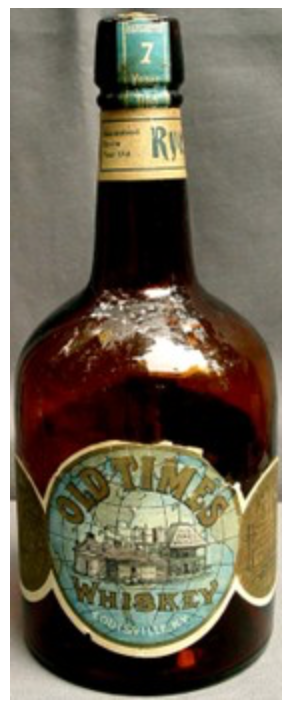
Like many successful Kentucky whiskey men, Biggs eventually broadened his business interests beyond a single distillery. In 1887, he acquired sole ownership of the Old Times Distillery, Registered Distillery No. 297, in Louisville. Old Times already possessed an established reputation, and Biggs's purchase reflected both his financial success and his growing standing within the industry. Rather than remaining permanently associated with Swearingen, he had become a distillery proprietor in his own right, directing another important whiskey operation during one of bourbon's great expansionary decades.
Unfortunately, Biggs enjoyed relatively little time to build upon that achievement. He died on January 21, 1889, ending a career that had by that time spanned nearly a quarter century. Following his death, ownership of Old Times soon passed to other hands, while Mellwood itself continued evolving under new leadership before eventually becoming part of the great consolidation movement that created the Kentucky Distilleries & Warehouse Company, better known as the “Whiskey Trust.”
Although Andrew Biggs never achieved the widespread historical recognition accorded to some of Kentucky's more celebrated distillers, his contributions deserve careful consideration. He belonged to the generation that transformed bourbon from a regional agricultural product into a nationally distributed commercial spirit. His work alongside George W. Swearingen helped establish Mellwood as one of Louisville's landmark distilleries, while his later ownership of Old Times demonstrated the confidence that contemporaries placed in his business judgment. Meanwhile, the surviving record leaves little doubt that Andrew Biggs was one of the capable nineteenth-century whiskey entrepreneurs whose steady administrative skill helped build Kentucky's reputation as America's foremost distilling state.
Sources:
Pursuit Spirits official website, "The Mellwood Distillery Company and General Distillers History”, pursuitspirits.com
Various genealogical websites: “Andrew J. Biggs”, “Mariah K. Biggs”, “Mollie Biggs”
Old Times bottle photo courtesy of dramdevotees.com
Contributed by Tracy McLemore, Fairview, Tennessee