


Charles L. Beam
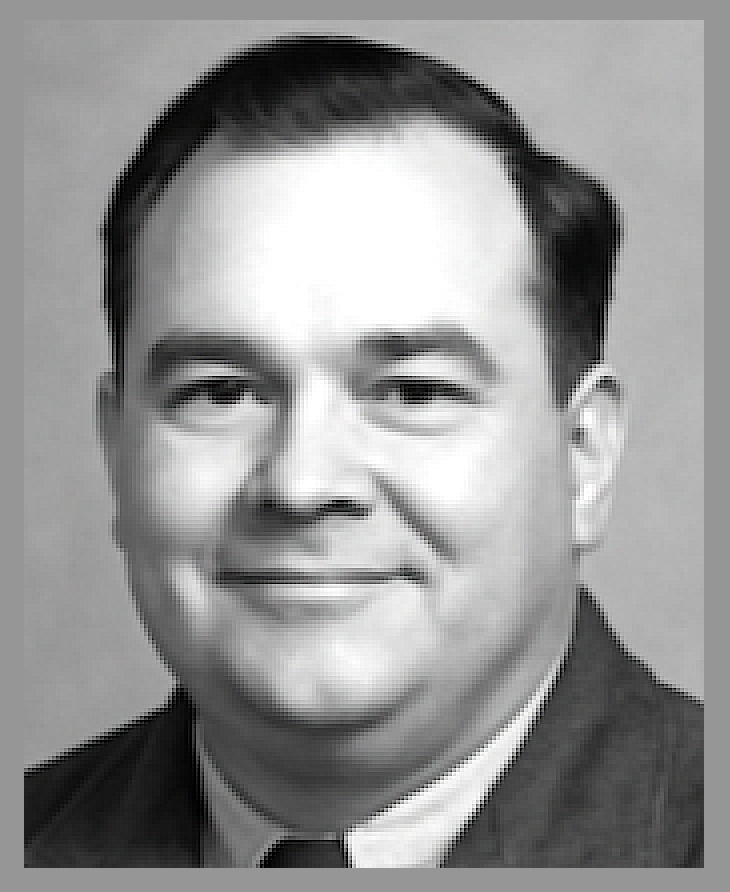
No actual photographs of Charles L. Beam could be found. Above is an AI-generated rendering of what he may have looked like, based on facts known about his life.
Charles Lloyd Beam was born in Louisville, Kentucky, on October 7, 1922, the son of Roy M. Beam Sr. and Mittie D. Beam. He was a grandnephew of James Beauregard "Jim" Beam, whose name became synonymous with Kentucky bourbon, and a grandson of distiller Joseph "Joe" Beam. Charles grew up in a family with deep connections to the whiskey business, although his early career took a different direction. He attended St. Xavier High School in Louisville and subsequently studied at the University of Louisville, where he pursued an education that included chemistry.
The Second World War interrupted Beam's education and brought him into military service. He joined the United States Army Air Corps, attained the rank of staff sergeant, and participated in 30 combat missions over Europe. His wartime service earned him the Distinguished Flying Cross, an American military decoration recognizing extraordinary achievement or heroism in aerial flight. Following the war, Beam returned to civilian life and, on January 5, 1946, married Mary Lee Kuhn. Their marriage produced three children, Rebecca, Charles Jr., and David, and lasted 61 years, until Beam's death.
Beam eventually followed his family's established path into the distilling industry. His career included work at several facilities before he became closely associated with Seagram and its Four Roses operation in Lawrenceburg, Kentucky. Seagram had acquired Four Roses in 1943, incorporating the established bourbon producer into one of the world's largest distilled-spirits organizations. The company controlled an extensive portfolio of whiskey brands and distilling facilities, giving its production specialists opportunities to work with different whiskey styles and manufacturing methods.
In 1962, Beam began his long association with Four Roses. His knowledge of distilling and production helped him advance through the organization, and in 1968 he became the facility's master distiller. The appointment placed him in charge of one of Kentucky's most historically important bourbon operations, where maintaining product quality required considerable knowledge of grain selection, fermentation, distillation, barrel maturation, and blending. His responsibilities extended beyond routine production to the development of whiskeys that could compete in a changing American spirits market.
By the late 1960s, the bourbon industry faced growing competition from vodka, gin, and lighter styles of whiskey. Seagram, like other major spirits producers, responded by developing products aimed at different segments of the market. Beam participated in this effort, applying his experience to the creation of new bourbon expressions. Two of the most enduring results of his work are still popular today: Benchmark and Eagle Rare, introduced six years apart.
In 1969, Seagram introduced Benchmark Kentucky Straight Bourbon Whiskey during Beam's tenure as master distiller. The brand offered a traditional Kentucky bourbon intended to provide consistent quality and broad consumer appeal. Its name referred to the surveying marks used to establish reliable points of reference, an association that later became closely connected with Kentucky's frontier history. Benchmark would eventually become an important value-priced bourbon within the Buffalo Trace family, but its origins belonged to the Seagram era and Beam's work at Four Roses.
Beam's most celebrated contribution, though, followed in 1975 with the introduction of Eagle Rare Kentucky Straight Bourbon Whiskey. Developed for Seagram, Eagle Rare entered the market as a ten-year-old bourbon bottled at 101 proof. Its extended maturation and relatively high bottling strength distinguished it from many American whiskeys marketed during the period. The brand also offered an alternative to Wild Turkey 101, another established Kentucky bourbon whose combination of strength and distinctive character had attracted a loyal following.
Beam also contributed to the development of other distilling professionals during his years at Four Roses. Among them was Jim Rutledge, who joined Seagram in 1966 and transferred to the Lawrenceburg operation in 1975, where he worked under Beam. Rutledge subsequently became one of Four Roses' most respected master distillers, helping establish the brand's reputation for premium bourbon in the modern era. The professional connection between Beam and Rutledge extended Beam's influence beyond the whiskey brands he helped create.
Beam retired from Seagram's Four Roses operation in 1984, concluding over two decades of service at the Lawrenceburg distillery. His departure preceded important ownership changes involving the brands he had developed, particularly Eagle Rare and Benchmark. Those changes would ultimately connect his work at Seagram with another historic Kentucky distillery.
In March 1989, the Sazerac Company acquired Eagle Rare and Benchmark from Seagram as part of a transaction involving multiple spirits brands. Sazerac also subsequently acquired the George T. Stagg Distillery in Frankfort, Kentucky, in 1992, establishing a production home for its growing bourbon portfolio. The historic Frankfort facility was renamed Buffalo Trace Distillery in 1999. Consequently, Beam's relationship with Buffalo Trace was established through the brands he had developed rather than through employment at the distillery itself.
Under Buffalo Trace, Eagle Rare evolved into one of the company's prominent aged bourbons. The familiar ten-year-old expression eventually adopted a 90-proof bottling strength, while Eagle Rare 17 Year Old joined the Buffalo Trace Antique Collection in 2000. The portfolio subsequently expanded to include older and more limited expressions, including Double Eagle Very Rare and Eagle Rare 25 Year Old. Although these modern whiskeys differ from Beam's original Seagram formulation and production arrangements, they continue the brand identity established in 1975.
Charles Lloyd Beam died on January 5, 2007, at Baptist East Hospital in Louisville, Kentucky, at the age of 84. He was survived by his wife, Mary Lee, and their three children, and grandchildren. In 2010, the Kentucky Bourbon Hall of Fame recognized his contributions with a posthumous induction, placing him alongside fellow honorees Eddie Russell of Wild Turkey and Ronnie Eddins of Buffalo Trace. Mary Lee Beam accepted the honor on her husband's behalf, acknowledging a career that had helped shape the development of American bourbon.
Beam's legacy is particularly evident in the continued success of the two brands he helped establish. Eagle Rare developed from a premium Seagram bourbon into an internationally recognized name in aged American whiskey, while Benchmark remained an enduring presence in the Kentucky bourbon market. His work also influenced the next generation of distillers, including Jim Rutledge, whose achievements at Four Roses further strengthened the reputation of Kentucky whiskey. Charles L. Beam never needed his surname on a bottle to leave his mark on the industry; the bourbons he helped create became his lasting signature.
Sources:
The Courier-Journal, “Charles Beam Obituary,” January 2007, legacy.com
Bourbonfool, “How Well Do You Know Eagle Rare?”, Don Williams, July 3, 2020, bourbonfool.com
Forbes, “Buffalo Trace's Eagle Rare 25 Year Old Is An Extraordinary Bourbon,” Joseph V. Micallef, January 28, 2024, forbes.com
Sazerac Company official website, sazerac.com
Buffalo Trace Distillery official website, buffalotracedistillery.com
BourbonBlog, “Kentucky Bourbon Hall of Fame 2010”,Tom Fischer, September 22, 2010, bourbonblog.com
Kentucky Distillers' Association, “Kentucky Bourbon Hall of Fame”, official inductee records, publication date unavailable, kybourbon.com
Contributed by Tracy McLemore, Fairview, Tennessee

Mary Lee Kuhn Beam, center, with other 2010 Bourbon Hall of Fame honorees, Buffalo Trace’s Ronnie Eddins and Wild Turkey’s Eddie Russell, accepting on behalf of her late husband Charles L Beam

