
George Ballentine

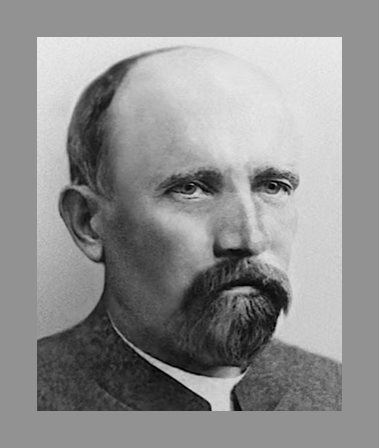
George Ballantine was born in 1809 in Broughton-Home, Peeblesshire, At a young age, George left the rural life of his family farm to pursue a trade in the city. Around 1822, when he was roughly 13 years old, he was apprenticed to Andrew Hunter, a grocer and wine-and-spirits merchant in Edinburgh. This formal apprenticeship, typical of the era, would have given him foundational skills in commerce, hospitality, drink trade practices, and supplier relations, in other words, an education that framed his entire career. After completing his apprenticeship of five years, Ballantine established his own grocery store in Edinburgh in 1827 at the age of about 19. His shop was located in Cowgate, a commercial district of the city where merchants and workers passed daily. Alongside common groceries, he offered wines, spirits, and Scotch whiskies to his customers, building a reputation for quality products and dependable service.
Although whisky at this time was largely a regional product with many illicit producers, the legal framework surrounding the drink had recently changed with new Excise Laws that opened commercial opportunities. In a stroke of good fortune, Ballantine’s early career coincided with this transformation in Scotland’s legal beverage economy.
In 1842, at approximately 33 years of age, George Ballantine married Isabella Mann, the daughter of a grain merchant from Inverness. The union was conveniently a match that connected him more deeply with the agricultural and grain-supply networks that were vital to his whisky production. After their marriage, the couple moved into a more substantial home in George Square, one of Edinburgh’s more fashionable residential districts, reflecting George’s rising status as a successful merchant.
The union of George and Isabella produced three children, including Daniel, Archibald, and George, Jr., all of whom would later figure in the family business. Sadly, Isabella died just six short years after their marriage, leaving George a widower with three young boys.
Meanwhile, through the 1830s and 1840s, George’s business continued to evolve beyond simple retail sales. In the early 1850s he relocated to more prestigious premises near Princes Street and South Bridge in Edinburgh, placing him among the city’s established merchants and increasing his visibility among affluent clients. It was also about this time that he married 35-year-old Mary Clark, a helper in raising his sons; however George and Mary never had any children of their own.
As whisky’s popularity grew, fueled by legal production and increasing urban markets, Ballantine began experimenting with blending whiskies from different distilleries. He blended spirits of varying ages and character, anticipating what would later become the standard practice for blended Scotch. While other merchants experimented with blends, Ballantine distinguished himself by pursuing quality and a balanced flavor profile. By 1865, George had reached a point where the business he founded was strong enough to be entrusted to the next generation. He placed his eldest son, Archibald Ballantine, in charge of the Edinburgh store, allowing George himself to open a larger shop in Glasgow, a commercial hub with extensive export possibilities.
In Glasgow, George focused more intensely on wine and spirit sales, adding a bonded warehouse and rigorous inventory of aged whisky stocks. His younger son, George, Jr., joined him in the business, and together they formalized the company as “George Ballantine & Son Ltd.” This partnership signaled both a generational transition and the beginning of Ballantine’s identity as a family whisky business rather than merely a grocer’s shop. Throughout the 1870s, Ballantine’s business prospered. Blended whisky became increasingly desirable in domestic and international markets because of its consistent quality and accessibility compared to single-malt alternatives, whose availability could vary greatly by distillery. In 1881, after more than five decades in the trade, George Ballantine retired from active management of the company. He handed full operational control to his sons, particularly George, Jr., who continued to expand the company’s presence and international reach.
George Ballantine, Sr., died on 23 April 1891 at 82 years of age. At the time of his death, the company he founded was well-established and poised to grow into one of Scotland’s most influential blended whisky brands. Under the stewardship of the next generation, Ballantine’s would go on to receive a Royal Warrant from Queen Victoria in 1895, then be sold profitably to new owners in 1919. Ballantines is now produced by the Chivas Brothers subsidiary of global spirits behemoth Pernod Ricard, which bought the company in 2005. In 2025, Ballantine’s was the second-most popular brand of Scotch whisky at 9.3 million cases sold worldwide, though well behind Johnnie Walker who sold over 21 million cases in that year.
Today, George Ballantine’s legacy remains notable not only because of his commercial success, but because Ballantine’s early work in blending helped shape what blended Scotch whisky would become: a globally preferred style that combines consistency, complexity, and broad appeal.
Sources:
Find-A-Grave/George Ballantine, findagrave.com/memorial/244176440/george-ballantine
The Scotch, “Chapter 4: George Ballantine”, Allied Distillers Ltd., 1996, suntory.co.jp
Ballantine’s Whisky official website/Blenders, ballantines.com/en/whisky-guide/blenders
Kiddle, “Ballantine’s Facts for Kids”, kids.kiddle.co/Ballantine%27s
Money Control, “Tippling Point: Ballantine is a popular drink. Here’s its story”, Manu Remakant, February 20, 2021
Contributed by Tracy McLemore, Fairview, Tennessee, USA