Peter Brown

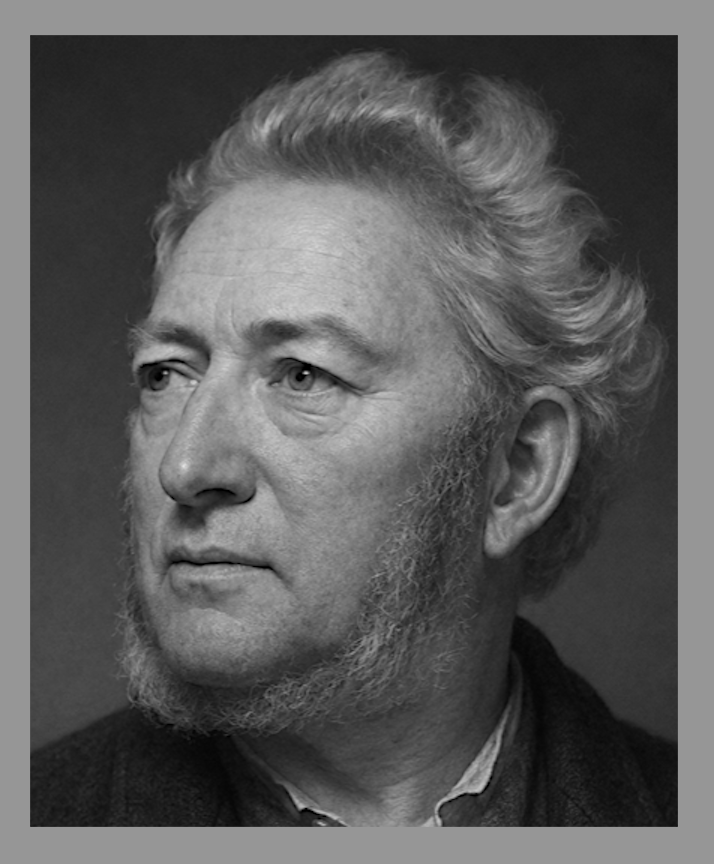
The above image of Peter Brown is AI-enhanced from an original oil painting portrait.
Linkwood Distillery has long occupied a curious place in Scotch whisky history. The distillery was rarely in the public spotlight, yet blenders and distillers have quietly regarded it as one of Speyside’s most elegant malt producers for decades. At the center of Linkwood’s story stood Peter Brown, the farmer and land manager who founded Linkwood distillery in the early nineteenth century, and by doing so established a whisky-making tradition that his family would continue for generations.
Peter Brown was born in Scotland on 27 October 1791, to his father, George Brown and his mother, Margaret Clerk Brown. Peter emerged into the agricultural world of Elgin, Moray, a region where farming, estate management, and illicit whisky production were deeply intertwined. The fertile lands surrounding Elgin supported barley cultivation, and whisky-making had become both an economic necessity and a profitable opportunity.
Not much information has been documented on Brown’s early life, but at the age of 28, Brown married Helen Leslie in Elgin on 8 July 1819. They were the eventual parents of 5 sons and 2 daughters, and the entire Brown family spent most of their lives in and around Moray.
Peter Brown eventually became associated with the Seafield estate interests near Elgin. By the early 1820s he had acquired sufficient standing and resources to pursue legal distilling at a sufficient scale. The recent Excise Act of 1823 had transformed Scotch whisky production by making licensed distilling more practical and profitable, so that many ambitious landowners and farmers saw the opportunity to move into legitimate commercial whisky-making, and Brown was among them. So in 1821 he founded Linkwood Distillery on land just south of Elgin. Production began in 1824. The distillery drew its water from springs and burns near Millbuies Loch, a source that later generations would fiercely protect as part of Linkwood’s distinctive character.
In its earliest form, Linkwood was a small-scale operation. It initially employed just one wash still and one spirit still, and produced only a few thousand liters annually. This reflected both the technological limitations and the cautious investment typical of new distilleries in that era. However, Brown did not manage the distillery entirely alone throughout its history. By 1842, operational management had been entrusted to James Walker, an experienced distillery manager who had previously worked at Aberlour. Walker managed the distillery during its most formative years. However, under Brown’s ownership, Linkwood gradually established a reputation for delicate, refined Speyside malt whisky at a time when blending houses increasingly sought dependable malt components.
Peter Brown died on 29 August 1868 at the age of 76, bringing to a close more than half a century of involvement with the distillery he had founded. Upon Peter’s death, ownership of Linkwood passed to his son, William Brown. William proved an active and ambitious successor. In the years following his father’s death, he undertook a complete reconstruction of the distillery, demolishing the original buildings and erecting a new, larger facility between 1872 and 1874. This redevelopment marked a transition from the modest scale of Peter Brown’s original enterprise to a more industrialized operation, reflecting broader trends in the Scotch whisky industry during the late nineteenth century. By 1898, the family had formalized the business as the Linkwood-Glenlivet Distillery Company, bringing it into the corporate structure that would dominate whisky production in the coming century.
As Linkwood matured, Brown’s reputation for careful stewardship became part of the distillery’s identity. The site occupied unusually attractive grounds, with ponds, greenery, and carefully maintained surroundings. Later observers often remarked that Linkwood possessed a serene atmosphere unlike the harsher industrial environments found at some Victorian distilleries. That emphasis on environmental continuity eventually became legendary under later manager Roderick Mackenzie, who resisted even minor changes to the distillery for fear of altering the whisky’s character. The roots of that philosophy arguably stretched back to Brown’s original approach to the site and its water sources.
Unlike some flamboyant Victorian whisky entrepreneurs, Peter Brown appears to have operated with relative quietness and discipline, and surviving records portray him as a conservative, practical, agricultural businessman. The distillery itself reflected that personality. Linkwood was designed not as a showpiece but as a carefully managed working distillery intended to produce reliable, high-quality spirit. And although Peter Brown himself never achieved the celebrity later associated with figures such as Tommy Dewar or James Buchanan, his contribution to Scotch whisky history was substantial. He belonged to the generation that transformed whisky from a semi-legal rural trade into a modern commercial industry. Distillers like Brown combined agricultural knowledge with practical business sense and helped establish the Speyside production culture that later became world famous.
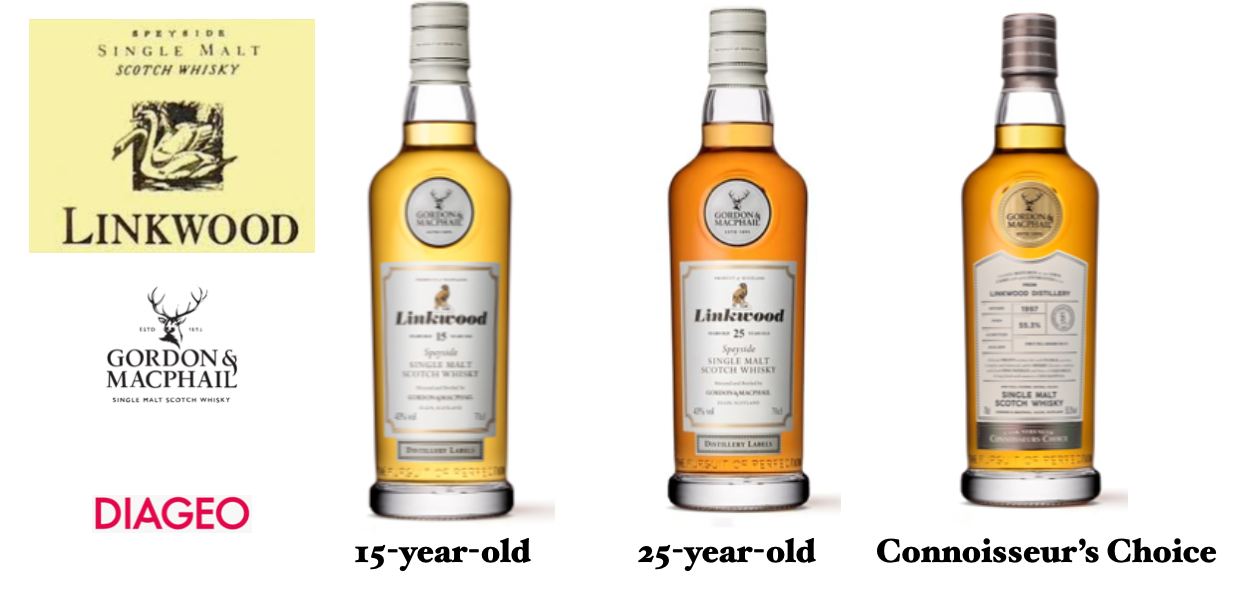
As did most independent distilleries of that era, Linkwood eventually passed out of family control. In 1933, it was bought by Scottish Malt Distillers, which later became part of Diageo. Today, Linkwood’s capacity is now in excess of 5.5 million liters per annum, and it contributes significantly to the Johnnie Walker, Haig, and White Horse blends, but also releases an occasional single malt, usually under the Gordon & MacPhail brand.
In the end, Peter Brown’s legacy lies not in dramatic personal mythology but in endurance. He founded a distillery that survived economic collapses, ownership changes, world wars, and the massive consolidation of the Scotch whisky industry. Linkwood endured because its founder built it carefully, selected its location wisely, and established a style of whisky respected by generations of blenders and distillers. In Scotch whisky history, that kind of lasting influence almost always matters more than fame.
Contributed by Tracy McLemore, Fairview, Tennessee USA
Sources:
Scottish Delight, “Linkwood Distillery - Speyside”, www.scottishdelight.com
Scottish Field, “Distiller’s Daughter Marks 80th Birthday”, 5 September 2019, Kenny Smith, scottishfield.co.uk
Publication, “The Single Malt Companion”, Libero publishers, Helen Arthur and Wallace Milroy, 23 September 1997
Unenhanced image courtesy of National Gallery of Scotland (Edward Burton-1865)