Stewart Bowman


Stewart Bowman’s whisky story begins on the northeast coast of Scotland where a distillery does not represent an abstract brand, but is a physical landmark people spend their whole life growing up around. Bowman is a Brora native, raised close enough that the town’s namesake distillery’s bell-tower sat in his everyday line of sight from home.
Bowman was only one year old when Brora distillery shut down in 1983, but as for the rest of the town, the closure landed as an unwelcome, stagnant silence, one that became part of the unwanted texture of the village. Stewart’s own father, Geoff Bowman, worked at Brora in the era before the shutdown, and served as the distillery’s last exciseman at the time production ended, an end that, for the people inside the gates, felt like the loss of a family member.
Bowman’s own path into drinks production started with science. He began at university pursuing a pure chemistry degree, then shifted direction after realizing he wanted a more applied craft. A friend studying brewing and distilling helped trigger the pivot; within a year Bowman transferred into brewing and distilling studies himself, a move that set the foundation for a career built on process, fermentation, and disciplined control of flavor. He finished university and entered professional production in 2006. That year, at the Good Food Show in Glasgow, he met James Watt and Martin Dickie as they launched a new beer brand called BrewDog. Bowman joined early and spent the next eight years as Head Brewer at BrewDog. It was an intense, hands-on apprenticeship in scaling a product without losing its core character, and it made him a production leader long before his name became associated with Scotch’s most anticipated resurrection.
Even during those beer years, whisky sat in the background as something more familiar than fashionable. Bowman grew up driving past Clynelish Distillery on the way to school, and he has said that two generations of his family worked there, an indication that distilling, in his case, was not an unfamiliar career change, but more a local trade with deep personal roots. So after BrewDog, Bowman moved into Scotch production and began to learn the art and trade of whisky-making at Cragganmore in Speyside. He then worked with Clynelish and, ultimately, Brora, distilleries that sit close together in the Highlands, but occupy very different places in whisky mythology.
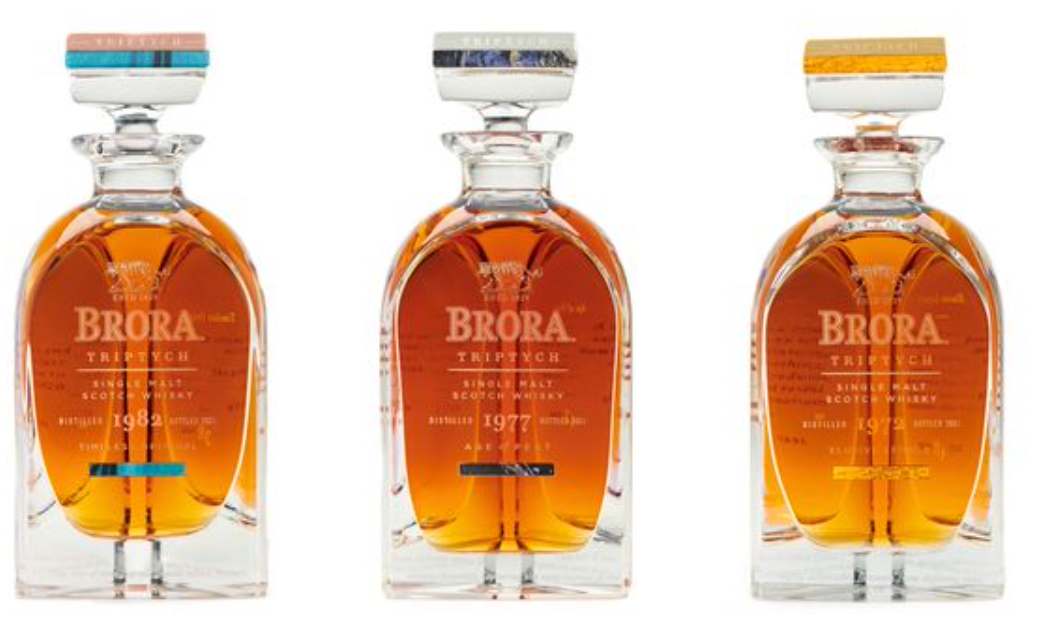
In September 2017, Diageo unveiled plans to bring Brora back online after 34 years of the distillery’s being used as nothing more than Clynelish’swarehouse. In May 2018, the company appointed Bowman into the lead role for the revival. Diageo publicly framed it as one of Scotch whisky’s most coveted “dream jobs,” and emphasized that the person chosen to guide Brora’s return was not only a trained production leader but, very importantly, also a local. He began in June 2018 and stepped into a project that demanded equal parts historian and engineer tasked with rebuilding a distillery. Unfortunately, it needed to be modern, environmentally conscious, and operationally efficient while preserving the texture of an older spirit style which collectors already treated as legendary, while most of the equipment inside was more than half-a-century old. But planning permission arrived on time in October 2018, and Bowman’s team worked year by year to restore Brora “meticulously,” with an explicit commitment by Diageo to keep as much of the original buildings and processes as possible. After nearly four decades, the site had real deterioration, but the restoration philosophy did not treat replacement as the default.
Some of the most dramatic work centered on the stills and stillhouse. Brora’s original copper pot stills were disassembled and traveled roughly 200 miles across Scotland to Alloa to be refurbished by hand by Abercrombie coppersmiths. The project involved major structural interventions, including removing a stillhouse wall to extract the equipment, then rebuilding with the original stone and materials. It was an operation Bowman has described in precise, practical terms, the way engineering people talk when the scale of a job is measured in cranes, masonry, and tolerances.
When the distillery finally reawakened in May 2021, the reopening ceremony made Bowman the human bridge between old Brora and new Brora. He sealed and filled the first cask of Brora spirit in more than 38 years—cask 001—marking the end of Brora’s silence. The distillery reopened with a restoration approach grounded in historic equipment and methods: the original stills, traditional mash tun design, worm tubs, and a research process that pulled from records and oral histories to protect Brora’s signature style right into its next life. Bowman’s connection to that moment was not colorful marketing, it was presented as the genuine pride of the village. He has spoken of the feeling of being able to tell his father, the local community, and the “old hands” that Brora was alive again, with stills running hot, spirit flowing, and a new generation of casks starting to stack up in the warehouses.
Stewart Bowman's personal life appears in public only in narrow glimpses. He is married, as he has referred to his wife in public interviews and social media, noting that she used to work at the Bon Accord bar in Glasgow. He and his family have since moved to the Isle of Arran and settled in Lochranza, a relocation that has turned his relationship with the Lochranza distillery from professional interest into daily responsibility. Public sources reviewed do not reliably identify children or details beyond these mentions.
In November 2021, only six months after Brora’s re-emergence, Isle of Arran Distillers announced Bowman as the new Lochranza Distillery Manager, describing him as a highly experienced hire who had been Site Operations Manager at Brora and had worked in production at Cragganmore, with his BrewDog leadership forming the backbone of his operational credibility. Still, Brora remains the defining chapter of Bowman’s career to this point, because it demanded something rarer than competence: it demanded continuity. Brora is a distillery with a reputation that was built as much in absence as in production. After all, its cult status came from scarcity, surviving casks, and decades of silence. Bowman’s role placed him at the center of the transition from myth back to manufacturing, charged with proving that Brora could again be a living spirit rather than a story told merely in auction catalogs. He did that work in public, in dates and engineering decisions, and in the quiet personal satisfaction of reopening gates that had been tightly closed since he was a wee bairn.
Sources:
Diageo, “Key appointments made to three ‘dream jobs’ in Scotch Whisky”, Diageo Press Release, 23 May 2018, www.diageo.com
Whisky Advocate, “Brora Distillery Reopens: The Wildcat Awakens”, Jonny McCormick, 20 May 2021
The Scotsman Food and Drink, “Diageo unveil Brora Triptych…ghost distillery”, Rosalind Erskine, 7 April 2021, foodanddrink.scotsman.com/drink/diageo-unveil-brora-triptych/
Arran Whisky official website, “Welcoming our new Lochranza Distillery Manager”, November 9, 2021, www.arranwhisky.com
The Whisky Shop (blog), “Back to Brora”, Frances Wilson, May 5, 2022
Financial Times, “Inside the ‘ghost’ distilleries that have risen from the dead”, July 22, 2021, ft.com/content/07349166-ada1-46dc-9716-3906f9f9bfeb
Contributed by Tracy McLemore, Fairview, Tennessee USA