Tom Browne

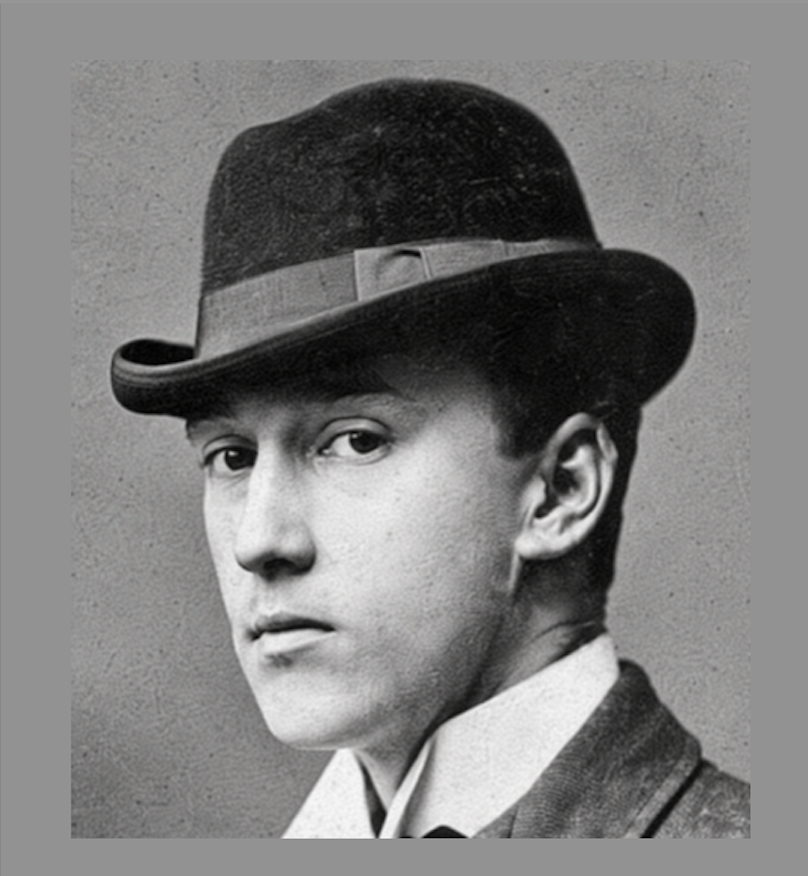
Thomas Henry “Tom” Browne occupies a distinctive place in the history of advertising art, remembered today primarily for creating the enduring “Striding Man” figure associated with Johnnie Walker scotch. Yet his life as an artist unfolded within the fast-moving world of late Victorian and Edwardian commercial illustration, where magazines, humor papers, and advertising agencies increasingly shaped public visual culture that ultimately impacted sales
Browne was born in London on 11 December 1870. Little is known of his youth, except that he had an early inclination toward drawing and design. Like many illustrators of his era, as an adult, he pursued formal artistic training in London, and was educated at the Lambeth School of Art. That institution was known for producing draftsmen and illustrators suited to the then-booming periodical press, and Browne’s development there positioned him well for the expanding market in illustrated humor magazines. His early professional work emerged in a competitive field that included weekly publications such as Punch and other illustrated journals, where visual wit and caricature were essential skills. Browne quickly developed a recognizable style characterized by fluid line work, expressive figures, and a strong sense of motion.
By the close of the nineteenth century, Browne was working actively as a commercial illustrator, contributing to popular periodicals and gaining visibility among advertising firms that were beginning to rely heavily on artist-driven branding. His work reflected the broader transformation of advertising in Britain during this period, when companies increasingly sought memorable visual identities rather than simple textual promotion. Browne’s illustrations often blended humor with clarity, making them particularly effective in commercial contexts. This combination of artistic skill and communicative precision would eventually lead to his most famous commission.
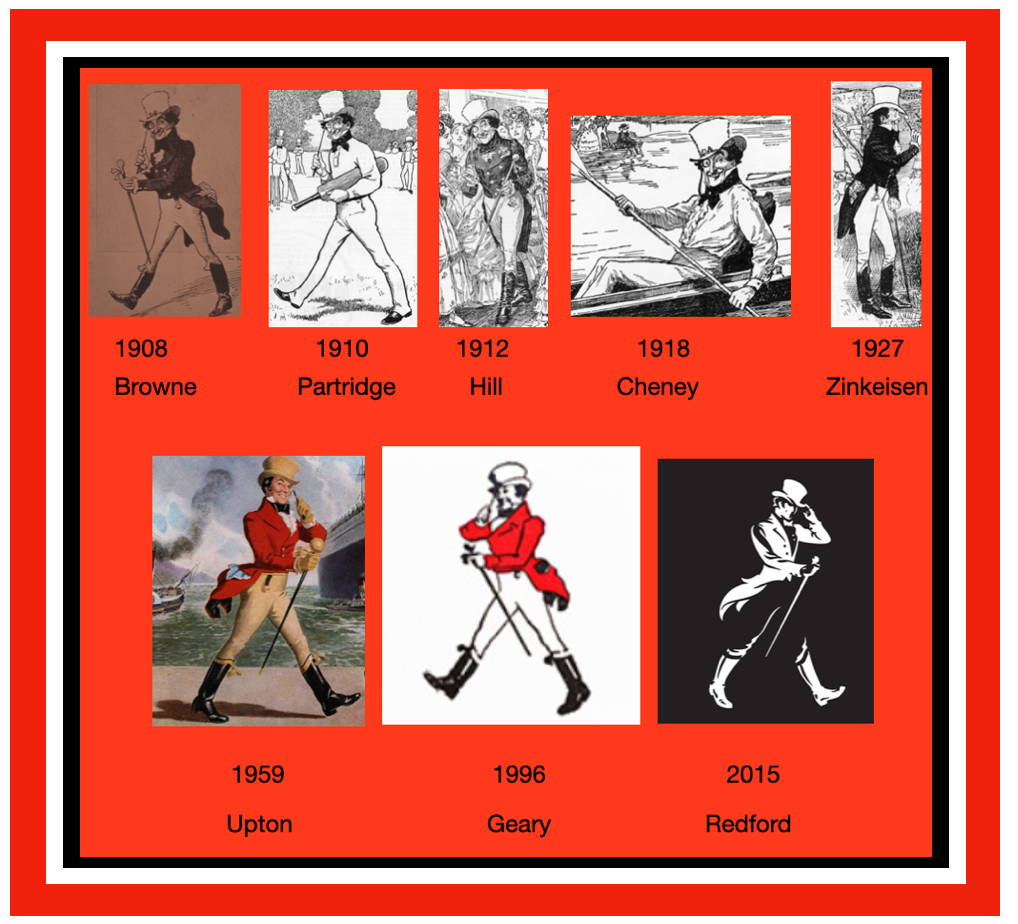
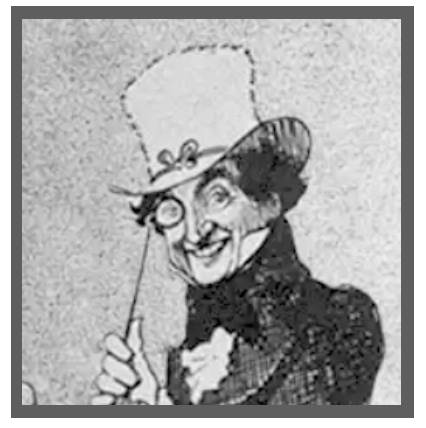
In 1908, during lunch with Johnnie Walker then-CEO George Paterson Walker, Browne was asked to create a visual identity for the Walker family’s burgeoning whisky business. Picking up a restaurant menu and quickly penciling a figure onto it, Browne’s first-draft result was an instant hit with Walker, and the figure now known as the “Striding Man” was born. The design depicted a sharply dressed gentleman walking briskly forward with confident momentum, a visual metaphor for progress, modernity, and reliability. The simplicity of the figure allowed it to be relatively easily reproduced across print media, signage, and promotional materials, making it one of the earliest and smartest examples of a truly scalable corporate brand character.
The success of the Striding Man was not merely stylistic but conceptual. At a time when whisky branding was still developing a consistent visual language, Browne’s illustration helped unify the identity of the product across markets. The character suggested forward movement and personal sophistication, qualities that aligned with the ambitions of John Walker’s company and the expectations of its modern, expanding consumer base. Over time, the figure became inseparable from the brand itself, enduring through redesigns and reinterpretations long after Browne’s death.
After the rapid success of the Striding Man campaign, the now-popular Browne found no trouble working as an illustrator for magazines, books, and advertising clients, where he maintained a steady output of commercial art. His style remained consistent with the expressive, slightly exaggerated visual language of Edwardianillustration, which balanced realism with decorative flourish. He worked during a period when illustrated humor was a dominantform of mass entertainment, and his contributions helped shape the visual vocabulary of the era.
Browne died tragically and abruptly at the age of only 39 on 16 May 1910 after surgery for cancer. He left his widow Lucy and their three children an estate valued at the 2025 equivalent of £1.9m, most of it from royalties earned via the success of his by then instantly recognizable Striding Man creation. Browne’s task in keeping Striding Man modern was quickly transferred to Sir Bernard Partridge, who drew the figure for four years, and in those four years, Partridge’s version of the character put on a bit of weight and developed a taste for fashion, city life, and women. Partridge was thereafter followed by a succession of six more artists over the next century, with Striding Man finally appearing in color for the first time in the 1950s, and with each new version seemingly losing more of his original mischievous playfulness, and instead appearing increasingly mature and sophisticated.
In retrospect, Tom Browne’s significance lies in the intersection of art and commerce at a formative moment in modern branding. While most illustrators of his generation produced work for ephemeral publications, Browne created an image that transcended its original advertising purpose to become a permanent corporate symbol. The enduring presence of the Striding Man in global markets ensures that his most famous creation continues to move, both figuratively and visually, through time, even as Browne did not live to fully see the enduring popularity of his creation.
Sources:
Lambiek Comiclopedia, “Tom Browne”, lambiek.net
Design Museum, “The Story of the Johnnie Walker Striding Man”, designmuseum.org
Diageo/Johnnie Walker, “Official History Materials”, johnniewalker.com
Vinepair, “A visual history of Johnnie Walker’s Striding Man logo”, 17 Jul 2017, vinepair.com
Contributed by Tracy McLemore, Fairview, Tennessee USA
The evolution of “Striding Man” over time: