Tom & Kim Bard

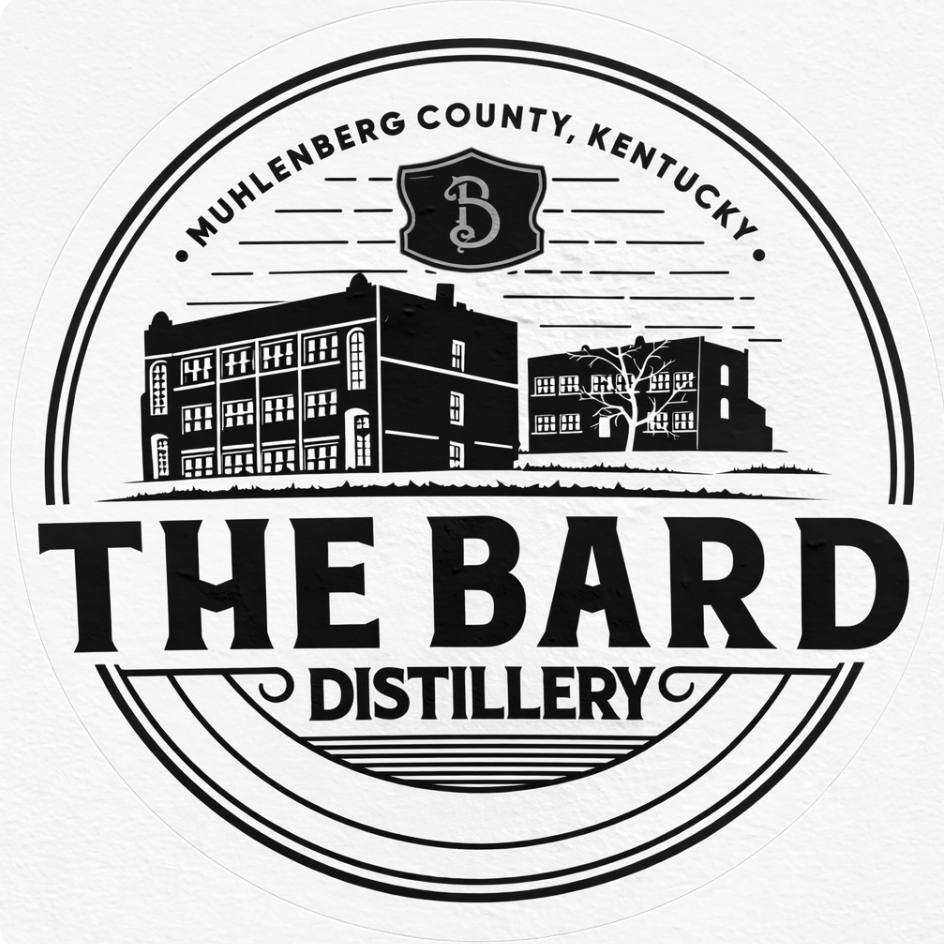
Thomas (“Tom”) Bard’s whiskey story begins in a place most Kentucky bourbon stories do not: a schoolhouse on a hill in the coalfields of Muhlenberg County. Long before it held fermenters, barrels, and tasting guests, the Graham School campus was the civic heart of a small mining town built to serve hardscrabble families whose lives were tied to the rhythm of the local coal mine. Decades later, Bard would return to that same property with a different plan: to rebuild identity through a new kind of local industry, and to do it on ground that felt personal. After all, he had attended that school himself for seven years, as did three generations of his family before him.
Tom is a direct descendant of the Bard brothers,William and David, mid-18th-century surveyors in the Kentucky frontier. William is associated with the founding of Bardstown, Kentucky. The more immediate family anchor, however, is not Bardstown but a farm. Tom Bard was raised on Isaac Bard’s farm in Muhlenberg County, land his family history connects to Isaac’s settlement in the county in the 1820s. Tom and his wife, Kim, still live on the family farm, with their home sitting on the same spot where Isaac Bard built his own house nearly 200 years ago.
Tom Bard was born in February 1980. He graduated from the University of Kentucky and trained as a mechanical engineer, building a career in industrial quality control and continuous improvement. Long before he became known as a Kentucky distillery founder, however, he spent many years in motorsports, working his way through stock car racing in roles that demanded speed, precision, and discipline: tire changer, jack man, fabricator, tire specialist, and crew chief. Those years were not a detour. They became an education in systems, repetition, and incremental improvement; the same mindset that later shaped his approach to distilling.
Motorsports also shaped Bard’s personal life. Tom and Kim Bard met in racing. Kim Bard is a former NASCAR Busch Series driver with an education and professional background in administration and education. She has also competed as a Monster Jam driver and, in later years, has raced monster trucks in Australia. Tom worked on Kim’s race team as she moved through the racing ranks, and that shared world became the setting where their partnership formed, first in the pits, then in business, and eventually in marriage.
By 2015, the couple made a decision that would bind their professional ambitions to their homecounty. They purchased the long-abandoned Graham School property and began the slow, methodical work of renovation. The nearly century-old building had suffered from decades of wear, hard use, and extended vacancy, but it also offered something rare: scale, character, and the emotional gravity of a community landmark. The Bards’ vision was not simply to install stills in an empty structure, but to convert a historic campus into a world-class craft distillery and tourist destination while preserving the historical fabric of the place.
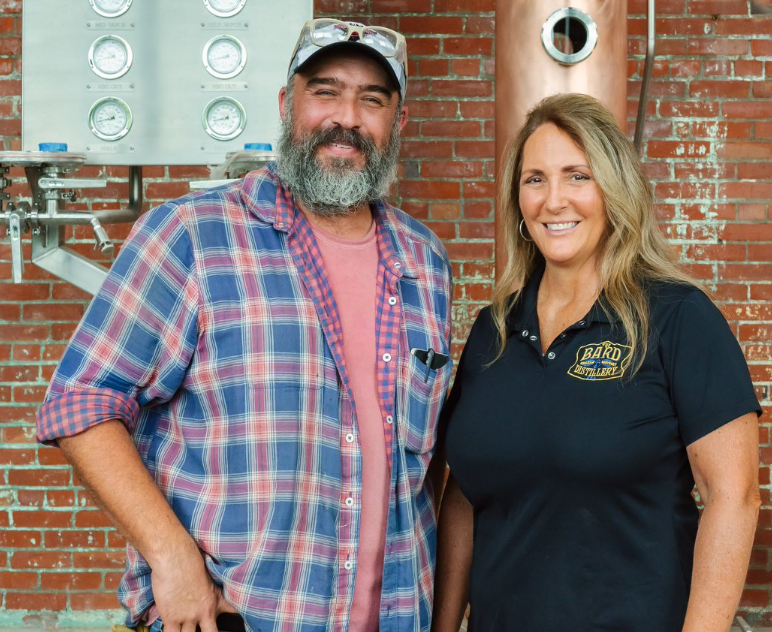
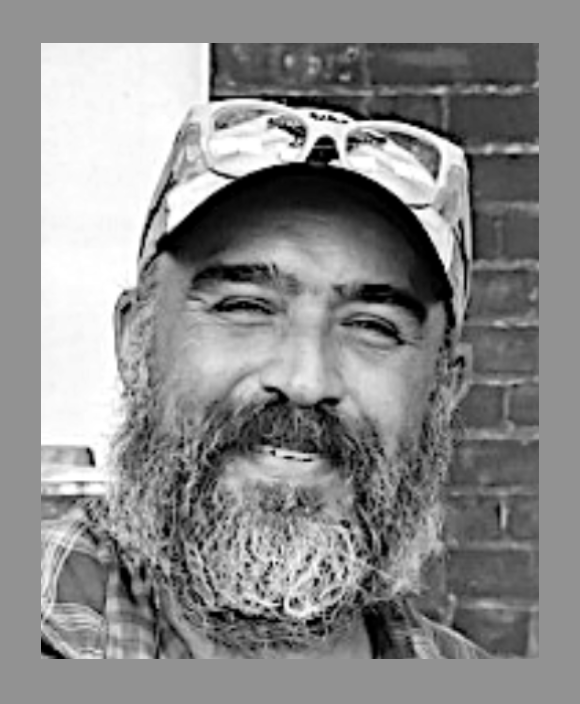
Tom and Kim Bard
The distillery within the old schoolhouse would be called “The Bard”—a name that tied the operation directly to family identity and stewardship. The work did not pay off quickly. Years were spent clearing debris, stabilizing structures, restoring interior spaces, and adapting classrooms, hallways, and gymnasium areas into production, storage, and hospitality environments. The scale of the project reflected the same long-view approach that had characterized Bard’s engineering and motorsports careers.
After years of rebuilding, The Bard opened its doors for tastings and tours in December 2019. The timing placed the distillery immediately into the turbulence of the COVID-19 pandemic, but the early disruption became part of its formative story. The Bards used the period to continue renovations, refine operations, build distribution, and broaden their spirits lineup while operating within the constraints of a small, hands-on business.
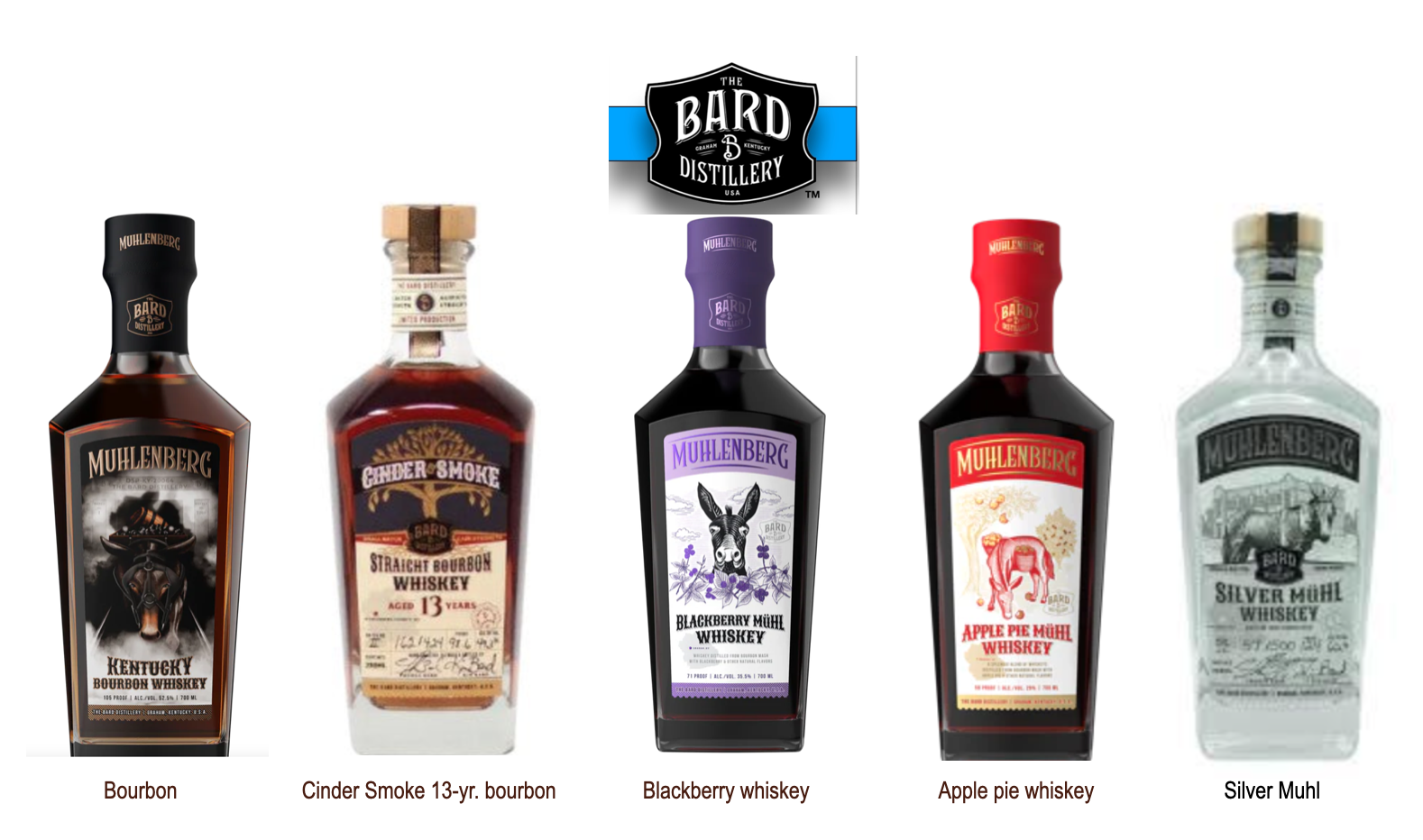
From its early public life, The Bard featured a core lineup of three whiskeys that established its identity. Muhlenberg, a Kentucky straight bourbon, serves as the house expression and nods directly to the county that shaped Bard’s upbringing.Cinder Smoke, a 13-year-old bourbon, reflects a bolder, more mature style.Silver Muhl is an unaged white whiskey that highlights grain character and distillate clarity. Alongside these, The Bard offers a number of flavored whiskeys, designed to broaden appeal and reflect the approachable, visitor-driven nature of the distillery.
In its earliest years, The Bard historically sourced its whiskeys, a common and pragmatic approach for new distilleries whose own stocks are still maturing. That changed in 2022, when the distillery began releasing its own creations: spirit distilled, aged, and developed under Tom’s direction. The moment marked a transition from startup phase to true production distillery, and it stands as one of the milestones Tom and Kim Bard describe as a point of immense pride.
As the operation matured, The Bard became part of the Kentucky Bourbon Trail Craft Tour, placing it within the state’s official tourism and heritage framework. The site’s identity, however, has always leaned as much on place as on product. Visitors encounter whiskey in a former school building where basketball games were once played, classes once met, and community gatherings once filled the halls. That layered history has become central to the distillery’s character. In late 2020, The Bard reached another industry milestone when it joined the Kentucky Distillers’ Association as a craft member. Around the same period, Tom Bard pursued further distilling education and networking, including attending distillery camp at MB Roland Distillery. The path reflected his characteristic blend of formal training, hands-on practice, and peer learning. As the years progressed, Bard’s public profile expanded beyond his own distillery. In 2024, he joined the board of the American Craft Spirits Association, connecting his experience in rural redevelopment and startup distilling to broader national conversations about craft spirits.
The throughline of Tom Bard’s story remains consistent: a local return, a technical skill set, and a willingness to take on projects measured in decades rather than quarters. His biography is often told through the places that shaped him—the family farm, the classrooms of Graham School, the pits of motorsports, and finally the tasting bar inside a former gymnasium that now hosts visitors looking for a different kind of Kentucky experience. And in The Bard, Tom and Kim Bard have created more than a distillery. They have anchored a working business inside a building that once anchored a town, tying family history, engineering discipline, and regional pride into a single enterprise. The result is a distillery that carries both a sense of inheritance and a sense of forward motion, firmly rooted in Muhlenberg County, and now producing whiskey that carries its own name on the label.
Sources:
The Bard Distillery official website, “Legacy”,thebarddistillery.com
Kentucky Monthly, “Crafting a Legacy”, Laura Ray, August 31, 2024, kentuckymonthly.com
Craft Spirits (podcast), “Tom Bard of The Bard Distillery”, November 8, 2024, craftspiritsmag.com
Distillery Trail, “The Bard Distillery Joins the Kentucky Distillers’ Association…”, November 28, 2020, distillerytrail.com
Kentucky Bourbon Trail, “The Bard Distillery”,kybourbontrail.com
Kentucky Distillers’ Association, “The Bard Distillery Announces…John Prine Bourbon”, October 6, 2025, kybourbon.com
Associated Press, “Trump’s Tariff Wars Forge Rare Bipartisan Alliance…”, Bruce Schreiner, March 14, 2025, apnews.com
Contributed by Tracy McLemore, Fairview, Tennessee