
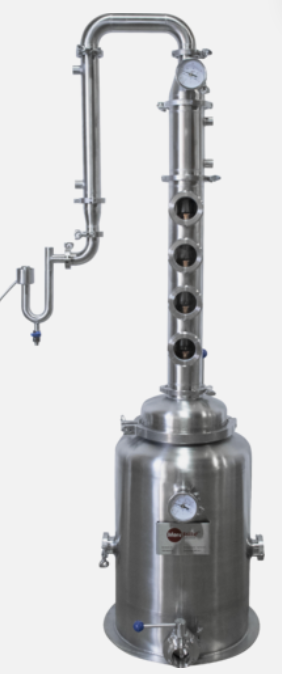
Aeneas Coffey

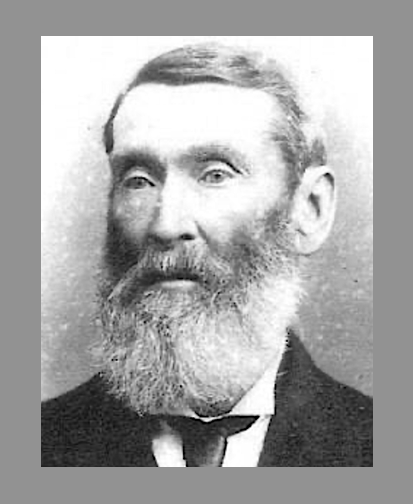
(AI-generated image of Aeneas Coffey is based on a credible illustration)
Aeneas Coffey’s story begins in Calais, France in 1780, where he was born to Irish parents. His father, Andrew Coffey, was an engineer connected with Dublin’s waterworks, part of a generation that treated pipes, pressure, and metalwork as civic destiny. In Coffey’s later life, those same practical questions, how liquids move, how heat behaves, how systems can be measured and sealed, became inseparable from whiskey. As a young man, Coffey received an education substantial enough to place him at Trinity College, Dublin. After secondary education, around 1800, he entered a regulatory government career in Customs & Excise, a world of gauges, ledgers, inspections, and enforcement that sat directly on top of Ireland’s huge distilling economy.
In 1808, Coffey married Susanna Logie, and the couple soon had three sons: Aeneas, Jr., William, and Philip. While family life anchored him, his job put him in motion. An excise officer in that era was not merely a bureaucrat, he was the face of a tax system in communities where illicit distilling was often an economic necessity. While he was a strong, determined upholder of the law, he quickly became aware of the danger, and Coffey survived many nasty skirmishes with illegal distillers and smugglers, particularly in the north and west of Ireland where moonshining was a common, yet rough way of life and competition was fierce. On several occasions he proposed to the government simple, pragmatic solutions to rules and regulations which had hampered legal distillers, while making it harder on those avoiding excise taxes. Those proposals came with risk, and in November 1810, near Culdaff in Donegal, Coffey was attacked by a rabble of 50 men during what later writers call the “poitín wars.” In testimony he later gave, he described a mob assault that left him with a fractured skull and bayonet wounds, injuries which he claimed affected him long afterward. It’s a vivid moment because it shows the cost of the work and the iron certainty it required: nevertheless, Aeneas Coffey survived, returned to duty, and continued in the bureaucracy. But also, during this time, Coffey was learning distilleries from the inside out: how wash arrived, how spirit was collected, where fraud could hide, and, most importantly for his later fame, how stills actually behaved when run day after day.
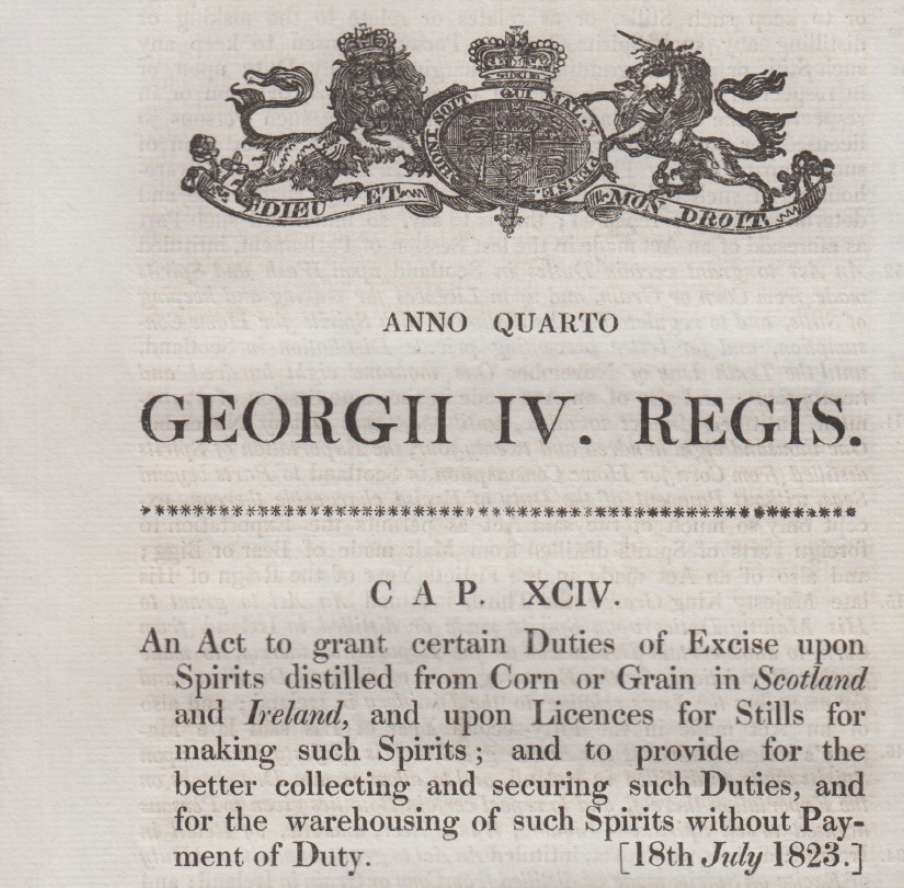
Coffey was an extraordinarily talented man with widespread interests. As such, he was able to rise quickly through the excise service ranks. He was appointed sub-commissioner of Inland Excise and Taxes for the district of Drogheda in 1813. He was appointed Surveyor of Excise for Clonmel and Wicklow in 1815, and in 1816 he was promoted to the same post at Cork. By 1818 he was Acting Inspector General of Excise for the whole of Ireland. He also assisted the government in the drafting of the 1823 Excise Act which made it easier to distill legally. The Excise Act sanctioned the distilling of whiskey in return for a licensing fee of £10, and a set payment per gallon of proof spirit. It also provided for the appointment of a single Board of Excise, under Treasury control, for the entirety of the United Kingdom, replacing the separate excise boards for England, Scotland and Ireland.
Following this, however, after nearly a quarter-century in government service, the still-maker begins to emerge from the taxman. Wearied from days traveling away from his family and living in near-constant danger from illegal distillers as well as from those who just didn’t like the government, Coffey left state service, once and for all.
Aeneas’s best-known achievement, the Coffey still, grows out of that moment. Continuous distillation was not a blank page as other inventors had already pursued it, but Coffey produced a design that proved commercially transformative. In 1830, the 50-year-old applied for a patent, and it is was granted in early 1831. The basic idea was straightforward in principle and profound in impact: instead of distilling in batches of heat, boil, condense, empty, clean, repeat, Coffey’s apparatus allowed distillation to proceed continuously, producing large volumes of high-strength spirit with little interruption. The industry reaction to his still split largely along national lines: Scottish distillers and London gin producers proved receptive, while his own people, the Irish distillers, remained loyal to pot still character and were resistant to the lighter spirit a column still could produce. Nevertheless, by 1832, Coffey’s still had been tested and approved by Excise, and in 1834, the first Coffey still was installed at the Grange distillery in Fife, Scotland, a stepping-stone in the rise of grain whisky as the quiet engine behind blended Scotch.
His column still soon became wildly popular in Scotland as well as the rest of the world outside Ireland, where today it remains known as the "Coffey still" or "Patent Still". Early Coffey stills produced spirits of about 65% alcohol by volume concentration but still offered its operators outstanding advantages; its fuel costs were low, its output high (2000 gallons a day of pure alcohol was a good average), it needed less maintenance and cleaning than pot stills, and because it was steam-heated, there was no risk of scorching, saving labor costs and distillation down time. Modern versions of the Coffey still can now achieve much higher alcohol concentrations, approaching 95.6% alcohol (however, as alcohol forms an azeotrope with water at this concentration, it is impossible to achieve higher purity alcohol by distillation alone).
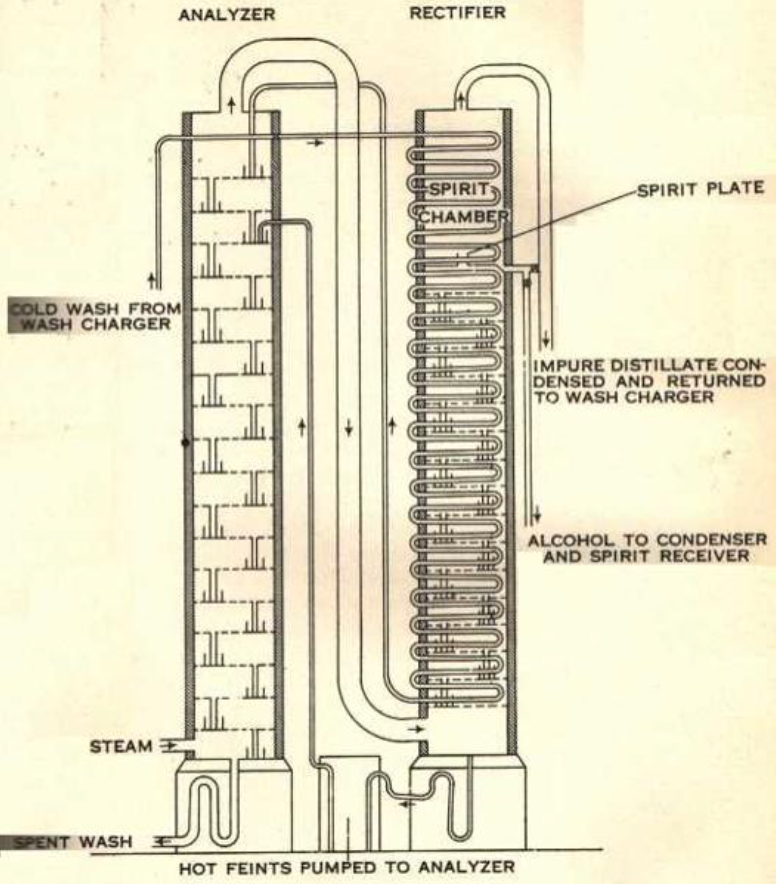
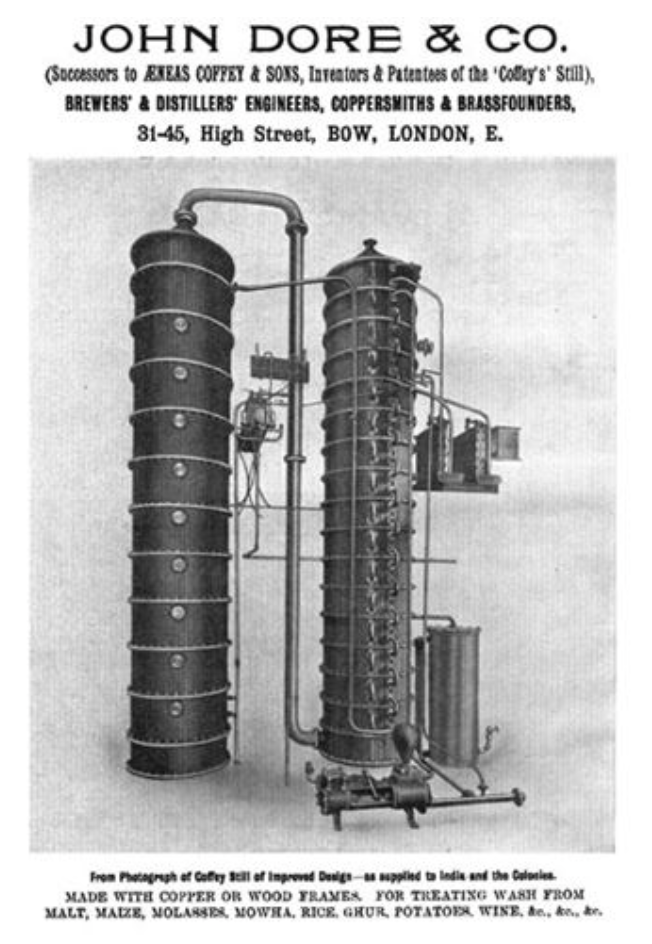
(Left) Patent application sketch and
(Above) Retailer advert for Coffey’s still
As orders for his still grew, the enterprise developed into Aeneas Coffey & Sons, and at this point Coffey ultimately relocated to London around 1839 to follow the demand that Ireland never gave him. Not long after, his son Aeneas Coffey Jr. took on leadership of the still-making plant. Aeneas Coffey, Sr., died on 26 November 1852 in Bromley, Middlesex (London). Sadly, soon after his father’s death, Aeneas Jr. sold the business to his long-time foreman John Dore, whose enterprise, John Dore & Co., continues as a distilling-engineering entity to this day.
Aeneas Coffee’s legacy is easiest to measure not in monuments, but in architecture: the familiar tall columns of modern distilleries, the steady streams of spirit, the industrial heartbeat behind blends and neutral spirits alike. Coffey’s name remains rooted in history and attached to a machine because his machine has, 175 years later, remained firmly attached to the future.
Sources:
Scotch Whisky, “Aeneas Coffey”, Neil Wilson, September 11, 2018
Master of Malt (blog), “Whisky heroes: Aeneas Coffey…”, Ian Buxton, May 22, 2020
Whiskipedia, the Whiskey Encyclopedia,“What is a Coffey still?”, May 22, 2020, whiskipedia.com
Contributed by Tracy McLemore, Fairview, Tennessee USA